Taking ride is filled with ‘feel-good’ emotions
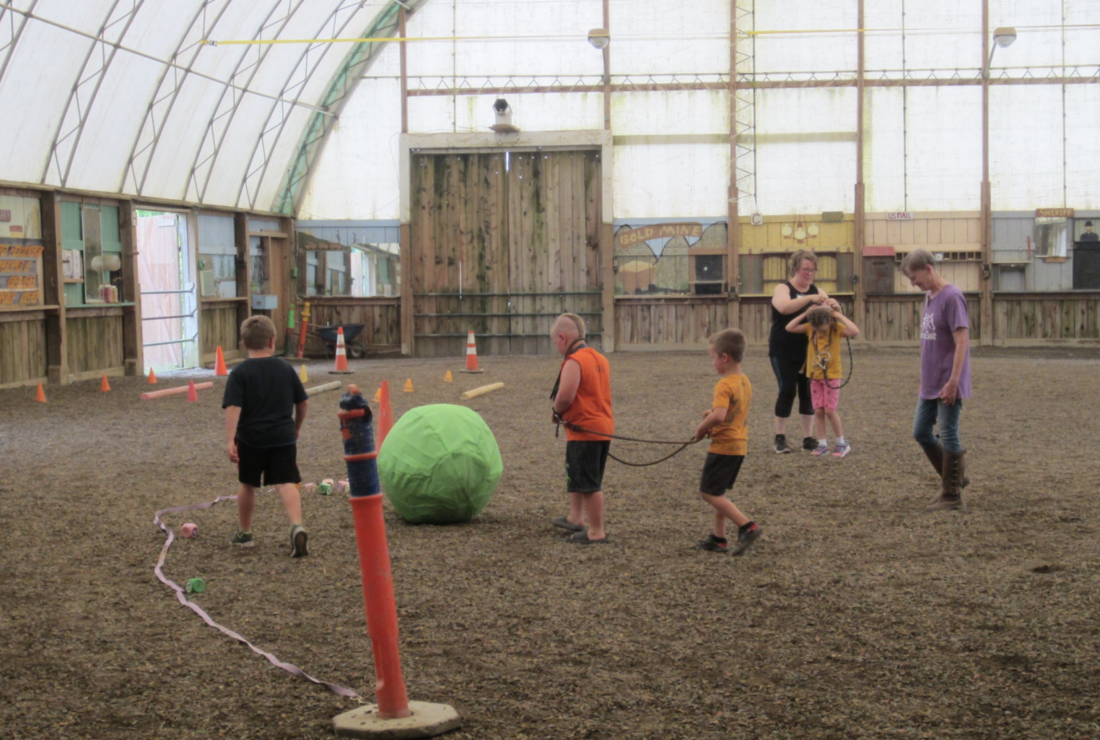
Students from Ripley School learn how the reins work in a lesson on how to better communicate with their horse, without words.
Science is extraordinary, expanding and reshaping itself as new discoveries overturn what once seemed like fact. In physical therapy, our understanding of the neuromuscular and skeletal systems has evolved, recognizing that sensory-motor integration, how the brain processes incoming signals and shapes movement, plays a transformative role in treatment. But that’s only one piece of the puzzle.
When I graduated in 1989, research was already shifting toward cellular biology, neurochemistry, and the subtler biological signals that influence movement and behavior and shape the treatment plans for physical therapy. Unlike electrical nerve impulses racing along neurons, hormones drift through the bloodstream, entering cells only when the right receptors invite them in. Even then, scientists recognized that some signaling molecules, particularly neuropeptides, are so short-lived that they’re incredibly difficult to study directly. Much of what we thought we knew came from inference, not observation.
Among the most intriguing are dopamine and serotonin. These “feel-good” neurotransmitters shape mood, motivation, reward-seeking, learning, and movement itself. Physical therapy has long been built on the idea of “use it or lose it”, a principle that supports strength, mobility, pain modulation, and independence. But beneath that lies a deeper question: what fuels the desire to act? Why do some people seem to have a reservoir of motivation, while others feel stuck?
As rates of autism spectrum disorders rise and the public wants answers, the race to understand neurochemical influences on behavior and engagement has accelerated.
So where do horses come in?
Now well-documented, horseback riding engages multiple brain systems, stimulating dopamine and serotonin release. Video games also trigger dopamine, which is why they can become intensely engaging. But comparing these two sources of reward tells a very important story about natural versus engineered stimulation.
Hormones and neurotransmitters profoundly shape behavior. Dopamine surges when we do something rewarding or anticipate success. This “teaches” the brain what to seek out again. Game designers understand this better than most. Modern games, even without sophisticated AI, continually adjust difficulty or offer small wins to keep the player in the sweet spot of dopamine-driven engagement. No wonder children (and adults) crave “just one more level.”
But dopamine isn’t exclusive to screens. It’s part of learning a skill, moving your body, savoring music, accomplishing a goal, or connecting with others. The challenge is that screen-based dopamine can become amplified. Long sessions or multiple screens can overstimulate the reward system, pushing the brain to demand more to achieve the same effect, much like any behavioral addiction.
So, what happens when parents limit screen time?
If a child has begun to rely on this artificial dopamine loop, withdrawal can surface as irritability, boredom, restlessness, loss of motivation, anxiety, or even anger. It becomes tempting to give in “just to keep the peace.”
But there is another way.
If a child is old enough to understand what’s happening in their brain, they can participate in setting boundaries. And when we offer activities that produce healthy, meaningful dopamine, activities that build competence, confidence, and connection, children can shift from dependency to empowerment.
Which brings us back to therapeutic riding.
A horse’s rhythmic movement delivers approximately 100-120 neuromotor inputs per minute to the rider, far more complex and integrated than human walking. Layer onto that the thrill of success, the anticipation of a goal, the novelty of mastering a new physical skill, the bond with a gentle but powerful animal, and a deep sense of partnership. The result is a naturally elevated release of dopamine and serotonin. Exercise itself boosts serotonin, which helps regulate mood, attention, and stress. Balancing serotonin and dopamine are essential for emotional stability and cognitive engagement.
Unlike video games, therapeutic riding isn’t powered by algorithms. It is deeply sensory, profoundly embodied, and emotionally rich. It integrates balance, coordination, problem-solving, communication, and affective connection. Instructors tailor challenges to each rider, and horses, remarkably attuned social animals, often respond with a kind of intuitive support that can’t be replicated by screens.
Psycho-social benefits include:
— Greater sense of responsibility
— Understanding and applying cause-and-effect
— Opportunities for authentic social interaction
— A nonjudgmental partner and safe emotional connection
— Empowerment through mastering difficult tasks
— Teamwork and cooperation
— Increased confidence and self-esteem
— Enhanced critical thinking and problem-solving
— Improved interpretation of nonverbal communication
These are real, lasting human experiences, ones that activate multiple brain regions working in harmony, rather than confining the mind to computer-generated dopamine loops.
Centaur Stride relies on community support to continue offering these vital services. End of year donations help us get through the slow services during winter months. Our basket raffle is Dec. 14 at the Mayville Holiday Market at the old school. Pictures, descriptions and ticket sales options are posted at linktr.ee/centaurstride. Gift Certificates available for riding lessons, for people with and without disabilities. For more information, call the barn at (716) 326-4318 or email info@centaurstride.org.
Claudia Monroe, physical therapist, cofounder, and President of Centaur Stride, Inc., a non-profit serving all of Chautauqua County.