
Chaco Canyon history discussed at Shakespeare Club
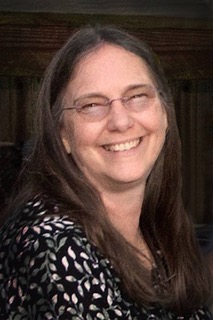
Lisa Mertz
A recent meeting of the Fredonia Shakespeare Club was hosted at the home of Irene Strychalski. President Karin Cockram welcomed Club members to the meeting.
After a brief business meeting concluded, a paper by Lisa Mertz on The Spirits of Chaco Canyon was presented. A summary follows.
There are 23 UNESCO sites in the United States. Three of them are in New Mexico: Taos Pueblo, Carlsbad Caverns, and Chaco Canyon. These were designated UNESCO World Heritage Sites in 1987, placing The Chaco Culture National Historical Park among the list of safeguarded locations “whose impressive natural and cultural resources form the typical inheritance of all humanity.”
This area served as the center of the Chacoan culture for roughly 400-years, from 850 – 1250 CE. The ancestral homeland of Pueblo peoples, Hopi and Zuni, and also the Diné (Navajo), Chaco Canyon represents the largest and most complex society in North America.
These ancient people constructed massive multi-story buildings with hundreds of rooms. They aligned these buildings with the cycles of the sun and the moon indicating a profound, sacred connection to the cosmos. The architectural complexity of the ancient Chocoans is truly awe-inspiring.
Of the Great Houses in Chaco Canyon, the D-shaped Pueblo Bonito, possibly five stories tall, has the greatest number of rooms estimated at 650. The center wall aligns to true North. The second largest Chacoan Great House named Chetro Ketl covers more than 3 acres, and contains approximately 400 rooms. Chaco scholars estimate that it required more than 500,000 work hours, 26,000 trees, and 50 million sandstone blocks to erect Chetro Ketl.
Scholars had speculated that the inhabitants of the area disappeared from Chaco when faced with drought and possibly warfare. However, preservation archaeologist Paul Reed asserts: “It’s super important that we don’t talk about Chaco in the category of ‘lost civilizations,’ like the Egyptian pyramids or Stonehenge. [That narrative] is particularly damaging in this instance because it disenfranchises the Pueblo people who live all around the canyon to this day.”
A research report published in 2025 in Nature by Pinotti, Adler, and Mermej, entitled “Picuris Pueblo Oral History and Genomics Reveal Continuity in US Southwest,” confirms genetic continuity among the Picuris people throughout the last millennium. DNA from Picuris individuals and ancient Chacoan DNA challenge claims of depopulation or disappearance in the area, establishing a genetic component to suspected cultural affiliation between a present-day group and ancestral Puebloan heritage.
The people of Picuris Pueblo are using their ancestral connection to the area to raise their voices to ban new oil and gas leasing around Chaco Canyon. While UNESCO status provides international recognition and protection guidelines, it does not supersede national, state, or private property laws. In 2023 the Biden-Harris administration enacted a 20-year 10 mile “buffer zone” to protect the site from environmental damage caused by oil and gas extraction. As of late 2025, the Trump administration is taking steps to reverse these protections. The current Bureau of Land Management has initiated tribal consultations to open the area to leasing.
The New Mexico congressional delegation swiftly condemned the action saying, “Chaco Canyon is one of the most important living cultural landscapes on the planet ….. To deface and destroy this irreplaceable and sacred landscape is not only morally wrong: It is utterly disrespectful to the Pueblos, Tribal Nations, and New Mexicans who have called for permanent protection of the Chaco landscape.”
Community News

New RTPI CEO settling into role

Chaco Canyon history discussed at Shakespeare Club
Lecture explores Jamestown Trolley 93 restoration progress

Dwyer Veterans Peer Support Group Gala is April 18
Coming up …
TUESDAY, APRIL 7 Ahira Hall Memorial Library book sale 37 W. Main St., Brocton, 10 a.m. to 5 p.m. $1 hardcover, ...
Silver Creek Seniors meet
SILVER CREEK – The Silver Creek Seniors met on March 31 with 16 members present. President Randy Nurmi opened the ...