
True stories are stranger than fiction
“Tell a Story Day” is celebrated every year on April 27. Even though the stories told can be fiction, true stories are often even more interesting.
As the poet Lord Byron wrote, “Tis Strange – but true; for Truth is always strange; stranger than fiction.” Later, Mark Twain wrote, “Truth is stranger than fiction, but it is because Fiction is obliged to stick to possibilities; Truth isn’t.
My recent trip to Fort Sumter in Charleston S. C. prompted me to ponder the stories of Abraham Lincoln’s death 150 years ago and some of the “what-ifs.”
Lincoln was the 16th President of the United States, serving during the American Civil War. He was relieved that the war was nearly over when General Robert E. Lee and the Army of Northern Virginia surrendered on April 9, 1865 in the town of Appomattox Court House, Va. Thousands of men had died and people of the North and the South were war-weary and ready for the nation to begin healing. However, Lincoln’s joy was short-lived because he was assassinated just five days later on April 14, 1865. Many have wondered about this tragic event.
What if Lincoln and his wife Mary hadn’t gone to Ford’s Theater that evening? What if they had stayed home because of Mary’s earlier headache or because plans to attend with General Ulysses Grant and his wife had been cancelled? What if Lincoln had taken the advice of Secretary of War Edwin M. Stanton to stay home because of the possibility of getting shot in the street? What if Lincoln’s body guard had not left his post at the theater door? Finally, would Lincoln have been killed if he had accepted the invitation to go to Fort Sumter for a ceremony scheduled for April 14, 1865?
On April 14, 1865, 150 years ago, a special flag was raised at Fort Sumter, the site of the first shots of the Civil War. A celebration was held during which Robert Anderson, the Union commander of Fort Sumter would raise the same 33-star flag lowered on April 14, 1861 when the Confederates forced the fort to surrender.
In 1861, Confederate forces had bombarded Fort Sumter for over two days until much of it was destroyed. Anderson reportedly carried out the flag with its colors flying and drums beating. Astonishingly enough, after 3,000 shells were fired at the fort, there were no casualties until the next morning when two of the Union’s soldiers were killed when a cannon backfired during Anderson’s 50-gun salute before surrender.
The celebration included salutes by cannon fire and speeches by abolitionists Henry Ward Beecher and William Lloyd Garrison. President Lincoln had been invited to attend, but had declined. At the celebration, a message from Lincoln was read and a toast made in his honor. Ironically, he was killed just a short time later that day, not in the “rebel” south, but in Washington, D.C, the nation’s capital.
Calvert Arms participated in the recent reenactment of the reclaiming of Fort Sumter as well as the reenactment at Appomattox explained in last week’s column. Reenactors slept on their bedrolls on the parade ground and in the sally ports, (fortified entrances to a fort).
It was easy to imagine the sights and sounds from 150-plus years ago while roaming the quiet halls and grounds after hours. There was plenty of marching and music for the visitors. A reenactor recited the words Anderson originally delivered Reenactors often have bittersweet feelings as an event comes to an end. The older ones know they are unlikely to participate 25 years from now at the 175th commemoration. As a special memento, each member of the fife and drum corps was given an original portion of a brick from the fort’s first construction in 1829.
Historical stories are re-examined and revised. What is the truth behind how the first shot of the Civil War was fired? Neither side wanted to be the “aggressor.” Who were all the players of in Lincoln’s assassination four years later?
One thing certain is that many grieved for Lincoln. An Evening Observer article from the summer of 1933 noted that the train bearing Lincoln’s body made a brief stop in Dunkirk near the Eastern and Erie Hotels. Near midnight, “a throng stood in reverent silence, broken now and then by the sobs which sorrowing ones were unable to stifle.”
Make it a good week and share some stories, particularly the most fascinating ones based on reality.
As a side note, I was happy to hear from a reader last week who said that based on the names listed in the column about Appomattox, his family was able to determine that a great-great- grandfather witnessed the surrender at Appomattox. Aren’t family stories great?
Mary Burns Deas writes weekly for the OBSERVER. Send comments to lifestyles@observertoday.com
Sunday Lifestyles

Get A Look At The Red-Tailed Hawk
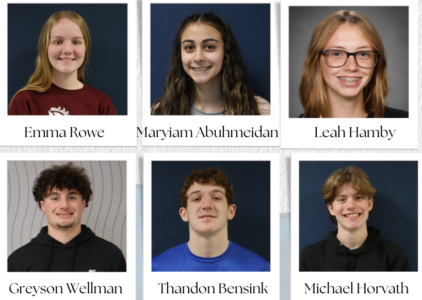
CLCS announces January Students of the Month
Attacking the fears that bring paralysis to individuals
Last month I wrote about loneliness, and gave the reader options about managing it. If you have never thought about ...
What we have is a failure to communicate
I have a friend who is an unabashed Trump supporter. When I asked him what he thought of Trump’s State of the ...
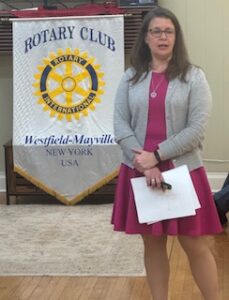
Jackson Center is Rotary topic
Americans still allowed to disagree with president
The topics I write about that seem to get the most response from readers have to do with dogs or politics. I’m ...