Club hears history of India temple

Mary Jane Covley Walker
The 10th regular meeting of the 2025-26 season of the Fredonia Shakespeare Club was hosted at the home of Mary Jane Covley Walker. President Karin Cockram welcomed members to the meeting.
After a brief business meeting concluded, a paper by Covley Walker was presented on the Mamallapuram Shore Temple, India. A summary of this paper is given below.
The Mamallapuram Temple is a UNESCO World Heritage site. It is in India. It is in the south Indian state of Tamil Nader on a strip of land between the Bay of Bengal and the Great Salt Lake. At one time it consisted of 7 temples, but sands and seas over time have covered up all but one of the temples. The temple was built in 725 AD with blocks of granite. At the time of construction, it was a busy port in the reign of Narasimhavaxman II of the Pallava Dynasty who reigned from 695 CE to 728 CE. Marco Polo, a European merchant who came to Asia called the site Seven Pagodas. The temple acted as a landmark for seafarers.
During his reign, it was a period of great literary and architectural advances. Narasimhavarsman II was a skilled dramatist and poet. He wrote many works in Sanskrit. He was one of the greatest rulers. His reign was marked by peace and prosperity. He erected elaborate temple complexes. His driving force was his dedication to Shiva, a deity in the Hindu religion. All of his temples featured Shiva. The Statues of Shiva usually depict Shiva in the yoga position with a third eye, crescent moon, a snake and trident.
The temple is a combination of three shrines. The main shrine is dedicated to Shiva as is the second shrine. The third shrine is dedicated to Vishnu. Vishnu is a principal deity in Hinduism and is known as the preserver and protector of the universe. All three temples of the Shore Temple complex are built on the same platform. Its pyramidal structure is 60 feet and sits on a 50 foot square platform. There is a small temple in the front that was originally a porch.
Excavations in the 2000s revealed new structures under the sand. On Dec. 26, 2004 a tsunami occurred in the Indian Ocean which exposed ancient rock sculptures of lions, elephants and peacocks that used to decorate the walls of the temples. Following the paper presented by Covley Walker, all members were treated to a variety of appetizers provided by the hostess.
Sunday Lifestyles
Top Brocton students highlighted
Brocton Elementary School recognized students who were chosen as Students of the Month representing grades K-5. ...
Nothing is ever as simple as 1+1
I am enjoying filling in for my good friend and former colleague Pete Howard as he takes a little break from ...
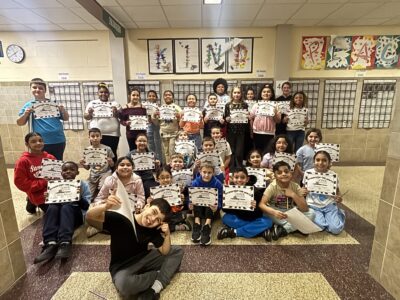
Intermediate students honored
Loneliness can be a real struggle
Before I get to this month’s topic, I want to congratulate two fine high school basketball programs, Dunkirk and ...

‘Caching’ when times are lean