
Getting a taste of Spain while on the trail
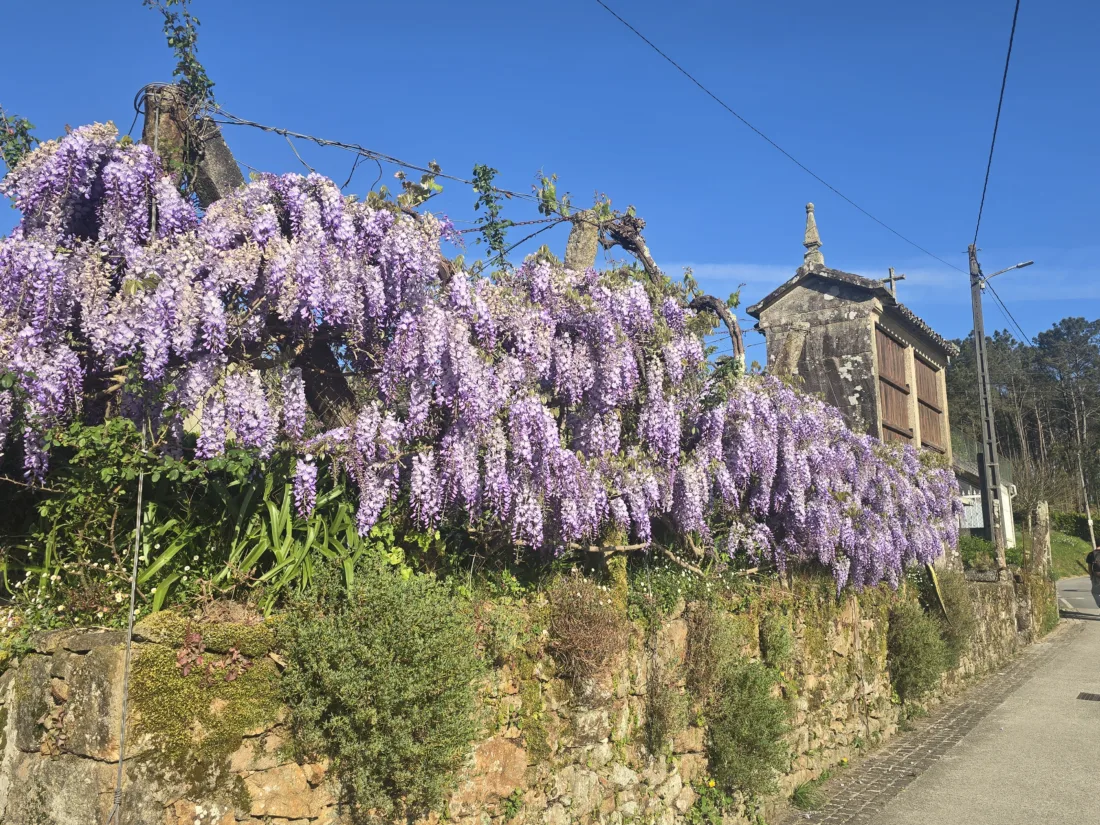
Spring was in full bloom.
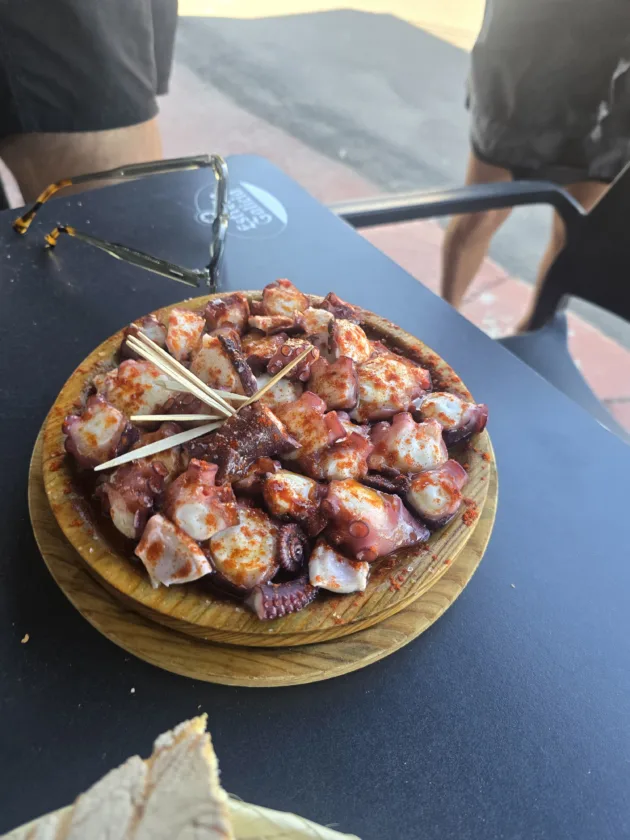
Boiled, seasoned and chopped up octopus in olive oil and seasoning.
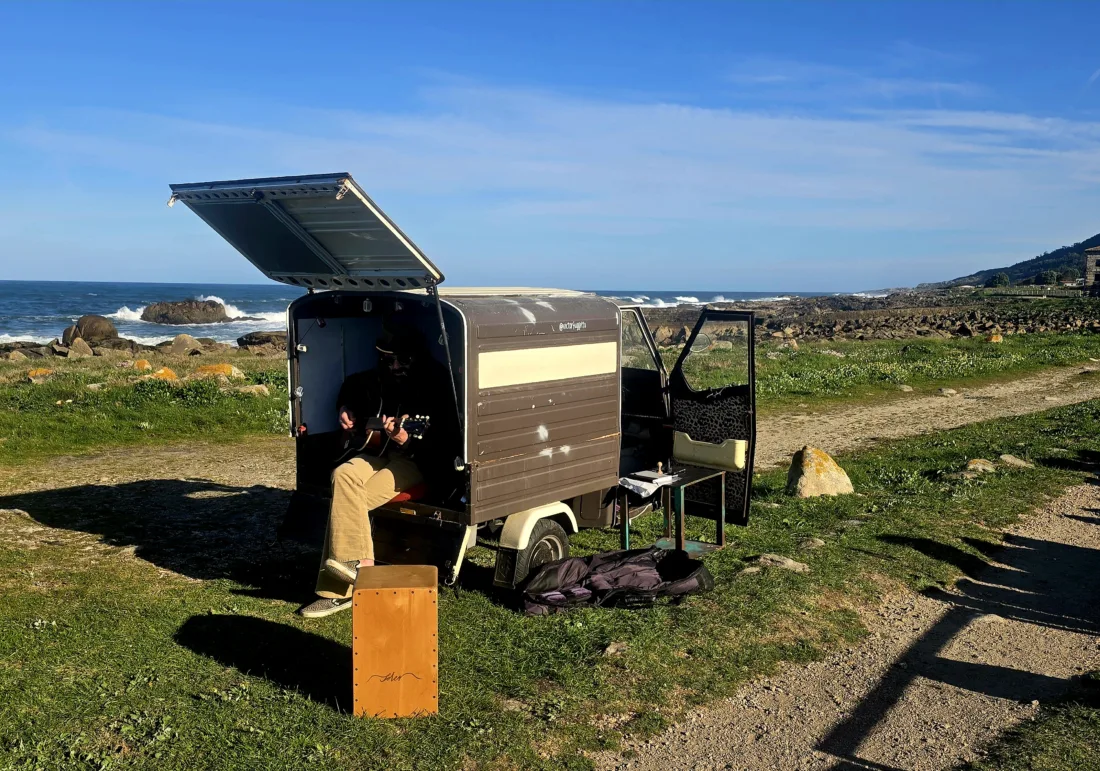
An industrious soul outside A Guarda strumming his guitar and offering his own special stamp.
Spring was in full bloom.
Boiled, seasoned and chopped up octopus in olive oil and seasoning.
An industrious soul outside A Guarda strumming his guitar and offering his own special stamp.
Trending
Editor's note: This is the second of three parts.
On our way north along the Portuguese Camino we crossed into Spain after crossing the river Minho in a small open boat at the town of Caminha, Portugal. The wind had whipped up a pretty good chop on the water, and although it was a rather short ride, it was a wet one.
Once in Spain there was less cobblestone, and more pavement.
We climbed through a hill town, traversed an aromatic eucalyptus forest and descended into the town of A Guarda. Later that evening a bit of panic set in when my phone wouldn't charge due to moisture in the charging port. With some probing and the use of the hotel hair dryer I got it working. Lesson learned was not to rely on a plugin charger and to bring a small contact charger
Along The Way in Portugal and Spain there are cafes and it was customary to stop after walking two or three hours to sip coffee and enjoy a pastry. Typically, these cafes were in the towns, but occasionally people would setup small refreshment tables outside their homes and even in some remote areas. All of these, whether formal or informal, would be selling some type of Camino "merch" such as the iconic oyster shell, patches, pins and other things with the camino oyster shell image. They even had their own stamp for the Camino Passport. In the early afternoon I needed a Coke or Pepsi for sugary energy.
Back home I never drink sugary drinks, but these are what my body demanded on this trip in early afternoon. Although it was safe to drink tap water, all water is served by the bottle and that only comes to the table if you ask for it. Consequently, it appears as if everyone is sitting drinking espresso, Estrella beer or sipping white wine. I adapted to this routine quite easily. The regional wine is a dry white made from Albarino grapes. I did not see anyone drinking red wine.
The day’s journey along The Way in Portugal and Spain ended in the heart of old stone towns. Once arriving at the small hotel I would collapse on the bed, eventually shower up and then set out to rehydrate. This was usually two tall Estrella beers. Many on the Camino chose to stay in Albergue's or hostels each night. These are equipped with bunk beds and snoring strangers. I like the idea of knowing exactly where I'm going to securely sleep each night so I prebooked hotels through a travel service.
Everything closes at 3 p.m. for siesta time and doesn't open until at least 6. Dinner in the Portuguese and Spanish cultures begins at 8 p.m., it was difficult to adapt to eating at this time. Many do not eat until 9. I was told that the bread in Europe was a lot healthier than in the US, and you could eat as much as you wanted and lose weight. So I ate plenty of bread at all meals. It looks as if the scale says I gained 5 pounds when I returned home, and that after walking the 180 miles!
Seafood, particularly octopus, pan fried fish, prawns and mussels were my primary dinner. A common breakfast food is bread with thinly sliced ham and sliced cheese. The food was excellent, and lacked the processing that poisons us here at home.
The springtime bloom in Portugal and Spain was beautiful, cala lilies and wisteria, fields of wildflowers were abundant. Minty eucalyptus filled the air. Of course, the architecture is different and all buildings are made of stone. Streets are very narrow and cobblestone in the older areas.