
Healing with Horses: Pathways for health
Natural approaches that support the body\'s ability to develop or heal
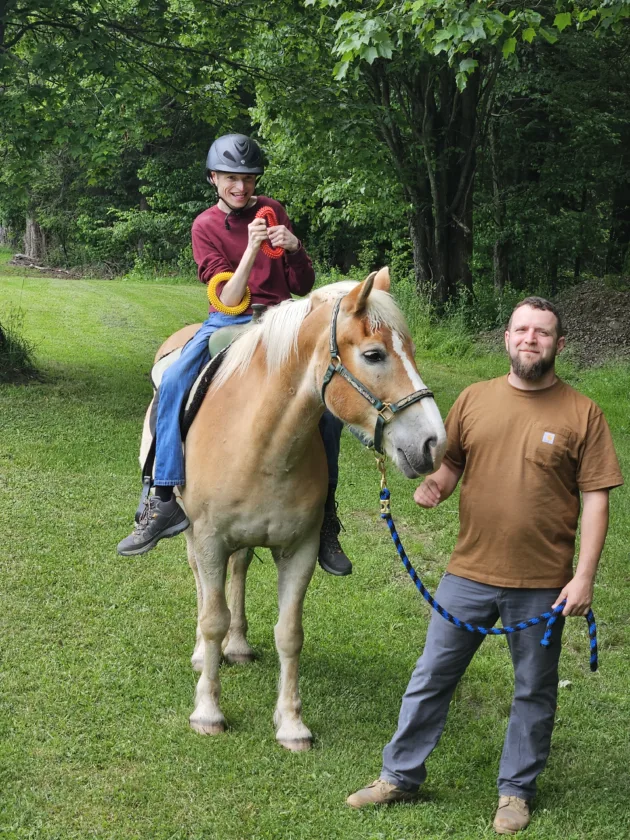
Rider Dane Corbin is pictured with instructor Tyler Muka and horse Magic.
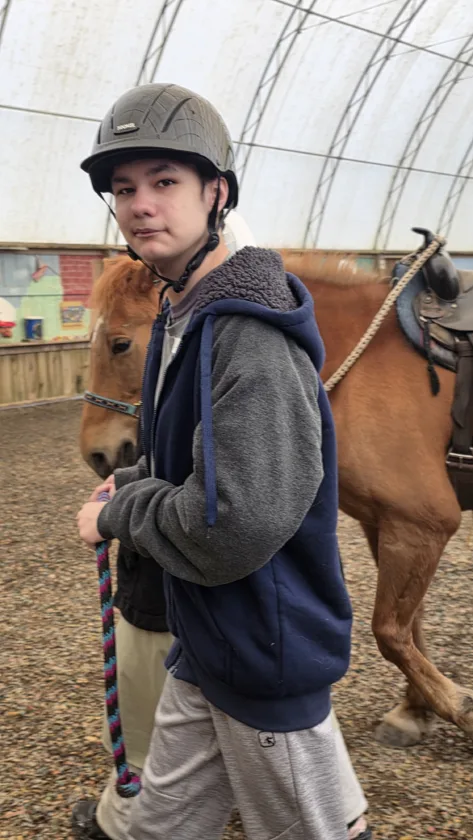
Lucas Wesley of Brocton is pictured with horse Dezi.
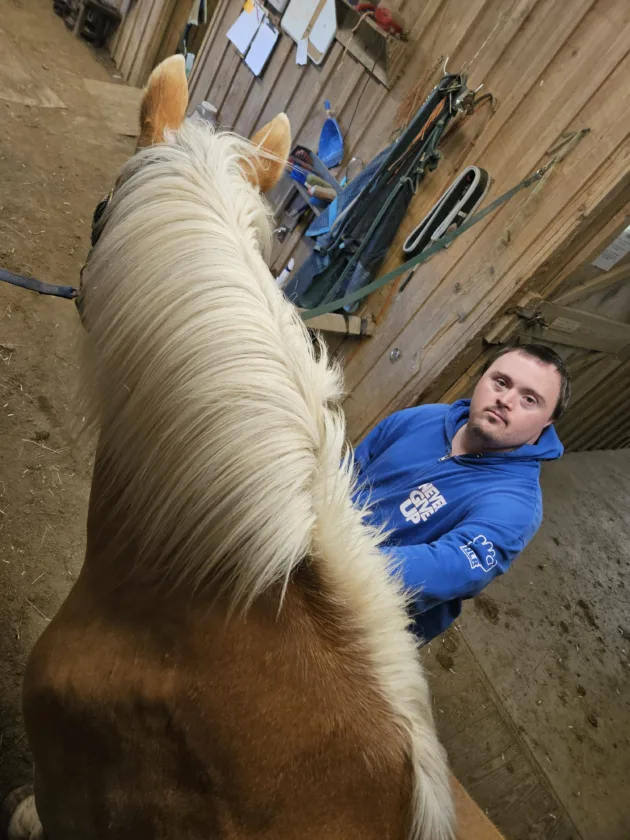
Peter Guy of Dunkirk is pictured getting his horse, Magic, ready for their ride.
Rider Dane Corbin is pictured with instructor Tyler Muka and horse Magic.
Lucas Wesley of Brocton is pictured with horse Dezi.
Peter Guy of Dunkirk is pictured getting his horse, Magic, ready for their ride.
Trending
At Centaur Stride, we have witnessed remarkable changes in the people we serve, and now research is delving deeper to explain why.
Today, the pendulum is swinging back toward natural approaches that support the body’s ability to develop or heal. Whether driven by rising healthcare costs or disappointing outcomes, many people are seeking alternatives that address the whole person.
As scientists continue to study the brain, they are documenting evidence that wellness and the ability to heal depend largely on the strength of our neural pathways, the communication between brain cells and what supports this network or diminishes it. The stronger and more automatic these connections become, the more efficient the brain and body work together.
Early in my career as a physical therapist, this concept was known more simply as sensory integration: the process by which the brain organizes information received through the senses. These pathways develop through movement, repetition, play, and life experiences, especially new and different encounters and in natural environments.
Developmental milestones help measure this progress, and children who fall behind are often referred to physical, occupational, or speech therapy. Physical therapists often use specialized handling techniques, positioning, and guided movement to encourage normal movement patterns while helping primitive reflexes fade as they should.
These developmental challenges are easier to recognize in children with significant physical limitations, but they also affect children who appear physically capable yet lack the integrated brain connections needed for learning, coordination, attention, and communication. Limited movement, play, or sensory experiences can contribute to abnormal development or disease.
It is notable to say that many other countries have gone back to hand writing, reading and learning, without the use of technology, and the return of recess and physical activity throughout the day, as lack of this has impaired normal development. If information does not get to the brain through the senses of movement and experiences, building cell communication and integration, that information does not make it to memory or automatic pathways, and the building blocks for higher learning (or natural healing) is impeded. Do you remember someone's phone number or the directions to somewhere? What else don't we remember? If we can't remember, neural pathways are either not developed, atrophied from disuse, or damaged and can become a roadblock for higher or efficient thought and expression.
Early in my practice, I often used therapy balls because they allowed children to experience multiple forms of sensory input at once. Then I discovered what a horse could do.
The horse multiplied the effectiveness of therapy in ways I never could alone. The horse carried the person's weight, freeing my hands to guide posture and movement. The horse's rhythmic motion naturally provided continuous sensory input, facilitating balance reactions, coordination, core strength, and body awareness. Every step offered changing visual experiences that strengthened eye tracking and visual-motor skills, while the movement itself stimulated the vestibular system, which governs balance and spatial awareness.
Research has proven that the brain cannot work effectively when in a stressed mode (sympathetic fight or flight), and the horse's calming effect opened the channels for the parasympathetic system to suppress the fight or flight stronghold.
People who typically struggled to focus often became engaged and attentive. Those who normally wanted to run away or shelter in place soon forgot about leaving or hiding because they were pleasantly captivated by the movement beneath them. All that movement, new sensory inputs, with motor responses to stay balanced and eventually learn to communicate with the horse to achieve a desired direction or outcome, was building more neural pathways and riding became something they looked forward to. The more repetition, the stronger the pathways, and the more variety, the greater the number of pathways, creating many alternative and eventually faster pathways for thought processes or automatic responses. And the more cell interconnectedness, the better the body's ability to grow, heal, adapt and triumph.
Some improvements were immediately visible. The smiles, longer attention spans, stronger posture, increased speech, and greater confidence, as well as other less obvious benefits -- improved circulation, digestion, hormonal balance, and overall well-being supported "seeing is believing."
Centaur Stride grew entirely through word of mouth. Families shared their experiences with others, and each success motivated and inspired our staff, volunteers, and board members, many of whom had children participating in our programs.
Today, research on neuroplasticity -- the brain’s ability to create new neural pathways -- is helping explain what we observed. Studies suggest that positive experiences, purposeful movement, and staying engaged and aware in the present moment help support learning and healing. This growing understanding is being explored for the developing brain as well as repairing (healing) conditions ranging from chronic fatigue and autoimmune disorders to other chronic illnesses that traditional medicine often struggles to resolve.
Therapeutic horseback riding may one day become a more widely recognized and utilized intervention across the spectrum of holistic mental and physical health. At Centaur Stride, we simply had the privilege of discovering its benefits long before it became a popular topic of research.
To learn more, contact us at info@centaurstride.org, call (716) 326-4318, or visit linktr.ee/centaurstride.