
WCA Home reuse debate flares up again
Trending
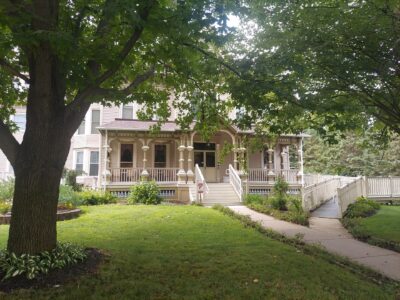
The proposed reuse of Fredonia’s WCA Home for migrant housing dominated the public comments period at this week’s meeting of the village Board of Trustees.
Two neighbors of the Temple Street building complained about the proposal to reuse the former assisted living home. Dennis Rak, who proposed the plan, and his attorney spoke out to defend it.
Mark Twichell was first to speak. He said the plan’s developers was seeking a change in the village zoning law to allow the migrant housing in a residential district.
He said a petition against the change is circulating in the village making these and other points:
• The request was not referred to the Fredonia Zoning Board of Appeals.
• The business entity proposing the plan does not own the property.
• Four months remain in the current variance that allowed the assisted living home.
• “The village code describes a boarding house as disruptive in R-1 districts. That’s right out of the code book. Disruptive.”
• The code calls for preservation of the character of Temple Street. A boarding house violates the family residential qualities of Temple Street and any other R-1 district.
• There is already a large housing entity, One Temple Square, nearby.
Next to speak was Matt Fitzgerald representing Double A Vineyards, Rak’s business entity.
“The only use permitted in the code right now … would be single family residential use. I don’t think anyone thinks it will ever be used for that purpose,” he said. “The only way you could do that is demo the building, build something much smaller in the property, which I don’t think anyone in this village would want to see.”
He said the migrant workers are in the U.S. temporarily on visas, “vetted and recruited through standards set at state and federal levels,” and by law can only get jobs when not enough U.S. citizens are willing or able to do them.
Fitzgerald added that the business entity would be doing the housing with the full agreement of the property owner.
“This is a property that was already used for a functionally equivalent purpose, in terms of the units that were already there,” he said.
He asserted that without either a variance or a zoning law change, the plan wouldn’t work and the property would go unused.
Complete story in Wednesday’s edition.