Katrina Johnston reunites with Dunkirk Summer Camp
-
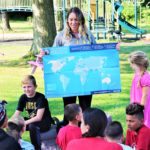
- OBSERVER Photo by Jordan W. Patterson: Katrina Johnston showing where Ethiopia is on a map.
-
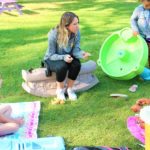
- OBSERVER Photo by Jordan W. Patterson: Katrina Johnston talking to Dunkirk Camp children Wednesday morning.
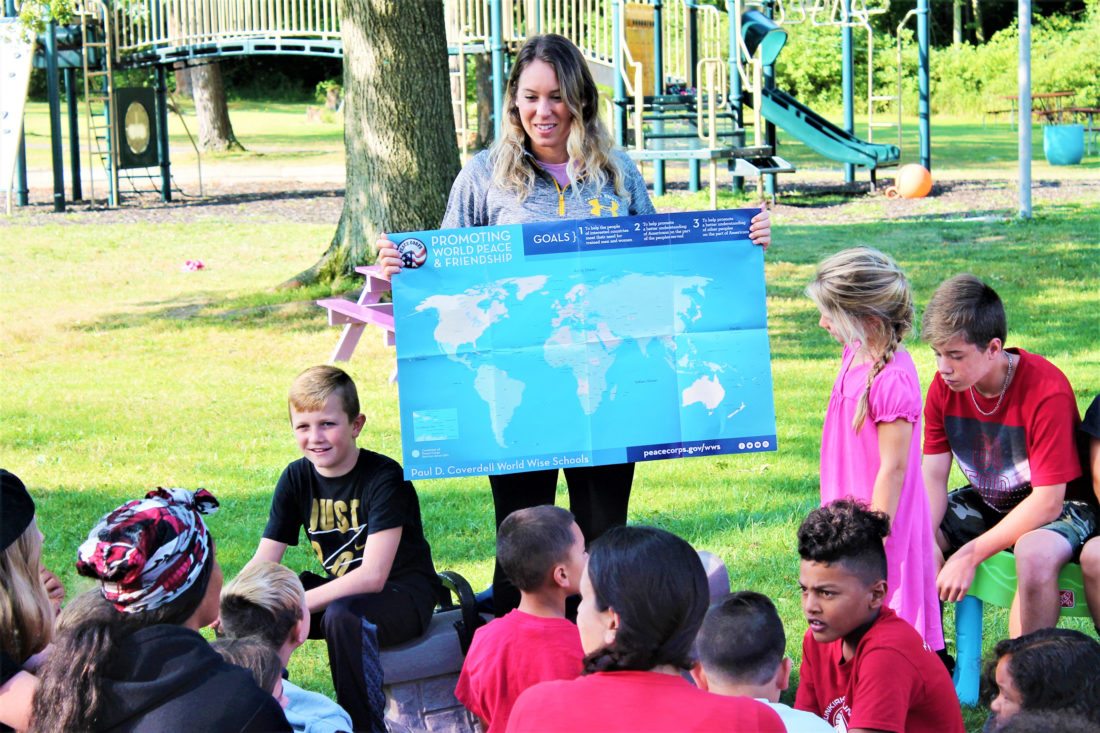
OBSERVER Photo by Jordan W. Patterson: Katrina Johnston showing where Ethiopia is on a map.
SHERIDAN — Hugs, smiles and even tears were on display recently at the Dunkirk Camp and Conference Center.
Former Camp Counselor Katrina Johnston had returned to see the children and educate the younger kids on her experience abroad.
“She’s awesome,” one child said of Johnston.
Johnston, who works for the Peace Corps, returned from Ethiopia in July of 2016 and has been living in Washington, D.C. Johnston spent three years in Ethiopia as an English Teacher Trainer. Typically, individuals in similar positions as Johnston would spend 27 months abroad but Johnston ended up staying for the long haul of three years.
While a more in-depth presentation was given later in the afternoon, Johnston spoke to the children at the Dunkirk Camp in the morning as they gathered in a group in front of her.
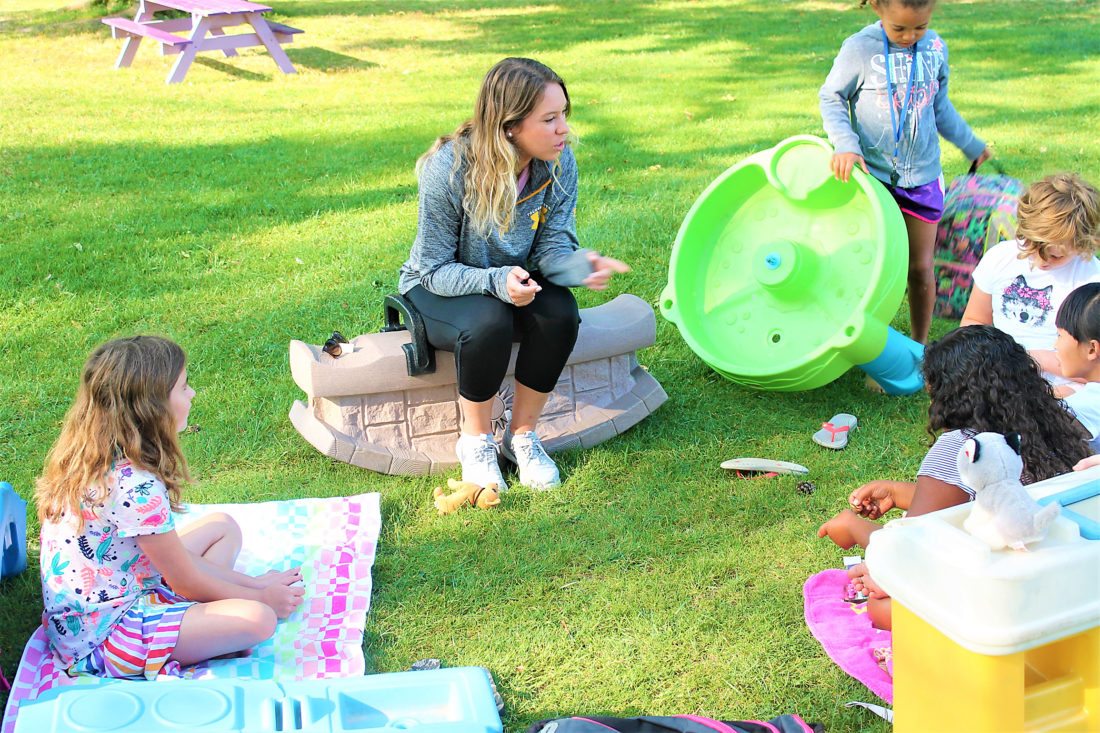
OBSERVER Photo by Jordan W. Patterson: Katrina Johnston talking to Dunkirk Camp children Wednesday morning.
She asked basic questions to the children and inquired if any of them knew where Ethiopia was. With a little help, they were able to locate the country on a world map. Another Camp Counselor Tanneh Seneh was present, who is originally from Liberia. Johnston made a point to show how far away Ethiopia and Liberia are from one another to encapsulate how vast the continent of Africa actually is.
“There’s so many diverse countries inside of Africa with different languages, different cultures (and) different looks,” Johnston began.
Johnston spoke about the unique aspects of Ethiopian culture and also fielded questions that the children had. She even attempted to teach select words from the dominant language in Ethiopia called Amharic.
Johnston’s biggest shock and takeaway from experiencing Ethiopian culture was her realization to start “appreciating the little things.”
She admitted that while Ethiopia is one of the poorest countries, people of less economic status were capable of being rich in different aspects, such as family values and aspirations.
“I want people to see a different side… from what they see on the news,” Johnston said of the perception that might be held in the United States. “I want them to see a different side of Ethiopia.”
Johnston’s main focus was to contrast the stereotypical idea of Ethiopia of starving, gaunt, poor children that one might see on the news or on the internet with pictures of healthy kids learning and aspiring to receive a greater education.
“That’s why I feel like it’s important to share other cultures,” Johnston said. “Also, because it opens your mind. It makes you more understanding of what’s going on in the world and kind of makes you more empathetic, almost.”
Johnston found it most rewarding when she worked with adolescent girls in Ethiopia. For her, she noticed that they were the quietest in the classroom but when in a room with similar aged girls, they were energetic and extremely talkative. Johnston attributes this to big movements of empowering women in Ethiopia, occasionally, having a tendency to unintentionally leave the adolescent girls behind, so to speak. Johnston wanted to make sure that the children at the Dunkirk Camp were aware of the differences between going to school in Chautauqua County and going to school in Ethiopia. She thought it was important that the children knew how lucky and privileged they are that they have such a high level of education being offered to them.
“I think it’s important because I think it inspires the children to consider options for when they became adults,” Camp Counselor Kathy Rankin explained. “And, also, to start learning to accept other cultures and other people and diversities.”
Rankin emphasized the importance of Johnston speaking to the young children at an early point in their lives to expose them to different cultures. The greatest hope for Rankin was that Johnston would help “break down the stereotypes” of other cultures.
Johnston is a SUNY Fredonia alumnus and graduate of Fredonia High School and is now a Human Resources assistant at the headquarters for the Peace Corps in Washington, D.C. She has aspirations to return to places like Ethiopia in the future to help more than she already has. Johnston has a blog online that detailed her experience while living in Ethiopia at KatrinaInEthiopia.wordpress.com.