Fredonia Shakespeare Club hears paper: Elie Metchnikoff
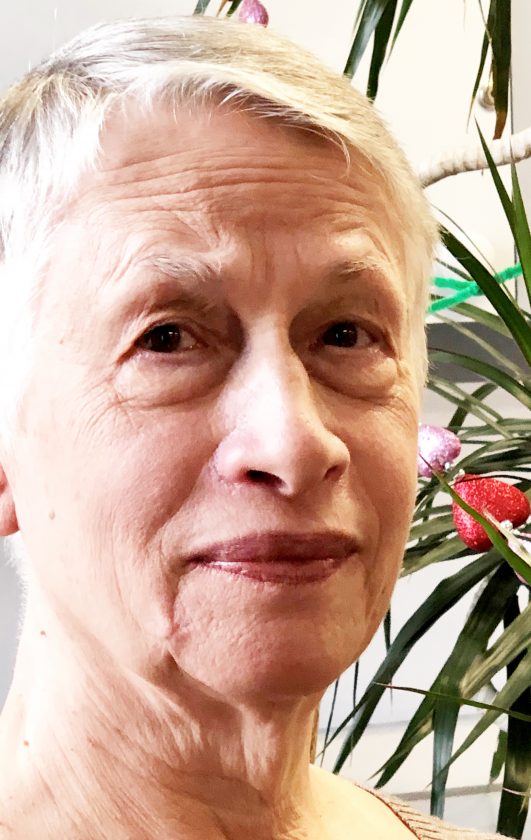
Submitted Photo Linda Dunn
The fifteenth meeting of the Fredonia Shakespeare Club was held on Feb. 13 hosted by Priscilla Bernatz. President Lucille Richardson welcomed 13 members.
Bernatz read the minutes from the Feb. 6 meeting. The minutes were approved as written.
The Club voted on the 2020-2021 club year’s area of study. The area of study will be Humor and Humorists.
The Club’s area of study this year is Nobel Prize Winners. Linda Dunn read her paper “Nobel Prize in Physiology or Medicine 1908 ” which is summarized as follows:
Elie Metchnikoff was a world famous biologist who won the Nobel Prize in Physiology or Medicine in 1908 for his work in immunology and the role of phagocytes (white blood cells) and phagocytosis. He was the first modern scientist to observe that, “the process of phagocytosis served as a natural immune system,” and that “human beings have inner curative powers” later to be called the immune system.
Elie Metchnikoff (nee Ilya Ilich Metchnikoff) was born May 16, 1845 in a village near Karkhov, then part of the Russian Empire, today located in Ukraine. He was the youngest of five children. One of his brothers, Ivan Ilyich, who became a judge, served as the model for Tolstoy’s protagonist in his novel, “The Death of Ivan Ilyich.” Elie’s mother encouraged him to pursue a scientific career in the life sciences. A tutor hired by the family motivated him to study natural history, especially botany and geology. By age six he was giving lectures to his siblings and other children on these subjects. By age eleven he had been introduced to microscopes at the school he was attending. He studied cells and took private lessons in Histology– the study of the microscopic structure of tissues. During this time, he read Henry Thomas Buckle’s “History of Civilization in England” and adopted its main tenet as a lifelong goal; “the progress of civilization depends on the advancement of science.”
In 1888 Elie Metchnikoff and his wife Olga moved to Paris, France where he began work, first as a volunteer, and then as Head of the Laboratory of the renowned Pasteur Institute. During this time he became obsessed with the aging process. His experiments with phagocytes led him to observe that; “phagocytes not only defended on organism but also performed maintenance by devouring damaged tissue.”
In 1901 Metchnikoff was awarded the Wilde Medal of the Manchester Literary and Philosophical Society for his work on why we age too soon. He gave a lecture at the Society on “The Flora of the Human Body.” The idea that waste products in the intestines poison the human body went back at least to the ancient Egyptians. But in the 19th century this idea had gained new validity with the establishment of the link between germs and disease. In his first philosophical book, “Studies In Optimistic Philosophy,” (1903) Elie wrote: “Our strong will to live runs counter to the infirmities of old age and the shortness of life…. If people attained a natural span of life, uninterrupted by disease, malnutrition or accidents he estimated they would live over one hundred years and would not fear death.” He coined the term “gerontology.” He focused his research on practical guidelines for achieving a normal life cycle and he practiced what he preached, abiding by strict hygiene to avoid the entry of harmful germs into his gut. Research in his lab on milk-souring germs coincided with his introduction to Bulgarian yogurt. The modern yogurt industry owes its beginning to his lecture on “Old Age” given on June 8, 1904 to the Societe’ of Agriculturists in Paris.
Despite the optimistic philosophy he developed later in his life he said he was “horrified and saddened, by the outbreak of the first World War in 1914, and that it shook his profound belief in the power of science to remedy society’s ills, and to contribute to the moral progress of civilization.”
Metchnikoff moved from his country house outside Paris to the Pasteur Institute in 1916. He died there of cardiac failure on July 15, 1916.
Leanna McMahon assisted at the tea table.
The next meeting of the Club will be hosted by Michele Starwalt when she will read her paper Nobel Peace Prize 1979.
Local/Region
New RTPI CEO settling into role
City of Jamestown files an official response to firefighters’ lawsuit
The city of Jamestown has filed an official response to the lawsuit by the Jamestown Professional Firefighters ...

Dwyer Veterans Peer Support Group Gala is April 18
Solar company submits wetlands permit application
York Run Solar, LLC recently filed a joint application with the U.S. Army Corps of Engineers for a wetlands permit ...
Ellicott police respond to homeless, trespass complaints
FALCONER - Although progress has been made, safety and compliance problems concerning the homeless population are ...