
Panama officials encourage merger meeting attendance
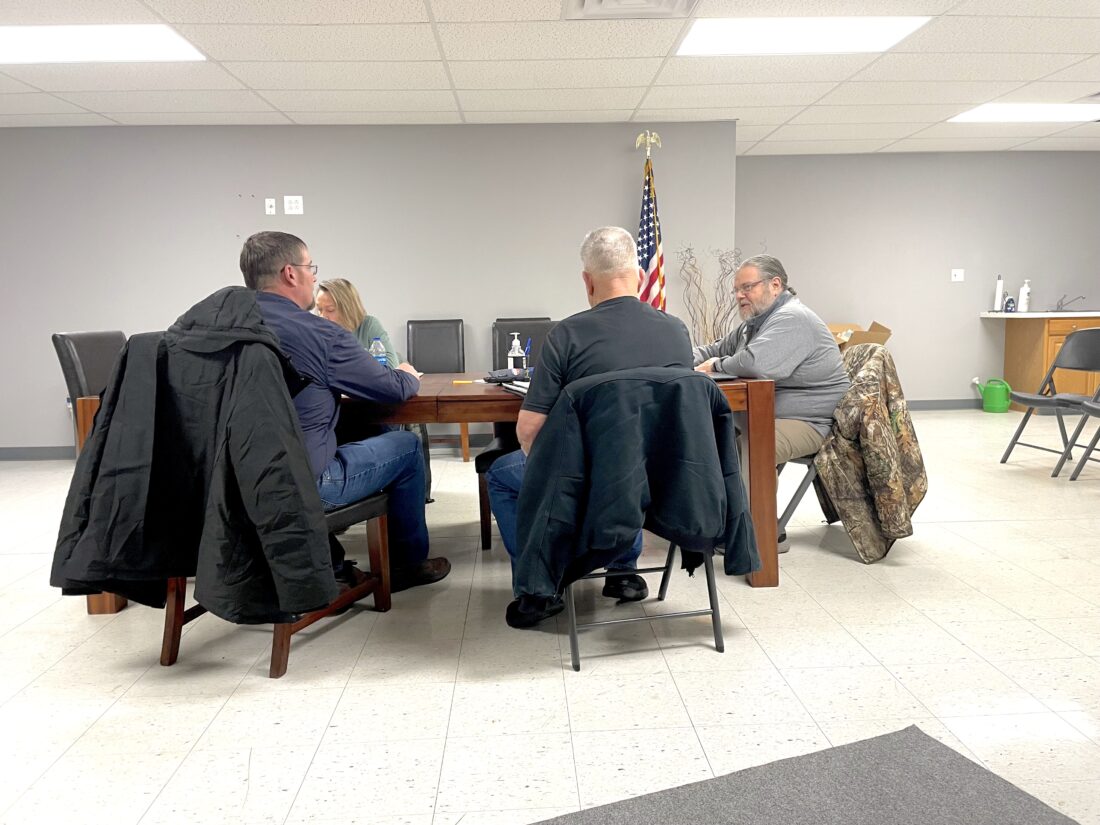
P-J photo by Sara Holthouse The village of Panama board discussed the beginning merger feasibility study between Clymer, Sherman and Panama schools and getting village residents to attend the study meetings during their January meeting.
PANAMA — The kick-off of the merger feasibility study between Clymer, Sherman and Panama Central schools is officially underway with the kick-off meeting set for this afternoon, and members of the village of Panama board are encouraging residents to attend both this and any future meetings.
Mayor William Schneider brought up the schools’ merger study at the January meeting of the village board, saying that he wanted to make sure that everyone on the board is aware of the merger study process taking place between the three local school districts, and Thursday’s meeting. The meeting will be a public meeting to introduce the consultant company that will be doing the merger study, White and Partners, and will be at 5 p.m. at the BOCES Hewes Center, 2615 North Maple Avenue in Ashville. The meeting will also be filmed with the video to be put on each district’s website following the meeting.
“They’re going to be introducing to the community at large the process by which the merger study is going to take place,” Schneider said.
Schneider noted that with the help of BOCES the three schools have picked White and Partners to do the study and are now in the process of putting together the study and focus groups from within the communities. Schneider suggested to the village board for members to make an effort to go to at least one of the merger study meetings in the future, especially if they have any concerns. Additionally, he said from the village board perspective both he and new village trustee Kyle Rhoades have unique perspectives for something like this, having worked with the schools in the past and with the past sports mergers at the schools as well.
“I know one thing that has already been said to me in the community is that residents are very concerned about what the status of the school building is going to be, because there’s nothing worse than our small village and then we have nothing coming out of that school facility,” Schneider said.
Schneider added that that piece of the merger study is a long way away, and there are multiple options for the school buildings, including using all three. He said when constituents come to board members with concerns like this, that board members should encourage them to attend these meetings.
One of the hard parts he noted from the last time the merger study was done between Clymer and Panama school districts was getting people to attend these meetings. A reason for that though, Schneider said, was because the meetings were held at bad times of the day, such as 3 p.m., when no one from the community could come. Last time, Schneider said he emphasized to the groups that the meetings had to be held at different times and that they should be going out to the different community groups such as the fire department as well for input.
“There were just some different things like that, so we need to encourage residents to go to the meetings when they can,” Schneider said. “I encourage residents to attend one or more of these meetings when they ask for input.”
Schneider said getting input is one of the worst parts of these types of processes, as if no input is given the people in charge do not know what the residents think or want, and then there are conflicts. Rhoades said a few months ago when he was still on the Panama Central School Board of Education a big topic of conversation when it came to the merger feasibility study was an emphasis on communication, and the idea that there was not enough last time.
“I feel like when I was on the board the whole board cared and still remembered the prior study and didn’t want that to happen again,” Rhoades said. “I think there’s going to be a lot more care put into it.”
Schneider said he knows most of the board members personally now, and that they do not want it to go the way it did last time. He added that since that time the sports teams have merged and been successful and it has shown that it works, including already having a name and a mascot. Rhoades agreed, saying he felt that because of the successful sports mergers that the communities may be a little more open to it. Conversation briefly returned to what might happen to the school buildings, and Schneider reemphasized that that is farther down the line and that there are many options and factors to consider, and a wise decision will be made at that point. Many of the factors, he said, can only be known by the study group if residents attend the meetings and present them. This includes some unique factors such as agriculture education, which Schneider said could be presented to Panama students if they utilize the school buildings in a different manner. He noted that this is a whole new study from the last time and that everything is starting from scratch. Something else for the village to figure out much farther down the line is how this will affect the village tax base.
“Again, the bottom line is we have to have community participation and everybody’s voice that wants to be heard needs to be presented,” Schneider said.