
Thule Lodge celebration notes completion of 118th year
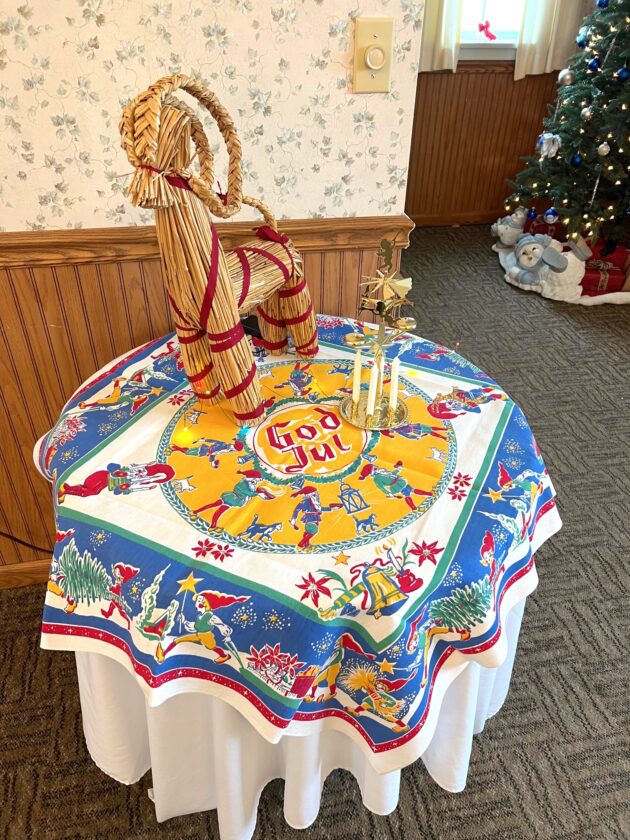
Shown are one of the Swedish decorations at the recent Christmas dinner. The message on the table cloth means Merry Christmas in the Swedish language.
FALCONER — The Thule Lodge is the Swedish organization formed 118 years ago in the Jamestown-Falconer area to help the Swedish immigrants when they settled in the U.S.
Thule Lodge served to help the Swedish immigrants with housing, employment and schooling. Many of the Swedish people found employment in the many furniture factories which once existed in the Jamestown and Falconer areas.
Today, the Thule Lodge exists to preserve Swedish heritage through events and activities. Thule Lodge always welcomes new members.
Recently, the annual Swedish Christmas dinner was held at the Falcon’s Nest in Falconer. The meal which included Swedish foods such as Korv, Swedish meatballs, ham, rice pudding, cucumber salad, pickled herring, different kinds of breads, and a variety of cookies was catered by the 3C’s Catering. This meal is known in Swedish as the Dopp I Gryta meal which means the dipping of the bread. A fine meal with ample amounts of food was enjoyed by all.
Lodge chairman Susan Fredrickson Washington Sipos welcomed all to the dinner, and set up several displays of Swedish decorations.
Longtime secretary and lodge historian John Sipos gave the blessing prior to the meal. Lodge treasurer Loretta Smith gave the financial report of the lodge. Many thanks to Smith for her efforts with the lodge finances. The dinner was arranged by events chairman Lynne Meyers.
Following the meal, a business meeting was held. Secretary Sipos led all in the pledge to the American Flag, and said that even though Columbus landed in this part of the world in 1492, Leif Erickson landed in Greenland in about the year 1022.
Cultural leader Lynne Meyers gave the report of the Swedish events leading to Christmas. Nominations for officers for 2026 were held, and voting will take place at the next meeting in March.
Thule Lodge will not meet during the winter months of January and February. A calendar of events for the next year will be established by then.
Local/Region

Anderson-Lee Library lists events for month
Thule Lodge celebration notes completion of 118th year
Jackson Center to host free speech talk Thursday
The Robert H. Jackson Center will be kicking off the theme for the 2026 year with a special event that will see the ...
Audubon birdseed sale deadline is Jan. 18
Panama officials encourage merger meeting attendance
Jackson Center to host free speech talk Thursday
The Northern Chautauqua County Juneteenth Celebration Committee is planning the annual Dr. Martin Luther King, Jr. ...