
Five-year lake management recommendations heard
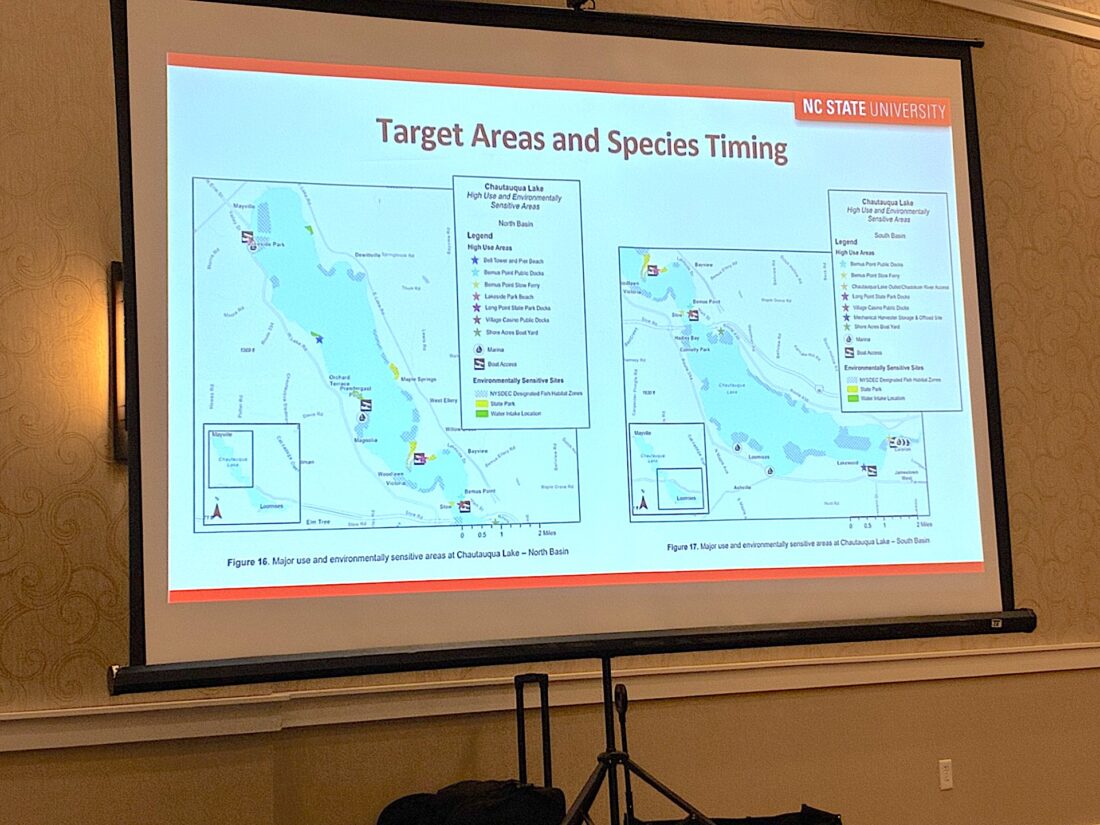
P-J photos by Owen Reed A map from Richardson showing High Use and Environmentally Sensitive areas.
-
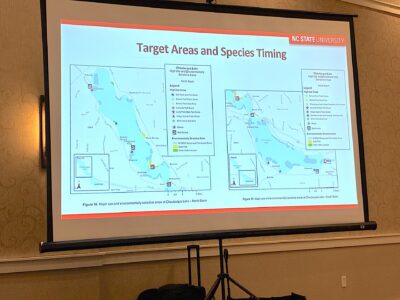
- P-J photos by Owen Reed A map from Richardson showing High Use and Environmentally Sensitive areas.
-
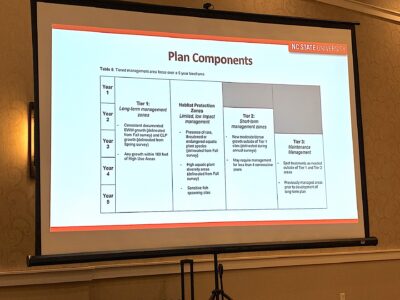
- A presentation slide from Richardson that breaks down the five-year timeline.
-
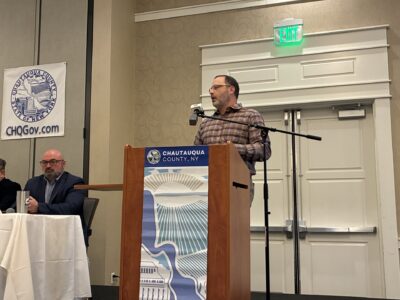
- Dr. Rob Richardson from North Carolina State University.
Presentations included an analysis of the potential causes of the particularly poor conditions last summer and more efficient treatments for the lake going forward.
Much of the management plan was based on research from North Carolina State University which was presented by Dr. Rob Richardson. Richardson detailed research about the five year management plan by noting that water quality, invasive species control, ecosystem restoration are three key points of operational management that the plan must address. A large fact that can contribute to each of these three is close management that is linked to plant biology, according to Richardson. Richardson noted that each weed species has different biological characteristics regarding growth, reproduction, etc. This means that management techniques must target reproductive cycles, use proper timing, and not focus as much on short-term tools. Curlyleaf pondweed and Eurasian watermilfoil are two examples of invasive species in the lake that would be better fought through these long-term management ideas, according to Richardson.
“We did the research to know in North Carolina that hydrilla, those turions can persist for somewhere around seven years,” Richardson said. “So if you want a management plan for hydrilla you have to manage it for seven or more years to get rid of it. I don’t know what the persistence of the curly leaf turions are. So, you know, that is one question that I haven’t seen really addressed in research. So, if you’re trying to manage curly leaf pondweed, how long and how intensively do you have to manage it up front to reduce those turions so that it’s less of a problem long term,” said Richardson. “But all these are practical questions, you know, that can help refine specific management. So, the management is more effective.”
As a result of this, Richardson broke down some recommendations for the management plan. These included adaptive planning, annual reviews of effectiveness and species abundance/distribution, using research to make recommendations to address unknown factors that impact invasive plant growth and management, and changing techniques and priorities over time if needed. Additionally, Richardson recommended that specific location data is reviewed more closely. This would entail reevaluating previous activities to establish a feedback loop on effectiveness and outreach to engage public and stakeholders in project goals. Richardson also stated that coordinators should attempt to identify ways to meet environmental, social, and economic goals while reducing tension among these stakeholders.
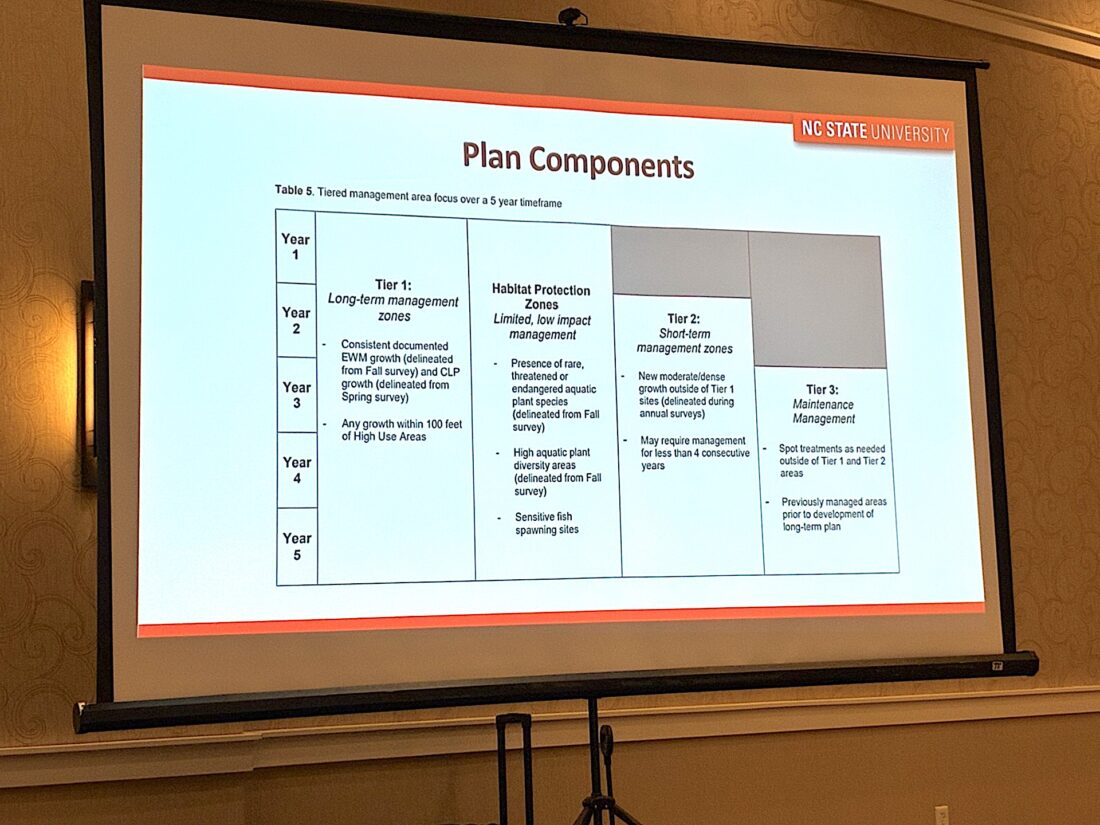
A presentation slide from Richardson that breaks down the five-year timeline.
Richardson’s presentation showed that all five years of the plan will see the use of long-term management zones. These zones will be able to produce consistent data on the levels of Eurasian watermilfoil and curly leaf pondweed, while also monitoring any growth within 100 feet of high-use areas of the lake. Throughout this time Habitat Protection Zones will also be created, which will see lessened amounts on management. These sites will help to protect rare or threatened aquatic plant species, diverse aquatic plant areas, and sensitive fish spawning sites. One year into the plan is when Short-Term Management Zones would begin to be created. These would attempt to address new or slight areas of growth in the lake, or areas where less than four years of care would be required. During year three maintenance management will begin. This will start spot treatments throughout the lake outside of the previously mentioned treatment zones. This will additionally be able to bring on more areas of growth that may not have even formed previously.
“Currently, we’re going to be working on a management plan update. So of course, you know, there’s the annual survey results that factor in,” said Richardson. “Also expansion on management strategy recommendations, refining guidelines on how some of those management practices can be implemented or should not be implemented and incorporation of review comments that we received from the original document that was drafted.”
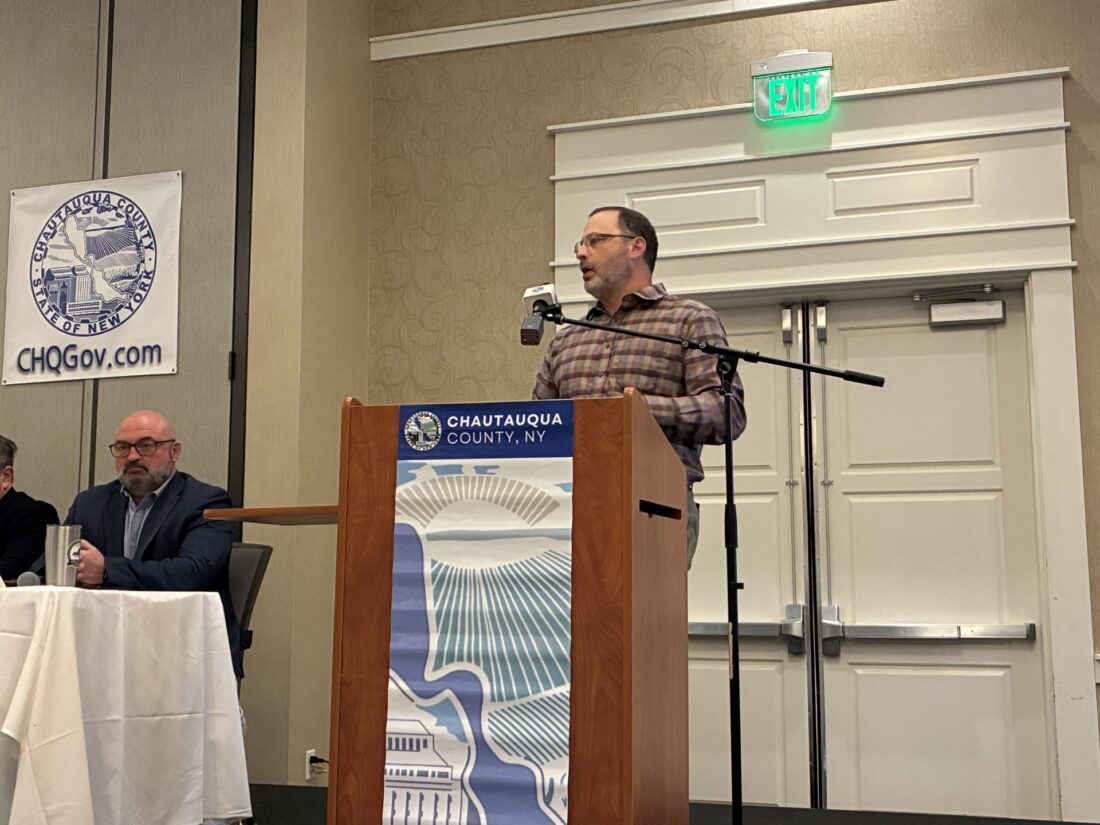
Dr. Rob Richardson from North Carolina State University.
Local/Region
Trustees hear update on missing Lakewood man
SUNY discussion to feature water resources
Five-year lake management recommendations heard
CHQ Transit Hub receives approval
Grant to enhance Point Gratiot Trail with 2 play spaces
A new outdoor experience, Discovery Way at the Point, is coming soon to Dunkirk’s Point Gratiot ...
Dunkirk man admits theft of COVID funds
A Dunkirk man has pleaded guilty to the theft of COVID funds. U.S. Attorney Michael DiGiacomo announced Friday that ...