
State celebrates opening of FeedMore facility
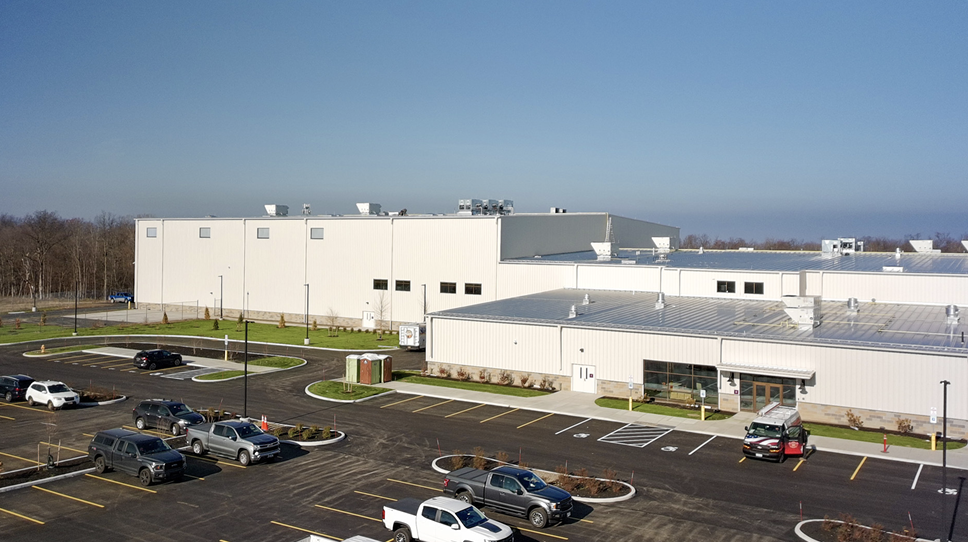
Pictured is the new FeedMore facility on Camp Road in Hamburg.
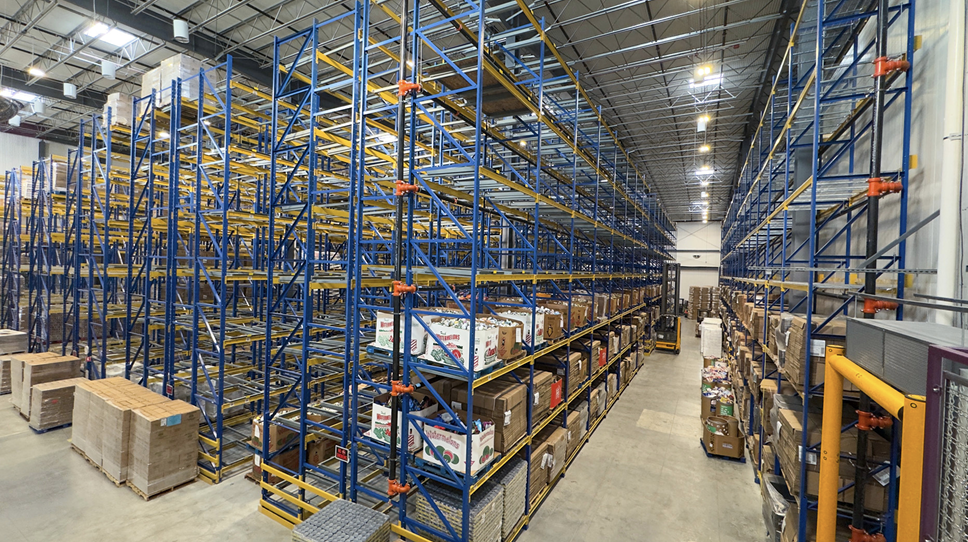
Pictured is a portion of the interior of the new facility.
Pictured is the new FeedMore facility on Camp Road in Hamburg.
Pictured is a portion of the interior of the new facility.
Trending
HAMBURG -- State Gov. Kathy Hochul announced the grand opening of the warehouse and start of warehouse operations at FeedMore WNY's new $115 million regional headquarters and distribution center at 4832 Camp Road.
The 200,000-square-foot facility addresses years of severe space constraints for the nonprofit by consolidating operations into a single, specialized campus designed to optimize hunger-relief efforts, boost regional food distribution and expand workforce development programs for tens of thousands of Western New Yorkers. The project is supported by more than $53 million in funding from New York State. "No New Yorker should ever have to worry about where their next meal is coming from, and FeedMore's new facility will make a huge difference for families and other members of our community here in Western New York," Hochul said. "As we head into the holidays, I'm proud to deliver this important investment for my home region and get more meals on more tables."
FeedMore WNY was created in 2020 through the merger of the Food Bank of Western New York and Meals on Wheels for Western New York. More than twice the size of both legacy facilities combined, the unified Hamburg campus replaces sites which the organization has outgrown on James E. Casey Drive and Holt Street in Buffalo, which will be sold.
The state-of-the-art facility features a 50-foot-tall warehouse space optimized vertically to leave room for future expansion. The warehouse utilizes "Very Narrow Aisle" forklifts to navigate a very narrow and high racking system. Additionally, the new commercial commissary space will be able to produce up to 20,000 meals a day, doubling its current output potential.
To expand FeedMore WNY's capacity to accept large-scale donations, the facility includes rooms specifically for re-pack of bulk goods and a specialized "protein suite" for large protein donations, the first of its kind at a food bank in the Northeast. Historically, FeedMore WNY estimates it has been forced to turn away roughly $13.5 million worth of food donations over the last five years due to inadequate infrastructure, a critical limitation solved by the new building.
This project represents a monumental community collaboration with significant investment from New York State as well as support from federal and local governments and many Western New York community members. Empire State Development administered $48 million in state funds to support the expansion project, complemented by $5 million from the New York Power Authority (NYPA) Power Proceeds program to support the construction of the regional facility. FeedMore also received a $400,000 grant through the New York Providing Local Access to Essential Sustenance (NY PLATES) program, administered by DASNY in collaboration with the New York State Department of Health, for the purchase of a specialized forklift and refrigerated truck to increase storage and food distribution capacity at its Hamburg operations.
Approximately 160 paid employees will work out of the new Hamburg facility initially, with employment numbers expected to grow in the coming years. The campus also doubles volunteer capacity, an essential improvement as the organization is largely fueled by its volunteer's dedication.
FeedMore WNY President and CEO Tara A. Ellis said, "We are immensely grateful for the vision and leadership of Governor Kathy Hochul, Empire State Development and our state partners. For years, our critical mission was restricted by the physical boundaries of our old facilities. Today, we step into a larger, unified campus that fully empowers us to alleviate hunger, expand our RISE workforce development program and tackle the root causes of food insecurity throughout Erie, Niagara, Cattaraugus and Chautauqua counties."
The highly coordinated design and construction process was led by construction manager Uniland Development Company, alongside Trautman Associates as the architect and Buffalo Construction Consultants as the owner's representatives. To accommodate dozens of specialized nonprofit functions, the building features a community donation acceptance area, dedicated space for its RISE job training program, specialized sanitation and anti-bacterial equipment in and around the commissary for enhanced food safety, a completely separate gluten-free kitchen to prevent cross-contamination, small quiet rooms for post-traumatic incident management and six 500-kilowatt backup generators to ensure uninterrupted operations.