
Another ‘time bomb’ for Vietnam vets
Publisher's Notebook
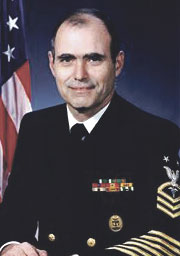
John “Jack” Skahill Jr., in this 1997 photo, survived the Vietnam War, but did not survive the cancer that came 41 years later.
John “Jack” Skahill always ran a tight ship when he led Brocton Central School as its superintendent. Some of that discipline was from his years of service in the U.S.
Navy, but a lot more of his attributes came from his caring and compassion for the children he served as well as the community.
During a tumultuous time in the district, Skahill was Brocton’s face in what would be a trying — and unpopular — choice of attempting to merge the school with Fredonia from 2008 to December 2009. Through more than 18 months of studies, board gatherings and community meetings, Skahill was always fair, courteous and honest to those who asked questions and voiced their disapproval.
In the end, Fredonia passed the first vote to move ahead with the merger, while Brocton said no. It was defeated. In the next year, Skahill retired from the district, but found Chautauqua County to be his home.
A Long Island native, his educational career took him throughout the nation starting in 1974, holding positions in Vermont, Iowa, Montana and other locations in New York state before arriving here.
He was a class act.
A soldier first
Before becoming an educator, Skahill served his country.
He was a Vietnam veteran and stationed on the USS Jennings County as a Navy combat corpsman from 1969 to 1970.
Almost no one who had a tour of duty in Vietnam has fond memories of serving their country.
Besides seeing the horrors of war first-hand half a world away, those fighting — many against their will due to the draft — were not endeared or supported by their fellow Americans once they returned to the homeland. In fact, most troops were outright warned to not share that they were returning from the war.
Through television, Americans were witness to the gunfires, explosions and death from afar. They did not like what they saw — and many did not appreciate the nation’s participation in what may be our country’s most controversial involvement.
Skahill, like many others, lived through that torture. It was another 41-year scar from his tour of duty, however, that ended his life too soon.
First diagnosis
In May 2011, Skahill had an ultrasound done for a condition termed as “fatty liver.” During the procedure, five lesions were found. After a further diagnosis, including a biopsy at Cleveland Clinic, he was diagnosed with inoperable terminal cholangiocarcinoma.
Within weeks, Skahill was receiving chemo for the cancer. His wife, Eileen Skahill, said while he never became ill from the procedure, his platelets did not respond well, thus delaying future treatments.
Jack Skahill, a diabetic, later learned from a friend the cancer may be an indicator that he had been exposed to Agent Orange. The defoliant was used by the U.S. military from 1961 to 1971 as part of its herbicidal warfare program.
Eileen Skahill took to the computer in an attempt to find a link. Instead, her online search led her to a woman from Horseheads, N.Y., near Elmira, who knew exactly what she and her husband were facing.
Sheila Harrison was the first spouse to get a Veterans Administration claim approved for cholangiocarcinoma. Her husband died from the disease in 2006.
Harrison helped Eileen Skahill through the claim process. It has led to her becoming an advocate for other Vietnam veterans who are battling the same disease, which has its origins from a liver fluke parasite that can be found in carp and tilapia from waterways in Southeast Asia, China and South Korea.
‘Time bomb’ lurking
Eileen Skahill warns that all Vietnam veterans, even if they did not eat fish, need to be aware of this cancer. “It’s not just in the fish,” she said during a phone interview this week. “If you ate green vegetables that were grown near the waterways and the farmers used that river water to water the food, then the larva from that parasite was also on the food.”
That parasite could be dormant in the veterans’ bodies for years. But, as Eileen Skahill notes, it is a “time bomb.” Once it becomes evident, another fierce battle for survival will begin.
“The Veterans Administration has known and has refused to put out any statement telling Vietnam veterans that they should go and be checked,” said the Westfield resident. “The parasite causes DNA changes in the internal liver bile duct. It’s like a time bomb. … Something might happen and it triggers that carcinogenic response. The cancer is just sitting there waiting to explode anywhere from 30 to 50 years after ingestion.”
On July 20, 2012, more than 13 months after first being diagnosed with the cancer, Jack Skahill Jr. died at 64.
Keeping up the fight
Eileen Skahill, who served as a U.S. Marine, is driven to assist other Vietnam veterans in having an awareness about this cancer. She is part of a Facebook group that is advocating for all who served to be checked and for those impacted to receive benefits from the Veterans Administration for their future health battles. The group’s name is “Vietnam Vets and Cholangiocarcinoma or Bile Duct Cancer” and as of Thursday had 910 likes.
In 2013, she received notice her claim was approved. Other veterans, and their spouses, have not been as lucky.
“The way the VA is picking and choosing which claims to approve and which ones they don’t approve, I don’t know why my husband’s claim was approved on the very first go around,” she said. “I’m in contact with women who are on their third and fourth appeal.”
A recent report by the Associated Press revealed cholangiocarcinoma is a rare cancer with only about 5,000 documented worldwide cases. There also are only about 60 claims for the disease being filed, with nearly 80 percent being denied, AP said.
More cancer discoveries could be on the verge of being found. Thousands of Vietnam veterans are right at the “time bomb” threshold.
“This cancer is a risk for every one of them who served over there,” she said, advocating for those who served to receive a PET scan to see if they have any trace of the parasite before it “blows out of proportion.”
Jack’s legacy
On the day of his funeral, many of the superintendents from the Western New York region delayed a retreat in Ellicottville so they could attend his service. Two of those superintendents were pallbearers.
A dedicated Navy man, he was in the Naval Reserve for 30 years, attached to the Marines for half of that time, and retired as master chief hospital corpsman. He also was awarded the Navy and Marine Corps Meritorious Service Medal for his actions which saved the life of a Marine Reservist in a training incident, and the Navy Achievement Medal with two Bronze stars for his tireless efforts to improve the training of Naval Reservists while stationed in Washington, D.C., and teaching a Navy Leadership course throughout the North East Region.
Besides his wife, survivors include a son, John Joseph III and a daughter, Bridget Ann. Eileen Skahill was at a baptism for a new granddaughter last weekend in Rochester and will be taking part in another celebration in Ossining, N.Y., this weekend. Her daughter will be marrying a man she recently reconnected with after 15 years apart.
“This has been a banner year for our family,” she said. “Those two incredible events, he’s not here for.”
Saturday would have been one of his proudest days, and he will be there in spirit. Eileen Skahill also knows her future son-in-law would have her late husband’s blessing.
“Jack would definitely approve … I’m very glad they did reconnect.”
John D’Agostino is the OBSERVER publisher. Send comments to jdagostino@observertoday.com or call 366-3000, ext. 401.
TOP STORIES
Bulk of city ARPA went to payroll
Officials address ‘set back’ for grape farmers
Earlier this week, Refresco announced through letters to grape farmers that they hold contracts with, that they are ...
MHA employee transitions from addiction to action
South Dayton may dissolve village
The village of South Dayton is considering dissolution, in another example of the local consolidation of services ...
7-figure private home sales skyrocket in 2025
Man still missing after truck recovered from Chautauqua Lake
A truck owned by a missing Lakewood resident has been recovered from Chautauqua Lake, but the individual's ...