Orange sends message
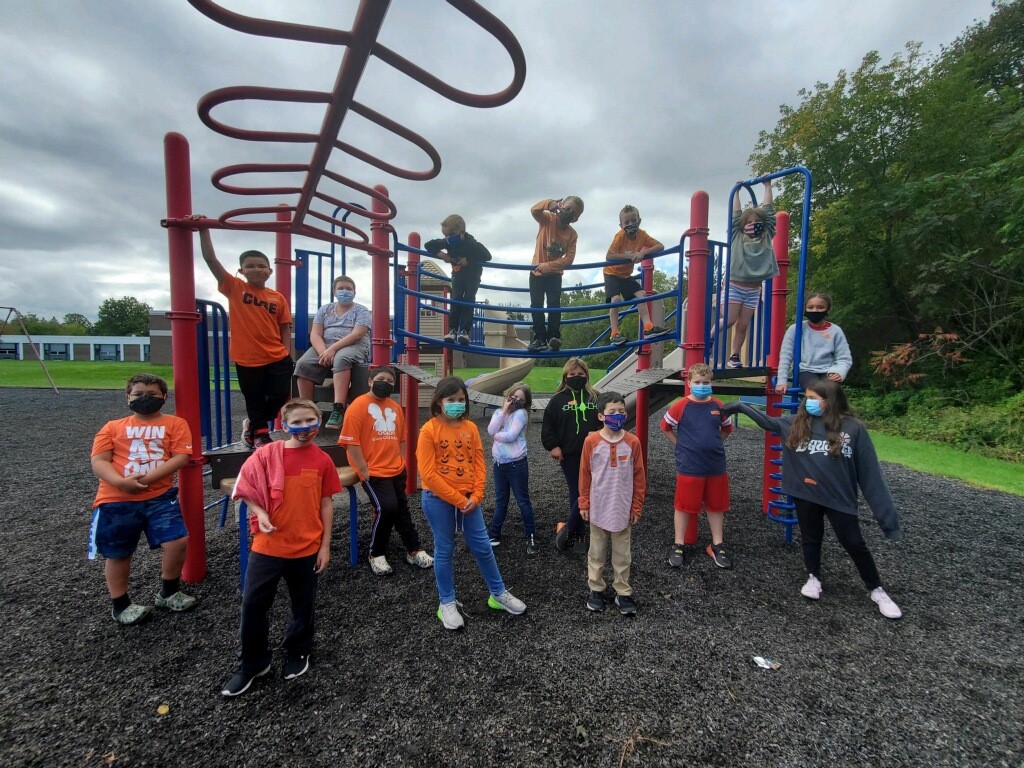
Submitted photo Gowanda Elementary pupils wear orange while on the playground.
Every year on Sept. 30, individuals across North America wear orange shirts in order to help spread a message: every child matters. The significance of the day comes from Phyllis Webstad, in response to the treatment of Canada’s First Nation’ children. Webstad wore an orange shirt to school on her first day at one of these schools and was subsequently stripped, with the shirt never being returned to her.
The day also serves as a reminder of the numerous unmarked graves of Native American children that have been discovered. Because of that, this day has particularly resonated with Native American people in the United States and Canada, and local schools also observe the day.
“The movement has grown over the years to include special events that focus on the idea that Every Child Matters and the emphasis has become recognition of the trauma that victims and survivors have experienced,” said Gowanda’s Title VI coordinator, Lea Golden.
See
Submitted photo
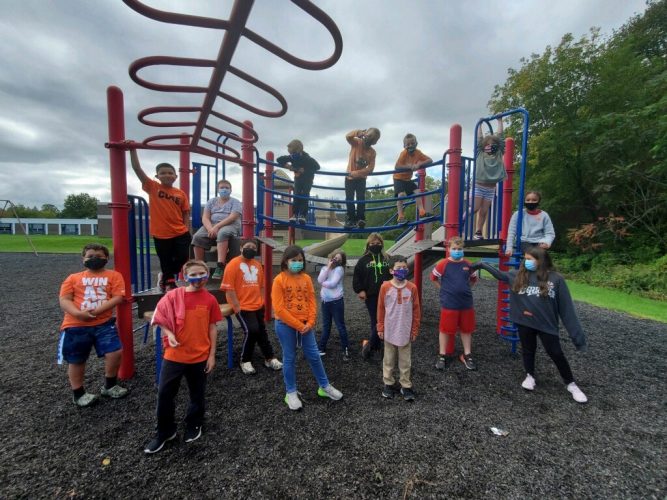
Gowanda Elementary pupils wear orange while on the playground.
-
- Submitted photo Gowanda Elementary pupils wear orange while on the playground.
-
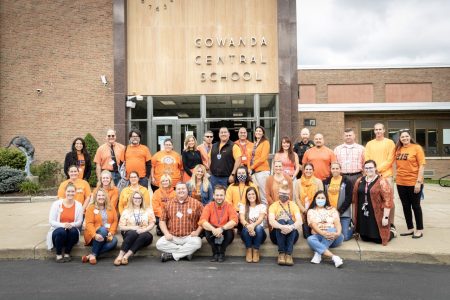
- Submitted photo Members of the Gowanda High and Middle School staffs wear orange on Thursday.
“As well as acknowledging how entire tribal nations and communities continue to be impacted by the forced assimilation of Native American people across the United States and Canada.”
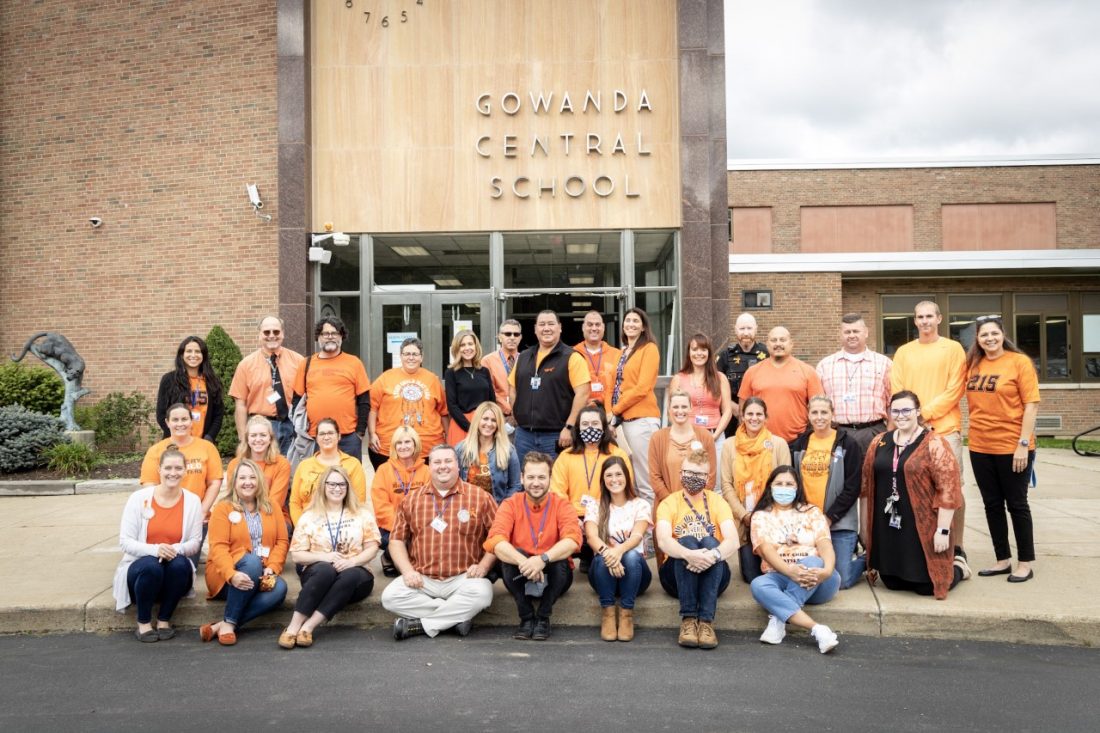
Submitted photo Members of the Gowanda High and Middle School staffs wear orange on Thursday.
Gowanda and Silver Creek are two of the schools who take the observation of Sept. 30 seriously. Golden said that approximately 25 percent of Gowanda’s students either are tribally enrolled Native Americans or are descendants of Native Americans.
“The majority of these students and families are connected to one or more of the Six Nations tribes,” Golden said. “Most have ties to the Seneca Nation Cattaraugus Territory which is located only a short distance from the Gowanda School District.”
Native American people from the area are not exempt from schools like what Webstad first went through. Thousands of Native American children were separated from their families in the 1860s, and were forced to assimilate by learning English and were not allowed to speak their native language or participate in traditional ceremonies. The Thomas Indian School was located on the Cattaraugus Territory, and the impact of the school is still felt all over. Though that particular school closed in 1957, some such locations closed as recently as 20 years ago.
“Our community has been directly impacted by the challenges of the residential school system since the Thomas Indian School was located on the Cattaraugus Territory,” Golden said. “There are still buildings there which were once part of the Thomas Indian School Complex in the area where Seneca Nation Office buildings, Library, Elder Facility and Health Care Centers are situated in Irving.”
Similarly, Silver Creek has a similarly high percentage of Native American students and an equally close proximity to the campus of the old Residential School. For the same reasons posed by Golden, Silver Creek’s Title VI coordinator Mary Williams said the school is recognizing that history and doing their best to bring awareness to it.
“We have a residential boarding school less than 11 miles from Silver Creek,” she said. “We have staff and students that are one to three generations out of the boarding schools. So the significance is huge. We need a change, we need this tragic history to be told, we need this day to break the ice on our history. Residential schools are not mentioned once in history books, yet it was an effort made by the U.S. government and the churches to eliminate a race of people. A race of people that have gone through so much to survive and no entity has taken responsibility for it.”
Because of the focus of the day and the local connection that Gowanda has, Golden said there is heavy participation from students, faculty, and staff and that the administration of Gowanda has been incredibly supportive of people embracing the day. And to prepare for the day, the Title VI Native American Education Program coordinated distributing curriculum materials for faculty to fit into regular classroom teachings. Golden also said that the curriculum was shared with students from Lake Shore and Silver Creek as well.
Gowanda fourth-grade teacher Caroline Young has been having her students participate in her Gowanda classroom. With Young’s guidance, the students created a shield out of an old ring dancing hoop, making a circle that was decorated with feathers and the words “remember, honor, and love.” The ring was also adorned with beads to symbolize peace and has a centerpiece featuring the phrase “Every Child Matters.”
“The hoop is sacred in many cultures,” Young said. “It reminds us of the never-ending circle of life. It symbolizes peace, wholeness and well-being and reminds us all of our connection within the circle.”
The collaborative nature of the project also helps some of Gowanda’s younger students become introduced to residential schools and brings more attention to the trauma their relatives experienced.
Golden said the significance of the day has continued to grow as more unmarked graves have been discovered. The opportunity presented by the day to recognize the tragedies suffered by Native American people has been seized by more and more places as time has gone on.
“This day is an opportunity to focus not only on the cold and brutal history, but to share the knowledge of how families have been impacted over several years and across 2 countries,” Golden said. “The trauma is far reaching and has had an impact on tribal languages, cultures practices and social norms within Native communities. It is time not only for learning about the trials and tribulations these children and families faced, but also for healing from all of the losses experienced by entire Native American nations.”
Additionally, Williams said that in order to maintain the growth the day has received, consistency to observation is key.
“We will continue to support and have a Wear Orange day here at Silver Creek,” Williams said. “We are already planning for next year and how it can be bigger and better. We have had conversation in years previous and over the summer to incorporate the teaching of Indian Residential schools in our social studies classes in both the Middle School and High School.”
TOP STORIES
Superintendent details impact of Gowanda storm

Cassadaga Valley honors staff with week of celebration
Spike Dailey’s donates to local veterans
County helping fight HABs in Findley Lake
MAYVILLE – Chautauqua County is helping address Harmful Algal Blooms in Findley Lake. During the county ...
Enrollment drop part of budget talks