Father of late Fredonia graduate speaks out about drug addiction
Christin Tibbetts loved to help others.
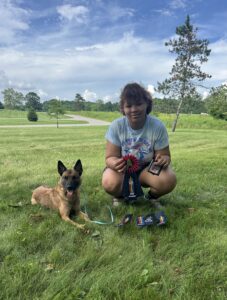
Kevin Tibbetts, her father, said Christin was always the compassionate caretaker in the family, looking after siblings, cherishing her infant daughter and even choosing social work as a field of study at the State University of New York at Fredonia.
But on Feb. 27, those efforts and more were abruptly cut short when Christin was found dead inside her father’s Falconer home, the victim of an apparent heroin overdose and a drug treatment system that tragically – and ironically – failed to help her recover from addiction.
She was only 23 years old.
“When (Christin) asked for help, there was nowhere to go,” Tibbetts said emotionally. “She slipped through the cracks (in the system), and they’re really, really big here.”
Tibbetts and his fiancee spoke candidly about Christin’s two-year-long battle with opiates, revealing that her exposure with the “wrong crowd” in 2012 was what led her on a path to prescription medications and, later, to heroin.
“By the end of 2012, she was already using painkillers,” Tibbetts’ fiancee, who preferred not to be named, said. “She managed to keep it a secret for a long time.”
Signs of heroin use were later masked, Tibbetts’ fiancee said, recalling Christin’s good grades at college and normal, everyday behavior.
“There was no way anybody could tell (Christin) was a heroin addict,” she said.
By the end of 2013, Christin had unfortunately become increasingly less responsive to her father, and more lethargic in the care of her daughter.
When Tibbetts and Christin’s mother and step-fathers confronted her with a family intervention, their efforts proved to be too late. The only solution, according to Tibbetts, was to get Christin into a program that dealt both with her physical withdrawal symptoms and her emotional state of mind.
“I tried calling everywhere,” Tibbetts said. “Hospitals kept denying her because they said she had to go through detox first. But there’s no detox program (in Chautauqua County). We took her to the Erie County Medical Center, but they wouldn’t let her in because she ‘wasn’t sick enough.'”
Tibbetts found some relief when Christin was placed in the Chautauqua County Jail for drug possession at the end of 2014.
The jail, he said, was the only possible place she could detox in the area.
“I begged the jail to keep her in,” Tibbetts said. “Or at least refer her to a drug rehab program as soon as she got out.”
Tibbetts’ requests were denied and Christin was released. A month later, she was dead.
“I walked into her room around 10 a.m. and the rest was a nightmare,” Tibbetts said. “It was too late; she was already cold. I tried reviving her even though I knew it was too late, pumping air into her dead body.”
He remarked that he was thankful for the care and compassion the police had in responding to the emergency call and noted they were “sincere” in what they did to help.
Tibbetts, fighting back tears, said he couldn’t change the past, but he could work to change a drug treatment system that he believes has failed countless other young people in Chautauqua County, many of whom are desperate for an accessible detox program and, perhaps more importantly, a sense of urgency.
“We need something here for this community because our children are dying left and right,” he said. “As a community, our memories are short. We almost push these deaths off and wait for the next one and then the next one. Our attention span is not what it used to be.”
Rick Huber, executive director of the Mental Health Association in Jamestown, said Tibbetts’ struggle to find a detox program or any program without a massive waiting list are shared by several frustrated and helpless parents in the area.
“Heroin addicts need to detox before they can go into any rehab program,” he said. “But the insurance companies say, ‘You can’t die from heroin withdrawal, so we’re not going to pay for detox.’ If you can’t get into inpatient programs because your kid needs a detox program, and you don’t know how to detox them at home and nobody will give you medication to help you through it, where do you turn?”
Huber added that jails should not become de facto detox centers.
“When we have people coming out of jail who were used to doing six bags (of heroin) a day, they don’t realize that their body clock has reset itself, and that they need to start back with one or two bags,” Huber said. “If they go right back to six bags, they’re going to overdose. … and I bet when they released Christin from jail, nobody talked to her about any of this.”
A year after the county gathered for a community drug forum in Mayville, the lives of promising young people like Christin continue to be lost at an alarming rate.
According to a recent study by JAMA Psychiatry, the average heroin user is now a spitting image of Christin – 23 years old, white and a resident of a suburban or rural community.
Tibbetts said the time for change is now. He will be a guest speaker at the second annual Family Ties Drug Forum Monday at 9 a.m. at the Chautauqua Suites Hotel & Expo Center in Mayville. He will also advocate to bring a dedicated detox center to Chautauqua County to help those struggling with drugs like Christin did.
“I cannot let my baby die in vain,” he said. “There has to be a way I can use this pain to help others who are (facing) addiction. I know as one man I won’t be heard, but as a community, they will have to listen.”
Christin’s family has set up a college fund for her daughter, Londyn Wilmot. Memorial contributions in Christin’s memory may be made to Londyn McKenzie Wilmot, C/O Inner Lakes Credit Union, 3795 Lake View Road, Fredonia, NY 14063.
Additional reporting by OBSERVER Staff Writer Greg Fox. Comments on this article may be sent to editorial@observertoday.com