Wendel preaches caution as micro-cluster ID’d in WNY
-
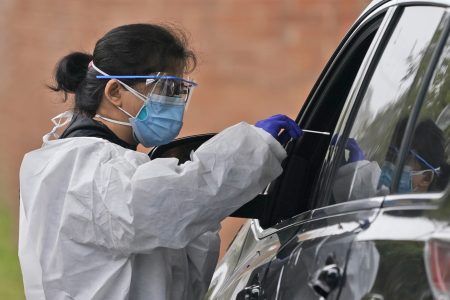
- Medical personnel prepare to administer a COVID-19 swab at a drive-through testing site in Lawrence, N.Y., Wednesday, Oct. 21, 2020. The rate of COVID-19 infections has risen enough in New Jersey, Pennsylvania and Connecticut to require those states’ residents to quarantine if they travel to New York, but Gov. Andrew Cuomo says New York won’t enforce the rules against those residents. (AP Photo/Seth Wenig)
-
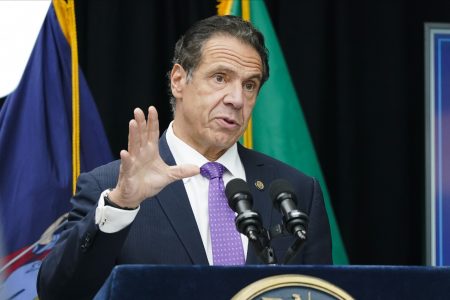
- Andrew Cuomo
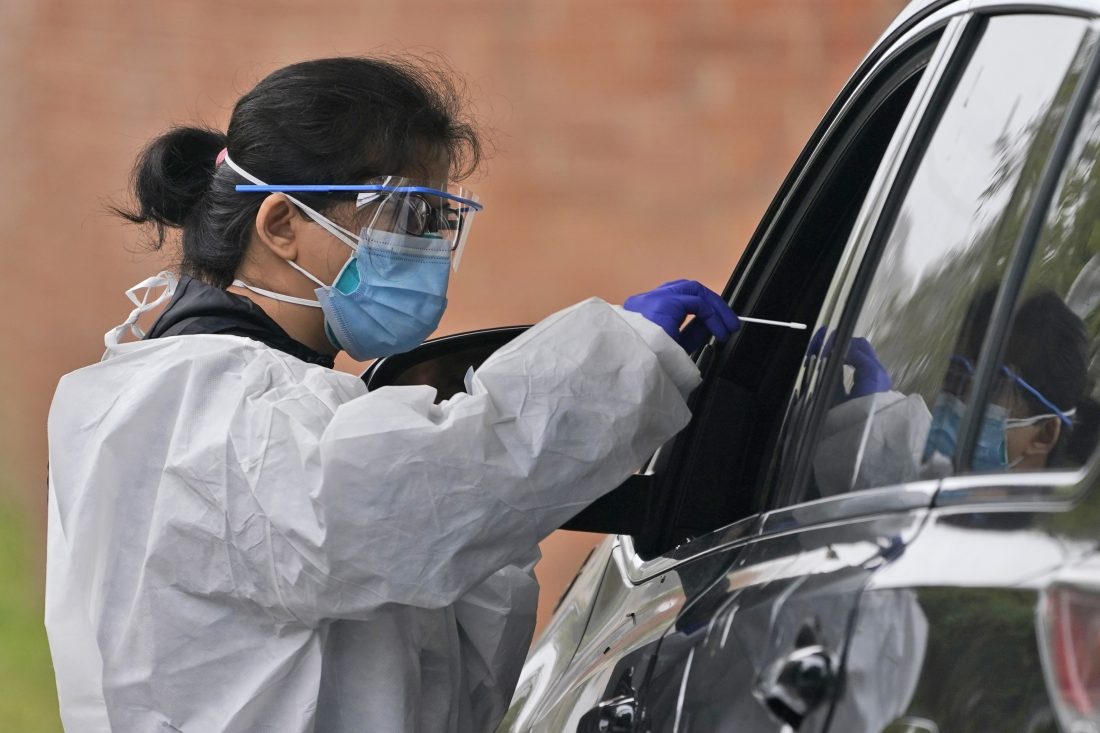
Medical personnel prepare to administer a COVID-19 swab at a drive-through testing site in Lawrence, N.Y., Wednesday, Oct. 21, 2020. The rate of COVID-19 infections has risen enough in New Jersey, Pennsylvania and Connecticut to require those states' residents to quarantine if they travel to New York, but Gov. Andrew Cuomo says New York won't enforce the rules against those residents. (AP Photo/Seth Wenig)
Erie County’s designation as a micro-cluster by Gov. Andrew Cuomo on Monday should serve as a warning to those counties that neighbor it, Chautauqua County executive PJ Wendel told The Post-Journal.
Wendel spoke with leaders in the region on Tuesday by virtue of his position on the Western New York Regional Control Room. The region registered a 5.3% COVID-19 infection rate on Sunday, leading Cuomo to designate parts of Erie County, as well as Monroe and Onodaga counties, as “yellow zones,” where gatherings are capped at 25 people, restaurants may not have more than four people at a table and schools are required to do more mandatory virus testing of students.
Erie County, alone, announced 228 new cases of the novel coronavirus on Monday.
“There was a lot of discussion from (Erie County Executive) Mark Poloncarz,” Wendel said. “They have a lot of issues out there and he’s really referring to Erie County as a ‘macro-cluster’ and not a ‘micro-cluster.’ There are just so many places where this virus has appeared.”
He added, “Just looking at that: in Chautauqua County, if we aren’t diligent with our efforts, we could be there, too.”

Andrew Cuomo
“We have definitely entered a new phase with COVID,” Cuomo said Monday during a conference call. “The fall season has brought the expected increase the experts predicted. The numbers are undeniable across the country. The rates will all go up. We expect the rates will continue to go up through the fall and winter.”
During the call, Cuomo explained that the micro-cluster strategy “works,” as evidenced by the state’s targeting of hot spots in Rockland County north of New York City as well as in several counties along the Pennsylvania border: Broome, Steuben and Chemung.
Wendel, too, sees the benefit of using the micro-cluster strategy in areas with a higher population density. But, in counties as small as Chautauqua, he noted that the local health department’s contact tracing has allowed for hot spots to be addressed quickly.
“The mico-cluster works in larger counties with density much greater than our population density,” he said. “But here, our areas have had as few as one to two cases and as many as six to eight. … Historically, if you look back, we can look and evaluate where we are as a county, where our clusters are and where our high prevalence are. It’s an effective tool that way.”
He added, “But, if people know where it is, does it matter? We all have to do our part. This is an all-in. We need to continue to work. It’s challenging, it’s tough, but the last thing you want to see is limiting gatherings especially this close to the holidays.”
“The long-term prognosis is get a vaccine as quickly as possible, and administer the vaccine as quickly, fairly and equitably as possible,” Cuomo said. “In the meantime, we manage the increase by doing more testing and targeted restrictions where necessary, and being more aggressive on enforcement.”
Should Chautauqua County, in the coming weeks or months, also receive a similar designation, additional testing will be made available to the county. Wendel continues to emphasize that need locally.
“We need to make sure that the testing is there,” he said. “Right now our supplies are there. We are able to attack our clusters if they arise. But for a long period of time, if it goes on for an extended period of time, we need to have those reassurances that they are there and to make sure those tests are available.”
Of concern also to Wendel is the influx of college students that will be returning to the area around Thanksgiving, a majority of whom will not return to their campus until mid-January or early February.
“That will be a huge impact on college students coming back to this area,” he said. “College kids are college kids. That challenge of being here and being restricted will pose a challenge. We have to do what’s right. We just can’t let ourselves get complacent and let the numbers go.”
“We just need our residents to continue our efforts,” he said. “No one is immune to this. It’s everybody and we need to step up and do the right thing.”
“I know people are tired — COVID fatigue is real,” Cuomo added. “But the virus isn’t tired. The red, orange and yellow zones are our way of saying the virus is making headway and we’re going to increase restrictions and we’re going to increase enforcement.”