Measuring up: After harsh weeks, snowfall totals mounting
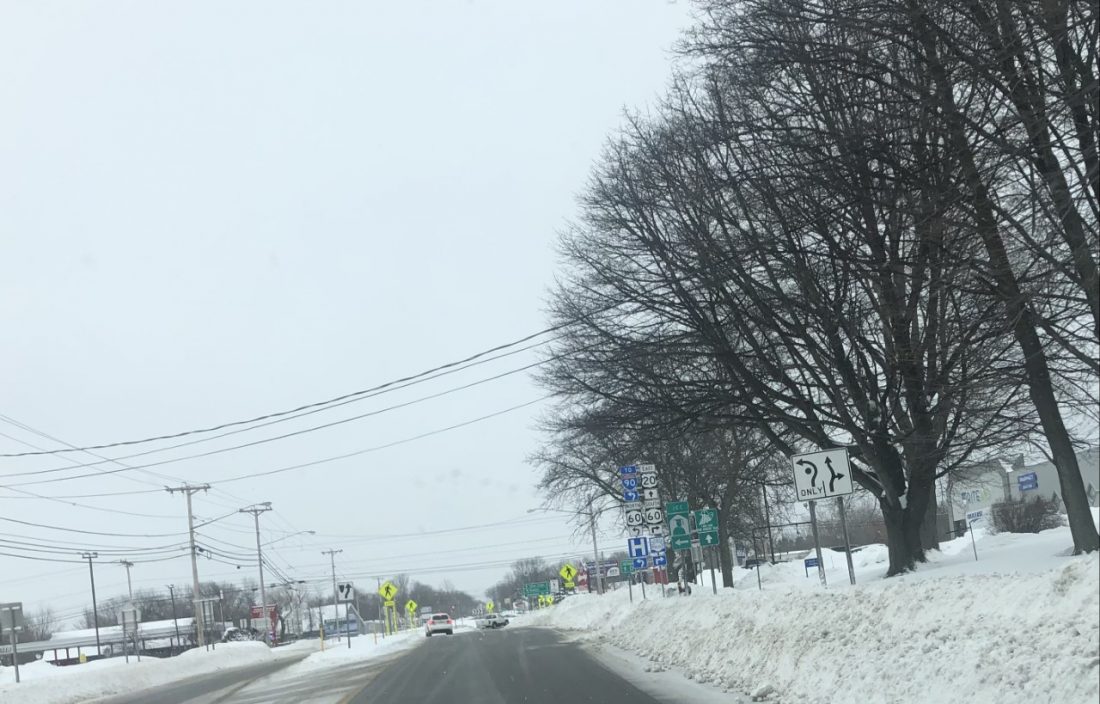
OBSERVER Photo Snowbanks surround the roundabout entrance on Route 20 in Fredonia.
While the snowfall for the 2021-22 winter started off relatively slow all over Chautauqua County, the two major storms over the last month have caught areas right back up to their total averages.
So far through the winter, Dunkirk has accumulated 44.4 inches of snow, and comparatively to the last several years, they’re about on par with how much they normally get. Over the last six years, Dunkirk has averaged roughly 60 inches of snowfall per year, and given the weeks left of the winter season, we should expect to get back close to that number.
“It seems like it would be more in line with what you’d historically expect,” said Aaron Reynolds, a meteorologist at the National Weather Service in Buffalo.
Reynolds said Dunkirk’s proximity to Lake Erie makes it so snowfall totals can fluctuate heavily. In 2017-18, the area saw 104.4 inches of accumulation, but two years before that, there was only 25.9 inches.
“For those lake bands to come and lock in over Dunkirk, it’s hard to do for a length of time,” Reynolds said. “That’s why you have this variation.”
Silver Creek is experiencing similar snowfall totals to their past year average as well. Currently, it has recorded 57.5 inches of fallen snow, and over the last three years, have averaged 73.2 inches. But Silver Creek and Dunkirk pale in comparison to some of the inland totals this year.
Thus far, areas further inland such as Jamestown, and more extremely Cattaraugus, Perrysburg, and Little Valley have taken a beating this far. Cattaraugus, Little Valley, and Perrysburg are each already at about 100 or more inches, with Cattaraugus getting hit the hardest at 123.2 inches.
Jamestown has had 74.4 inches fall so far, and when all is said and done, this year will be their highest total in the last three years, and could be as high as they got in 2018-19 when they got 97.7 inches. This exemplifies Reynolds point that there is a huge variation in snow fall this year.
“We started out behind and depending on where you are, you are below or above normal,” said Reynolds. “Buffalo seems like we’re above normal. It just depends on where you’re located.”
TOP STORIES
Florida pedestrian dies in Collins Route 39 mishap
COLLINS --- A Florida man has died after being struck by a pickup while walking on state Route 39. State Police in ...
WCA Home to become Aspire of WNY north county headquarters

SUNY welcomes 1,000 for annual Admitted Students Day

Gowanda projects 1.2% school tax hike

Cassadaga Valley hosts development summit