
Generating a plan: SUNY projects offer village insight
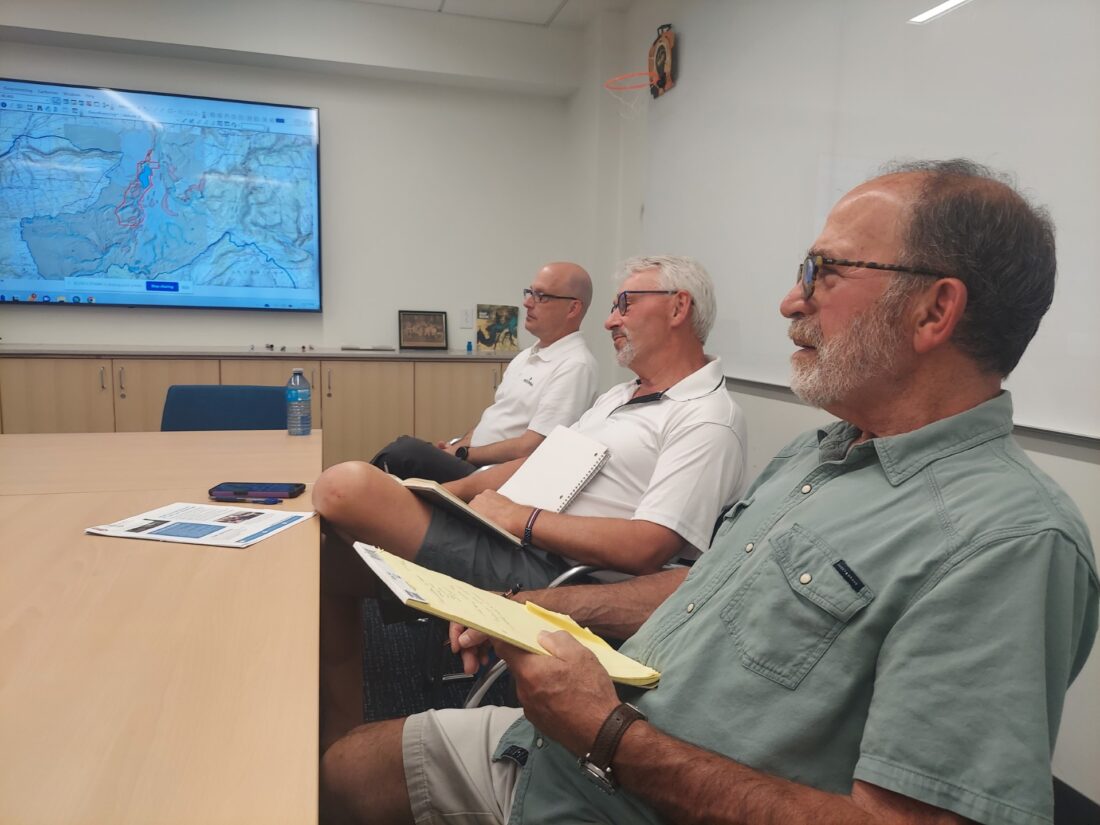
OBSERVER Photos by M.J. Stafford From left to right, SUNY Fredonia professor Andy Karafa, Fredonia Trustee Jon Espersen and SUNY Fredonia College Council member Richard Alexander listen during a presentation of SUNY Fredonia projects meant to benefit the wider village.
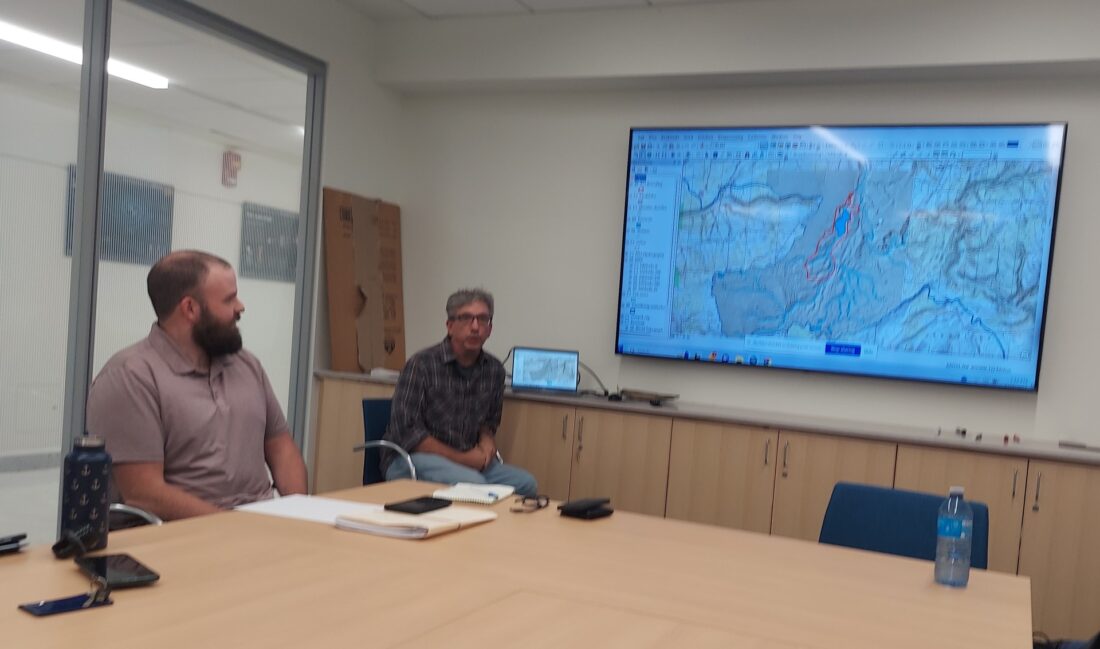
SUNY Fredonia professors Matt Lanning, left, and Matt Purtil describe a map of erosion-prone areas near the Fredonia Reservoir that they and their students put together.
OBSERVER Photos by M.J. Stafford From left to right, SUNY Fredonia professor Andy Karafa, Fredonia Trustee Jon Espersen and SUNY Fredonia College Council member Richard Alexander listen during a presentation of SUNY Fredonia projects meant to benefit the wider village.
SUNY Fredonia professors Matt Lanning, left, and Matt Purtil describe a map of erosion-prone areas near the Fredonia Reservoir that they and their students put together.
Trending
Fredonia Trustee Jon Espersen has long advocated the "town and gown" liasion committee he set up with SUNY Fredonia. Last week, the group showed off some projects intended to benefit the village.
Most of the projects concern the village's troubled water system. The committee meeting happened Aug. 29 -- a day before village and county representatives, including Espersen, discussed the system, which has been declared out of compliance with state regulations.
Espersen was the only representative of village government -- joined by a slew of SUNY Fredonia professors and the College Council's Richard Alexander in a conference room at newly renovated Houghton Hall. They took turns listing projects.
Professor Lan Cheng began. She and a group of three students picked 14 houses from the village according to housing size and yard size and studied the pattern of how water was consumed. They also studied different billing systems over the country. There are plans to expand the study this semester.
"Another project was, four students helped to create the village social media presence," Espersen said. "It was very outdated and we weren't on any platform that students use, so students weren't aware of what was going on in the village. In order to rectify that... we created sites."
Matt Lanning, an assistant professor of geology and environmental science, and his class started mapping and digitizing old records of the village water system last semester. "They created a digital infrastructure for all that data to go into, as well as did about 10 to 15% of the maps... and that is ongoing," Lanning said.
"Some of (the old records) were actually on papyrus," Espersen joked.
The goal is to allow water workers to navigate their lines "within about one meter, as opposed to the current way of navigating, which is finding the big tree at the side of the building and measuring off 200 feet, and then finding a fire hydrant," Lanning said.
The professor added the goal is that someone who gets a phone call about a water main break "can have information, location and photos of the lines all pop in front of them. That part of the project is done. It's getting the rest of the data into the system, which is time consuming."
Matt Purtill, also an assistant professor of geology and environmental science, is studying landslide and erosion potential around the reservoir. He and his class have created a map showing recorded landslides, and "areas that are known or we suspect to have landslides," in and around the reservoir property.
"The hope is that we can get a good idea of where there might be potential problems of getting too much sediment into the Fredonia Reservoir. That way, the village can use good management practices -- at least, we can provide them good information on how best to manage their land," Purtill said.
He intends to do some field validations at the site with his class this fall. Lanning might be able to date some of the landslides using dendrochronology.
Logging is banned within 200 feet of the reservoir. Purtill commented that the ban should be increased, as landslide-prone areas outside of the zone could slip away if logged, and deposit soil into the reservoir.
Courtney Wigdahl-Perry, associate professor for biology and environmental science program coordinator, and Lanning invited a colleague, Derek Gibson, to teach them new techniques in sedimentation research. "He has expertise in sediment coring and he has a new technique where he's using different metals in the sediments to help us establish a timeline," Wighdahl-Perry said. Sediment dating can be very difficult, "prohibitively expensive and not always successful even if you have the money to do it," she said, but the metals dating can line it up with specific historical human activity.
They took two sediment cores at the reservoir and await test results on them.
"The more information we get (on Fredonia's water system), the more logical conclusion we can draw, and go from there," Espersen said. "If we wanted to make a decision based on no knowledge, we'd just say, 'Hey, whatever we got, just fix it,' and go from there."
"It's really about, we want to be helpful, but we're also not going to not tell you something because it doesn't line up with what somebody else wants," Wigdahl-Perry said. "If somebody views it as negative and somebody wants to weaponize it, unfortunately, that's what we do. The other option is not looking at any of this stuff."