
Fielding options: Fredonia discusses facilities upgrades with architects
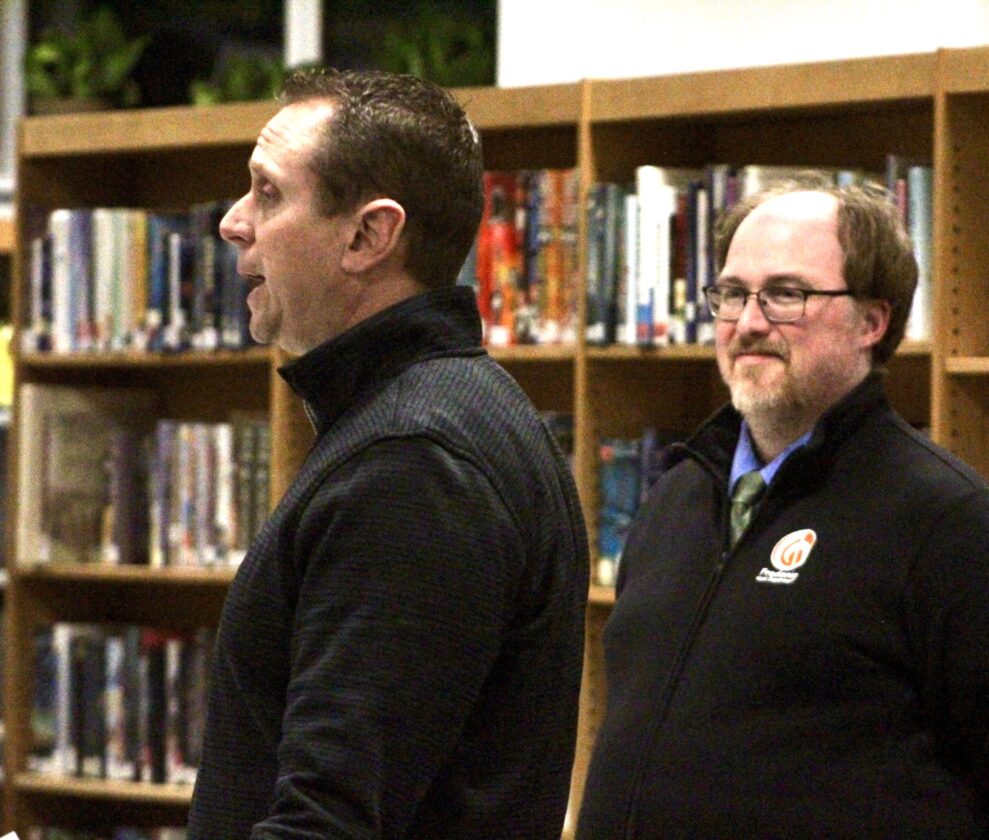
OBSERVER Photos by Braden Carmen Fredonia Athletic Director Greg Lauer, left, addressed the Board of Education, with Fredonia Band Director Andy Bennett standing beside him, at a recent public forum to discuss capital improvements to the District.
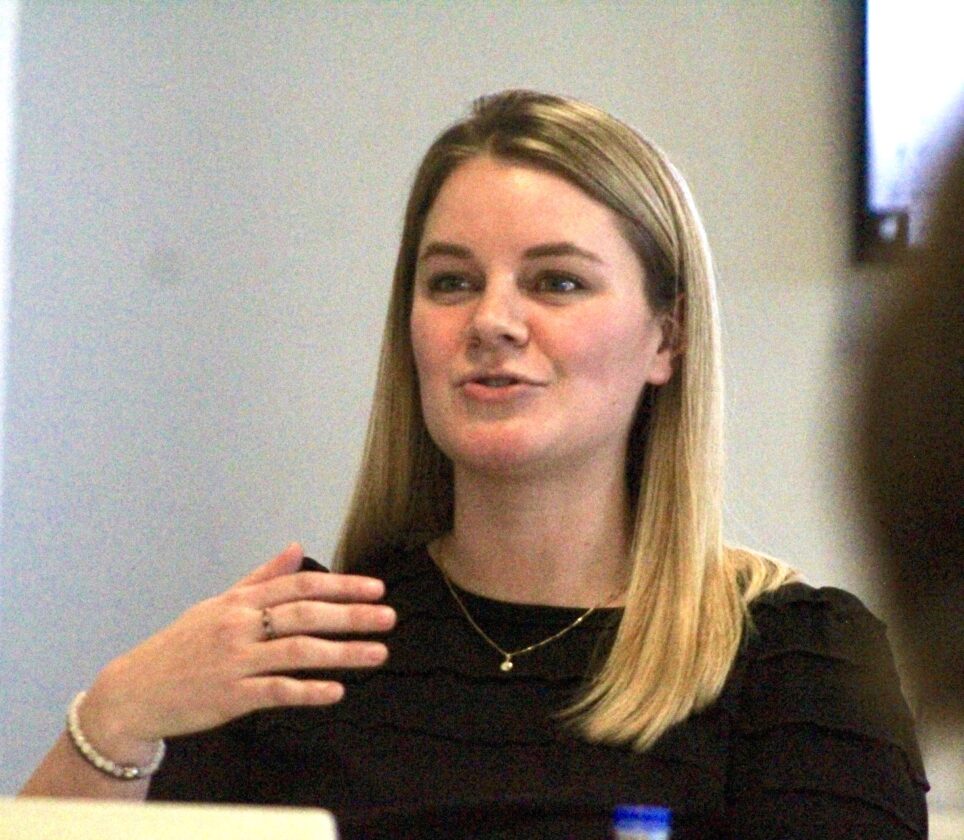
Alyssa Catlin, Associate of Young and Wright, spoke to members of the Fredonia Board of Education at a recent meeting to discuss capital improvements.
OBSERVER Photos by Braden Carmen Fredonia Athletic Director Greg Lauer, left, addressed the Board of Education, with Fredonia Band Director Andy Bennett standing beside him, at a recent public forum to discuss capital improvements to the District.
Alyssa Catlin, Associate of Young and Wright, spoke to members of the Fredonia Board of Education at a recent meeting to discuss capital improvements.
Trending
Discussions are still ongoing to address future improvements to the Fredonia Central School District.
Young and Wright Architectural Associate Alyssa Catlin and two of her colleagues spoke to members of the Fredonia Board of Education at a recent meeting to discuss potential capital improvements.
In recent weeks, after approximately 230 members of the school community responded to a survey from the district regarding capital improvements, the data showed the same themes the district expected. Athletic field improvements were "leading the pack," according to Superintendent Dr. Brad Zilliox. Larger music spaces to accommodate for high enrollment in music programs followed closely in second place, while third on the list of priorities from the survey respondents was a focus on district playgrounds.
The other "dominant themes" Zilliox mentioned were heating and cooling system upgrades, which the Board also later deemed as a lower priority than the first three focus areas. Catlin said air conditioning and heating upgrades would come at a "significant cost." Zilliox also noted that the public highlighted maintenance items, such as roofs and doors, which the district will prioritize in order of which needs are most pressing.
Representatives from Young and Wright recently visited individually with department leaders and building principals to seek input on what the priorities of the district are from their perspectives. Many of the areas of focus mirrored those of the community. Elementary Principal Mark Drollinger listed playground accessibility as the top item on his list of priorities. Athletic Director Greg Lauer noted a multi-purpose turf field as his top priority. High School Principal Darrin Paschke and Middle School Principal Jamie Polhamus each listed space for the music department among their areas of need.
The needs from the IT Department and Maintenance Department were explained to the Board first. Catlin stated that of all the department head meetings, the maintenance needs "bumped the most things into priorities to consider." She also noted the maintenance department was "very conservative" in its needs.
"You guys probably have the two best maintenance guys in the world, in that they are going to fix any problem you have, period," Catlin said. "The flip side of that, though, is that they think they can fix any problem you have. They are not worried about the rooftop units that you have on the roof that are all over 20 years old."
Catlin also stated it is beneficial for the district to only focus on the roofing and structural upgrades that are most necessary at this point, rather than updating everything all in one project. "You want to start to space those out, and your predecessors will thank you too, because that will put them in a position to replace them periodically, as well," Catlin said.
After Catlin spoke to the district's option of utilizing a smaller capital outlay project to address some of the needs uncovered in recent months, Board of Education member Sheila Hahn inquired about improvements to the district's playgrounds. Currently, both the main campus playground and the Wheelock school playground are not handicap accessible. Catlin responded by explaining that playgrounds are "insanely expensive", while noting a nearby school playground project cost well over $1 million.
For a project to receive building aid from the state, at least $10,000 of work must be dedicated to the inside of a school building, with a total of $100,000 of available funding each year for a capital outlay project. Catlin did highlight that a benefit to playground work is that it can be done through state contract, which means rather than waiting for bids to come back on a project with cost uncertainty, the district could contact a state contracted playground company with a figure in mind to ask what can be done for the funds the district has available. Members of the Board at the recent meeting expressed a desire to focus on making the current playgrounds handicap accessible, rather than to re-do an entirely new playground.
Regarding the music department needs, the focus from the public respondents has been on instructional spaces and storage, which has been highlighted as a major need by Music Department Instructional Leader Andy Bennett. Zilliox noted the department has had "good messaging" to its supporters throughout recent weeks.
Catlin later noted that a "general trend" across all of the district's meetings with Young and Wright was to consider repurposing the middle/high school library space for a new use. Catlin stated many districts have repurposed libraries in recent years.
When the topic of athletic fields was revisited by the Board, Catlin stated that whether to use a turf surface or a natural grass field often comes down to playability in poor weather, as noted by Lauer when speaking to the Board previously.
"Playability is the number one thing that comes into the conversation," Catlin said. She then later explained that because of drainage issues with the soil on the district's campus, a turf field would require an extensive drainage system to mitigate flooding concerns, but maintenance costs would be much lower in the following years when the turf could be replaced at the surface level as needed. A natural grass field would likely be much more challenging to treat on a regular basis. Board of Education Vice President Steven Johnston requested more information about the costs compared to a natural grass field and whether to keep the Orange Bowl as a renovated football game site.
As previously stated by Zilliox and by Young and Wright, the District currently has approximately $300,000 in capital reserve funding available, which would cover a $5 million project without any additional impact to district taxpayers. The district has a reimbursement rate of 82.7% for state aid-eligible work. For an increase of $5 million of aid-eligible to a potential project, taxpayers would be asked to pay an increase of $11 per year for every $100,000 in assessed value, equalized, over 15 years. The cost would be much higher for work that is not eligible for state aid.
Young and Wright explained that most homes in the district are valued much lower than $100,000 in assessed value, meaning the impact on most taxpayers would be much lower. Catlin also stated that the district is "very likely" to surpass the cap of aid-eligible work on the outside of the school building, most notably with athletic fields.
Young and Wright representatives also discussed potential voting options for taxpayers on the date of the capital project vote, including listing one option that has no impact to taxpayers and another option that includes the upgrades the community has requested in recent months.
The district is expecting to receive more information in the coming weeks, as roof scans, athletic field assessments and playground audits are all underway. Young and Wright representatives will meet with the district and the Board of Education again once more information is available.
"You guys are ahead of schedule, you are thinking about it and you're involving everybody," Catlin said. "You are doing this the right way."