Sky’s the limit April 8: County braces for tourist impact from solar eclipse

FILE - A total solar eclipse is seen from an aircraft over Patna, India, Wednesday, July 22, 2009. (AP Photo/Shreya Sahai, File)
-
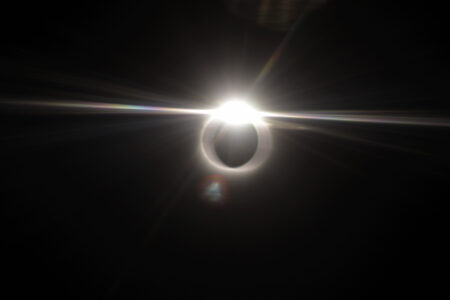
- FILE – A total solar eclipse is seen from an aircraft over Patna, India, Wednesday, July 22, 2009. (AP Photo/Shreya Sahai, File)
-
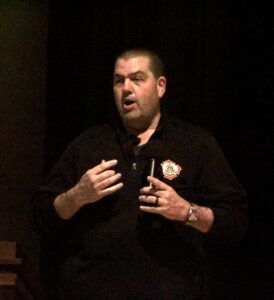
- OBSERVER Photos by Braden Carmen Noel Guttman, Chautauqua County Emergency Coordinator, presented information regarding the upcoming total solar eclipse on April 8 to a crowd of approximately 100 people at Brocton Central School.
-
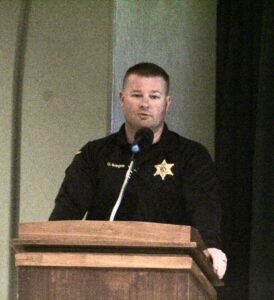
- Lt. Chad Bargar of the Chautauqua County Sheriff’s Office stated that multiple departments will be fully staffed leading up to the eclipse through the night afterward.
-
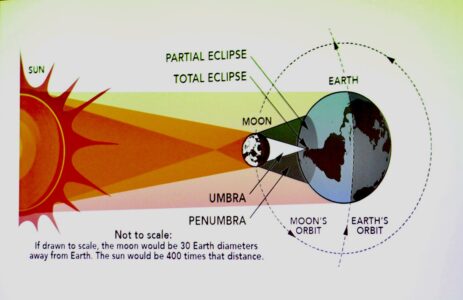
- A total solar eclipse occurs when the Moon passes between Earth and the Sun, which fully obstructs the view of the Sun for a period of time.
The upcoming total solar eclipse on April 8 will bring thousands of tourists to Chautauqua County and beyond to view what Chautauqua County Emergency Coordinator Noel Guttman described as a “once in our lifetime event.”
Approximately 100 people filled seats in the Brocton Central School auditorium for a presentation from Guttman and first responders regarding the upcoming solar eclipse on April 8.
Guttman was introduced by Brocton Fire Chief Bill Hussey and was accompanied on stage by Chautauqua County Sheriff’s Deputy Chad Bargar and two New York State Troopers. Guttman’s presentation lasted approximately 45 minutes, followed by close to 20 minutes of a question-answer portion with the audience.
“For lack of a better term, this is a planned emergency. Not too often do you get to plan for an emergency, knowing when it’s going to happen,” Guttman said.
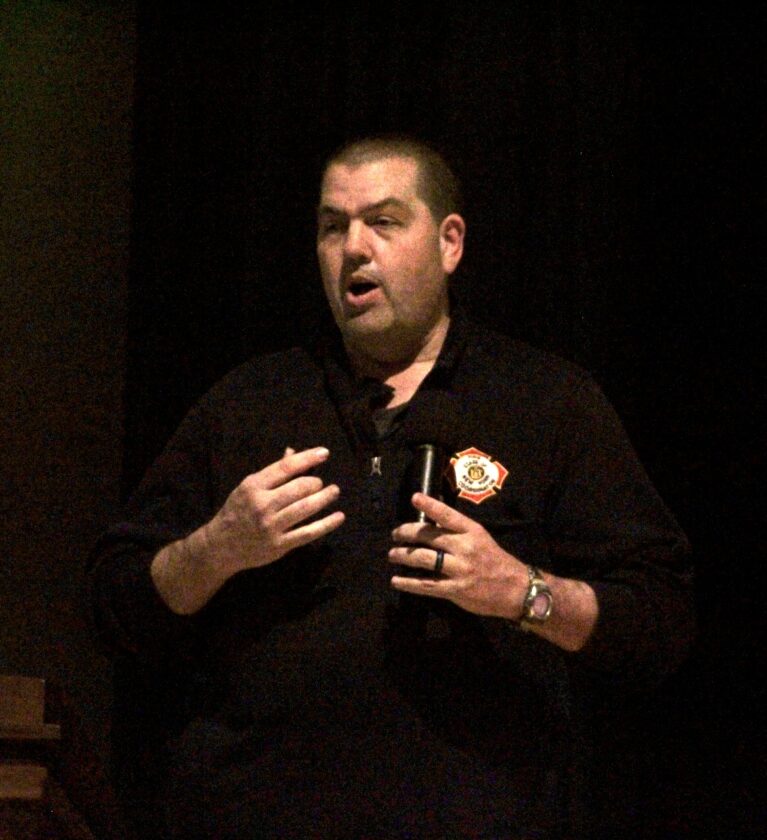
OBSERVER Photos by Braden Carmen Noel Guttman, Chautauqua County Emergency Coordinator, presented information regarding the upcoming total solar eclipse on April 8 to a crowd of approximately 100 people at Brocton Central School.
A timetable
Guttman began by describing what a solar eclipse actually is. It is when the Moon passes between Earth and the Sun, which obstructs the view of the Sun. A regular eclipse happens on average once every 18 months. However, the eclipse on April 8 is a total solar eclipse, meaning the Sun will be entirely blocked out by the Moon. The duration of totality will be just shy of four minutes, beginning at approximately 3:17 p.m.. The entire eclipse from start to finish will be approximately two-and-a-half hours, beginning at just after 2 p.m. and ending just after 4:30 p.m. that day.
“It’s a really significant international event. It’s a scientific historic event that we’re going to get to be a part of,” Guttman said.
From 2 p.m. when the eclipse begins until just after 4:30 p.m. when it concludes, the only time when it is safe to look up at the Sun without eclipse glasses on is during the period of totality, beginning at approximately 3:17 p.m.. Eclipse glasses are available at local municipal buildings and fire halls throughout Chautauqua County, free of charge.
“Don’t let anybody tell you that your sunglasses are good enough. There are no sunglasses on the market that are good enough,” Guttman said. “… You will damage your eyes.”
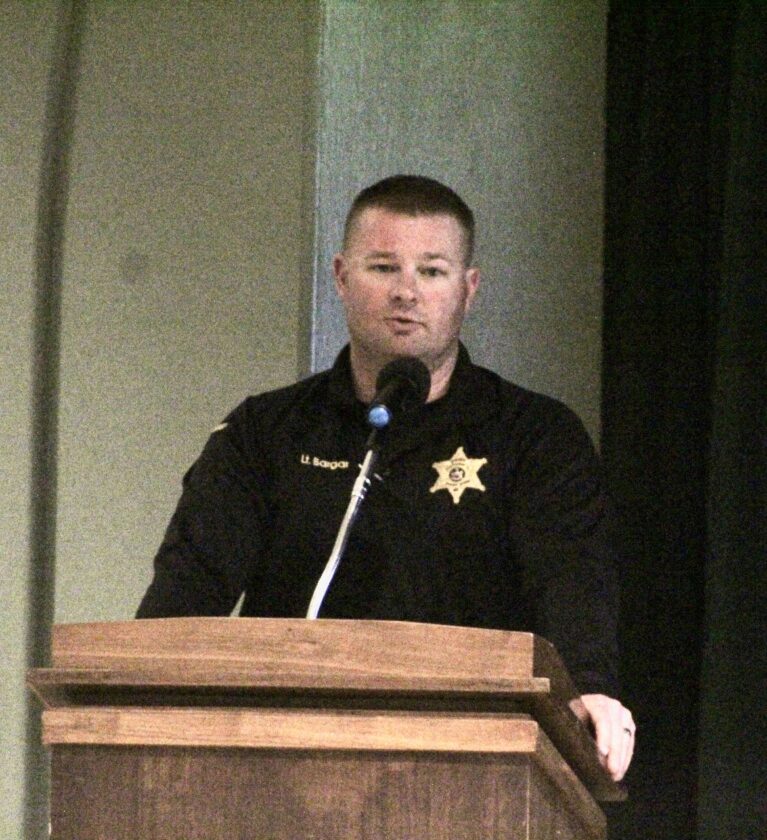
Lt. Chad Bargar of the Chautauqua County Sheriff’s Office stated that multiple departments will be fully staffed leading up to the eclipse through the night afterward.
With prescription glasses, solar glasses must be worn over the glasses. If worn behind the lenses, the damaging rays could be magnified and ocular damage could still occur.
Regarding photography during the event, Guttman explained that cellphone cameras and photography equipment are not equipped for the event without a special lens. Taking photos during the eclipse without a special lens could burn out the photo sensor on a device, in addition to the health and safety risks to the photographer. “If you want to do it, you need to get the right solar filters to make sure you’re doing it right,” Guttman said. “… More importantly, enjoy the event.”
Since 1776, only 21 total solar eclipses have been seen in the continental United States, with most happening over open waters. While the last total solar eclipse was not long ago, in August of 2017 across the northwest United States to the southeast region of the nation, the last total solar eclipse to be seen in New York State was in January of 1925. The next total solar eclipse in the continental United States will take place in 2045, and the next time one will be visible in New York State will be in 2144.
“The thing to remember is, we don’t get a do-over on this,” Guttman said. “This is one-and-done. This is a one-time, once in our generation, once in our lifetime event.”
While the August 2017 total solar eclipse serves as a good reference point to start at, the April 8 eclipse will be much different. In 2017, the moon was further away, so it created a smaller path of totality — meaning where the eclipse can be seen in its entirety. Chautauqua County is located within the path of totality for the April 8 eclipse.
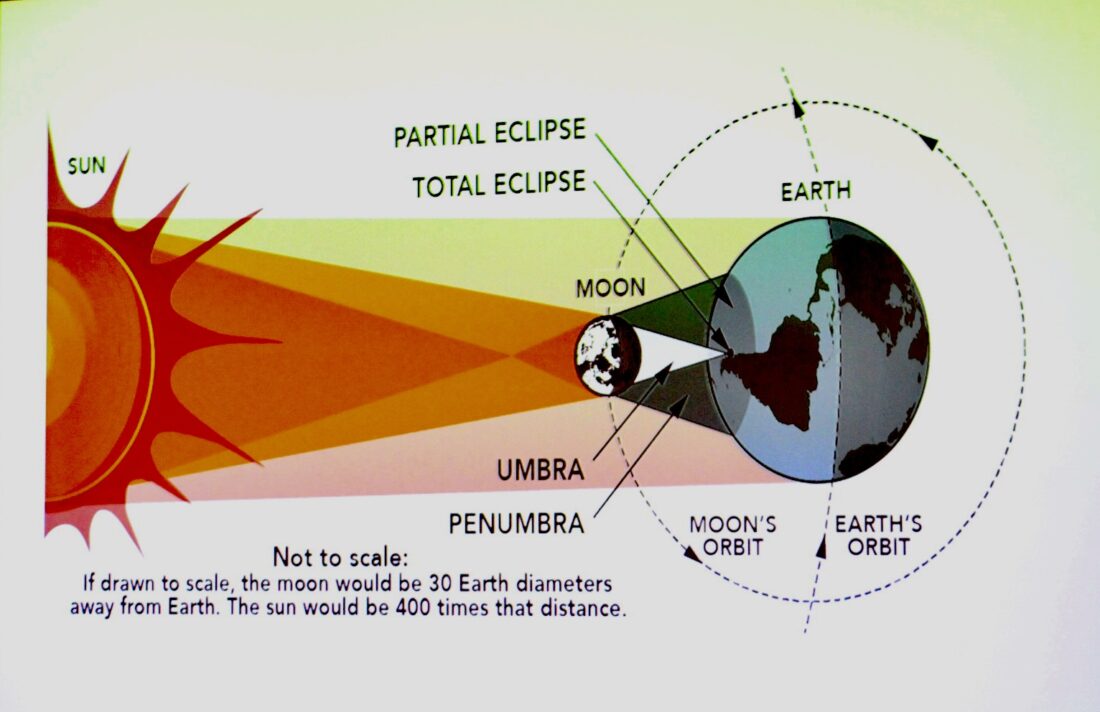
A total solar eclipse occurs when the Moon passes between Earth and the Sun, which fully obstructs the view of the Sun for a period of time.
Large populations
Another difference from 2017 is that in addition to Chautauqua County, the event as a whole will reach many more populated areas this time around. Major cities such as Cincinnati, Detroit, St. Louis, Toronto and Quebec are all along the path of totality. Approximately 32 million people live directly within the United States path of totality, with a great deal more into Canada. Close to half of the entire United States population lives within 250 miles of the path of totality or in it already.
There is also expected to be much more media coverage of the event, from traditional media sources to interaction on social media channels driving up the amount of attention for the event. With that added attention, people are likely to travel from all across the world to witness the total solar eclipse. Niagara Falls is listed by several different national outlets as one of the best destinations to view the eclipse, and because of the anticipated traffic toward the area, it is likely many guests will stop or become stranded in Chautauqua County for the eclipse.
“Rural areas could very well get that back flow of people who want to go somewhere else, but they just physically can’t,” Guttman said.
Many tourists have already made Chautauqua County their destination for the event, as close to 50 events have been scheduled and listed with the Chautauqua County Visitors Bureau for the day of the event or the weekend prior. Most lodging options have been fully booked for months, and Guttman noted that the cost of a single room for the night prior to the eclipse at the Clarion hotel in Jamestown was listed at $699. Many other options far exceeded that cost, with some short-term rental properties exceeding $1,000 per night.
The County is treating the eclipse as a five-day event, from the Friday prior to the event through the day after it concludes, Tuesday, April 9. Judging already by lodging and events scheduled, visitors will continue to trickle in each day leading up to the event. Guttman stated that many observers will travel to the region without planned lodging, with weather, mobility and availability likely to determine where visitors stop to view the eclipse. A last-minute influx of exodus could occur on the day of the event.
“People are coming. There are going to be a lot of people in our area,” Guttman said. “… I’d love to say we’re going to get X, Y, Z, exact number of visitors. We just don’t know that.”
Guttman later estimated close to 250,000 people to visit the region over the course of the event and the days prior. He added, “I hope that I’m 100% wrong, because if not, it’s going to be a very busy day for our first responders.”
Judging based off August of 2017, the majority of viewers will exit the region they visited along the path of totality within two hours of the eclipse’s conclusion. Most of those viewers who promptly leave will depart within 15 minutes of the conclusion of totality once the Sun re-emerges from behind the Moon’s cover. After the 2017 eclipse, many highly populated highways and roads reported traffic congestion for up to 13 hours after the eclipse concluded.
The dramatic increase in visitors to the area will likely overload cellular towers, making it much more difficult to operate a cellphone during the eclipse and the days leading up to it.
Being prepared
Chautauqua County reached out for portable cellular towers for assistance, but Guttman is not optimistic that Chautauqua County will be high on the list of prioritized areas.
“If you still have a landline … you’re golden,” Guttman said.
Viewers tend to prefer locations without many lights, especially with long sight lines. Shorelines, cliffs, hilltops, parks, campsites and hiking trails are among the potential areas set to be flooded with visitors looking to catch a glimpse of the generational event.
Another impact of having such a dramatic increase in visitors is the potential for shortages of gasoline, restaurant and grocery foods and beverages, and shortages or delays at pharmacies regarding medications. Residents are strongly urged to stock up on necessary supplies prior to the weekend of the event.
“Prepare like it is a winter storm,” Guttman said. “… Make sure you have your supplies well ahead of time so that you’re not trying to go out to the store and being part of that traffic clog.”
When it comes to pets, Guttman advised keeping animals indoors for the eclipse to keep their eyes safe. With other animals, the solution is not as simple. “Wildlife and farm animals, they are going to be confused,” Guttman said.
Guttman noted deer are likely to graze when the Sun retreats, while animals could head toward the barn. “Roosters aren’t going to know what to do. It’s going to be light, dark, light, they are going to be confused,” Guttman said.
The three local hospitals — Brooks-TLC Hospital System, Westfield Memorial Hospital, and UMPC Chautauqua Hospital — have also taken steps to prepare for the event. Guttman noted, “not one of them is taking this lightly.” Elective procedures have been scheduled away from April 8 in anticipation for the event, and with the increased likelihood of ocular injuries, Brooks has looked into finding an eye specialist to come in for the day of the event. Ocular injuries could present symptoms hours after the event on those who did not properly protect their eyes from the Sun during the eclipse.
Because of the potential traffic issues, Guttman noted that more patients could be required to be airlifted in an emergency. With that in mind, the Allegheny Health Network will be stationing an additional helicopter at Westfield Memorial Hospital.
On a Federal level, an additional Coast Guard helicopter will also be stationed in Buffalo. “Our Federal partners are taking this as seriously as our State partners, and as our local partners,” Guttman said.
Guttman stated that he has had ongoing discussions with County Executive PJ Wendel about the event and that a travel ban will not be implemented. “We want our businesses to prosper,” Guttman said. “It is a delicate balance between wanting to support commerce and enhancing public safety.”
One area of public safety, however, that Guttman did not hold back on at all is the status of public schools. “I feel very strongly, and probably always will, that the schools should be closed that day, or at least be done at noon,” Guttman said.
On the roads
Guttman described how traffic issues could lead to school buses being stranded on the road for hours, which could leave parents unable to get to their child. Guttman noted that the majority of schools in the area, to his knowledge, have closed on April 8, at least for students.
“I’ve been very vocal that it’s a very key, important part of this overall safety plan. It’s a huge educational opportunity that we can talk about in schools on April 9, but on the day of, it really could be a bad situation with all those school buses out there during the eclipse,” Guttman said.
The event will also take place right in the middle of a statewide burn ban, so the influx of visitors, especially at campsites, will likely present extra challenges for local fire departments. Guttman has encouraged fire departments to staff extra members for the weekend leading up to the eclipse and the day itself.
To assist with public safety concerns, not only with traffic but also with such massive crowds anticipated in the region, both the Chautauqua County Sheriff’s Office and the New York State Police will be staffing more than usual on the day of the eclipse and the weekend preceding it.
Lt. Chad Bargar of the Chautauqua County Sheriff’s Office stated, of April 8, “Every single Deputy of the Sheriff’s Office will be working that day. … From 7 a.m. on Monday (April 8) until 7 a.m. on Tuesday (April 9) we’re going to be fully staffed.”
Bargar also stated the Sheriff’s Office will also have the Jamestown and Mayville dispatch centers fully staffed for 24 hours straight, from the morning of April 8 until the following morning. A boat will be located at both the Dunkirk harbor and the Barcelona harbor in case of emergency on Lake Erie. The State Police will coordinate with the Sheriff’s Office to assist wherever necessary.
“Don’t take away from this that the eclipse is a threat, because it’s absolutely not. This is a historic, scientific, really cool event that I’m looking forward to. But there will be an impact on our everyday lives,” Guttman said.
For more information about upcoming events centered around the eclipse, visit the Chautauqua County Visitors Bureau website, tourchautauqua.com.
For more safety tips and related information, visit chqgov.com or download the Chautauqua County Emergency Services app for iPhones or Android phones in the App Store.
TOP STORIES
Real estate sales include former Sherman grocery store

Healing with Horses: Getting moving always a healthy choice

On the cutting edge: County junior eyes future in heavy equipment
Having faith that NCCS could be must-see TV

Demo begins at apartment project site