Electric equation a real shock for customers

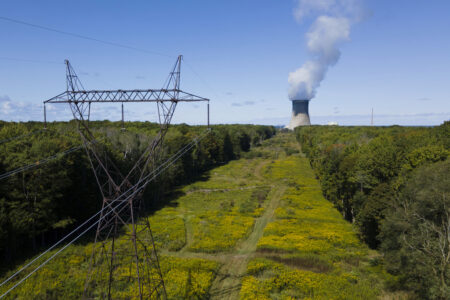
AP photo Electricity prices, according to The New York Times, have increased by 13.3% over seven years in the state.
Once the Sheridan Town Board did its due diligence months ago in approving a new solar farm for 2979 Middle Road, words of encouragement were expressed to the developer, RIC Energy. “I don’t see any problems with it,” Town Board member Colleen Yerico said. “It’s the first one that did everything. … It’s surprising that you’re being so accurate about it. That’s good.”
Remarks of praise do not come at a price. Tax breaks — or payments in lieu of taxes — do. While renewable companies continue to sink their teeth into rebates and government subsidies, customers who rely on the grid throughout Western New York continue to pay a higher price.
Shortly after Sheridan’s approval, RIC Energy made their pitch for a PILOT at the Chautauqua County Industrial Development Agency meeting. While there’s no promise of lasting jobs at any of these sites — just panels of sun catchers — RIC Energy has become experts at pleading to not pay the same tax rates as homeowners and small shops.
Across New York, they have established solar sites in 27 counties in the state, including Chautauqua, Erie and Cattaraugus counties.
Decades ago, this was not the way it worked. Massive power plants — through coal or nuclear — paid big bucks to the communities and schools where they were located through tax bills. There also was stability with rates since electricity was being produced at home and not imported from Canada or nearby states.
Through the state’s energy transition, coupled with rising inflation, customers are now thinking twice when turning on the lights. A recent New York Times article found that over the last seven years, the average price for kilowatt hour has increased by 13.3% in the Empire State. As a nation, that rise does not even begin to put us at the top.
California’s rate was up 33.7% while Maine followed at 22.7%. Also in the mix were West Virginia, up 10.3%, and Pennsylvania, 7.3%.
For the Mid Atlantic states, the rise in rates has shock value. Pennsylvania, according to the U.S. Energy Information Administration, is the second-largest net supplier — after Texas — of total energy to other states.
West Virginia is nearly as prolific. In 2023, coal-fired electric power plants accounted for 86% of its total electricity generation. Renewable energy resources — primarily wind energy and hydroelectric power — contributed 7% and natural gas also provided about 7%, the energy agency reported.
Yet these three Atlantic states are struggling when it comes to the price of electricity. Worse yet, higher costs locally are likely on the way.
In August, the Public Service Commission approved a 20% rate increase for National Grid over three years. “We recognize that this proposal comes at a time when affordability is top-of-mind for our customers,” said Phil DeCicco, National Grid’s New York General Counsel in the spring. “We worked hard to strike a balance that prioritizes energy affordability and ensures grid resiliency — especially in light of the record number of damaging storms we’ve seen in upstate New York — while deferring other programs and initiatives that would add to our customers’ bills.”
National Grid says a chunk of the hike will go toward critical investments to ensure the reliability and safe operation of the company’s energy delivery system that serves 2.3 million Upstate New York residential and business customers, including capital investments of $1.4 billion in the electricity delivery system and $351 million in the natural gas system in the first year.
Those upgrades, however, are part of a decision made in February 2023 by the Public Service Commission. At that time, for more than 60 minutes, commission members discussed $6.6 billion in transmission upgrades that are designed to reduce congestion in three upstate regions as called for by the Climate Leadership and Community Protection Act. Environment was the key factor for the 4-2 approval. The dissenters worried about costs.
Today, that pain is obvious. Once the National Grid hike was approved, AARP New York took note of a growing inability for residents to keep up with utility costs. In April, the organization reported, more than 230,000 households in National Grid’s service territory were 60 days or more behind on their utility bills, owing more than $350 million, and nearly 60,000 households had received a final termination notice due to nonpayment.
Though the Sheridan site work is still in the early stages, another county solar effort is on hold. Within the last month, work has stalled near the Pennsylvania border.
“Due to the current state of the economy, the costs to construct this project have increased far beyond this company’s estimates despite our best efforts,” noted a letter signed by South Ripley Solar Project Manager Alex Spiridakis. “There are several factors impacting the project, including import tariffs, high interest rates and federal trade policies that bring uncertainty to cost of material.”
Overall, Spiridakis’ remarks do not just impact the town or the work. They also are a bad omen for customers who are seeking relief from runaway electricity prices.
John D’Agostino is editor of The Post-Journal, OBSERVER and Times Observer in Warren, Pa. Send comments to jdagostino@observertoday.com or call 716-487-1111, ext. 253.
TOP STORIES

Ellington fire department honored for 100 years of service
Bill would set age limit to buy E-bikes

Forestville Historic District approved by state
City buys land from county for salt shed
The city of Dunkirk has agreed to purchase some land on Lucas Avenue from Chautauqua County for $20,691, intending ...

Boys & Girls Club receives donation from PetSmart