
For tax entities, it’s always better to receive
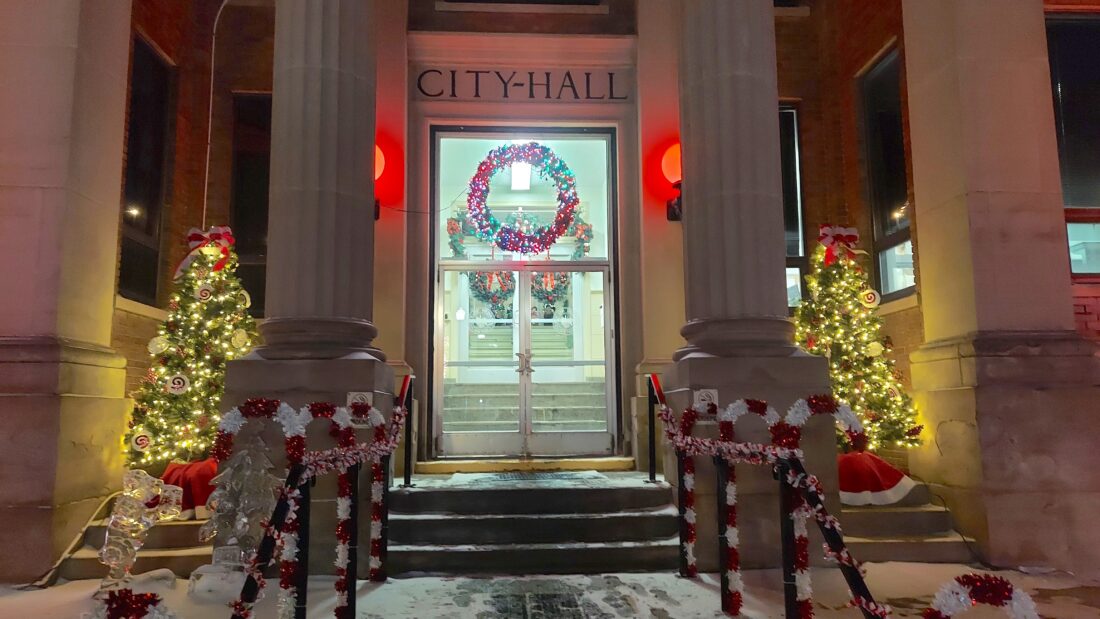
OBSERVER Photo by M.J. Stafford Even at the holidays, all is not calm and bright in a number of local municipalities.
Stalling and stumbling through 12 months has become a tradition of futility for many who are elected here. Due to consistently forgetting they hold positions to represent constituents, not the government they are overseeing, 2025 may have been one of the most brutal years in recent history for Chautauqua County.
Even after the gut punches that included 84% and 54% property tax hikes in the city of Dunkirk and village of Fredonia, nothing has been altered. Across the region, dwindling revenues are failing to keep up with growing expenses.
It is a dangerous equation for struggling local governments — and school districts — that continue to be bloated despite serving fewer residents and students. In a county where the population has declined from 147,000 in the 1980s to 124,000 currently, how do we continue to justify massive amounts of taxpayer entities that exist and continue to need so much more of our money to operate?
Consider the 18 county school districts. Take away the two cities of Jamestown and Dunkirk with a combined population of 42,000, that leaves about 82,000 residents — that make up 16 shrinking school districts.
Albany takes a lot of blame when it comes to high taxes. But decisions here keep driving the punishing property taxes in a county that is among the poorest in upstate New York.
How in the world can we accept being in worse shape economically than Allegany and Wyoming counties? On assets alone, we have Chautauqua Institution, the National Comedy Center and six lakes, including one of the Greats in Erie. Those other counties, which have some natural gems and a more rural setting, are doing better than we are when it comes to prosperity.
It is tough to fathom, but the numbers do not lie. Only the Bronx rates as poorer than our home in the state.
Even the entities and officials who have been bragging about reducing your tax rate are not decreasing costs. Chautauqua County, which shamefully increased its payroll by 19% in a one-year span from $63 million to $75 million, raised the total amount of taxes collected by 2% while holding on to $36 million in reserves.
That is not being responsible. It, especially at Christmas, is downright miserly.
Add in 19 self-serving county legislators — many anonymous to those they serve — who voted themselves a 62% pay increase that starts in January and you get the bigger picture. Governments and schools at the moment are working harder to protect their tax-collecting entity than they are at serving the community.
Missing in the big picture is sustainability. As New York state faces a future that likely includes less federal funding, there’s strong indications that Albany will be facing a squeeze.
All sectors — health care, education, transportation and economic development — could be under the razors.
“The stakes are high for New York if the cuts being discussed in Washington occur,” state Comptroller Thomas DiNapoli warned last spring. “The state needs to do what it can to stabilize finances, build reserve funds, focus on efficient service delivery and develop a strategy for how to contend with federal changes.”
That has not happened. But within the last month, there has been some minor progress that we need to at least consider as a glimmer of hope. Knowing the region’s economy is based on a public sector model — and not on growing business — we cannot keep asking those living here to pay more.
One of the solutions touted by Chautauqua County Executive PJ Wendel was discussed during a virtual meeting with elected officials from towns, villages, and cities while providing an update on the Government Reduction Initiative (GRI), scheduled to launch during the first quarter of the new year.
In October, Wendel proposed an amendment to the GRI, originally adopted in May 2017. The initial resolution authorized the county to provide up to $50,000 to a town if two or more towns consolidated, or if a village dissolved into the town in which it was located.
Wendel’s updated initiative authorizes the county to provide up to $100,000 per year to any local government entity or school district that is considering, planning, or implementing one of the following: dissolution, consolidation, or merger; consolidation of public services or facilities; and intermunicipal collaborations that improve service delivery.
“Efficient government isn’t just good policy, it’s good stewardship,” said Wendel, who has a documented history of growing county government.
At the moment, Panama, Sherman and Clymer are three schools considering merger options. In the north county, fiscally troubled Dunkirk and Fredonia have been talking about having combined fire and police departments and Pomfret has been in on conversations about possibly working with the village’s DPW.
On paper, the proposals make sense. Emotionally, area residents are consistently afraid of making sacrifices when it comes to government or school downsizing.
In this case, fear is overrated. High costs are not.
— — —
Happy holiday.
John D’Agostino is editor of The Post-Journal, OBSERVER and Times Observer. Send comments to jdagostino@observertoday.com or call 716-487-1111, ext. 253.
TOP STORIES
Outgoing county legislators received salute
For tax entities, it’s always better to receive
Council sets special meeting on fiscal affairs
The Dunkirk Common Council has set a special Sunday session to consider resolutions that Mayor Kate Wdowiasz says ...
Dunkirk police bust 2 for weapons threats
Two people who threatened others with weapons were arrested by Dunkirk police in separate incidents recently. The ...
Fredonia police chief retiring
Boil order lifted for Fredonia water users
The Chautauqua County Health Department, in conjunction with the village of Fredonia has lifted the boil water ...