
Healing with horses: The science behind feeling safe
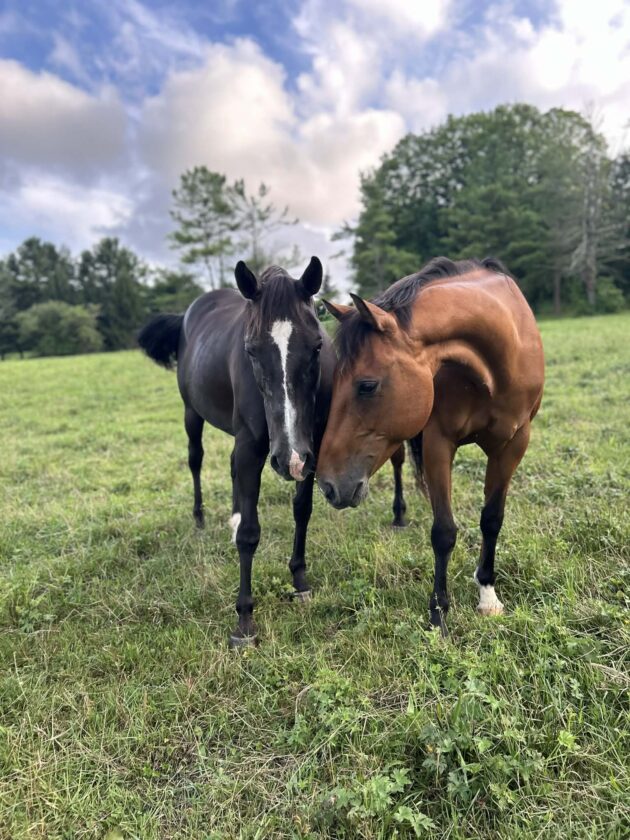
These horses have a connection.
The Year of the Fire Horse, according to the lunar calendar, symbolizes courage, motion, and transformation. For me, this is a catalyst for more action. Something has to change — especially when it comes to health.
I am tired of not feeling well, of wanting to do ordinary things without exhaustion or pain. I spend hours reading research, reviewing studies, and searching for answers — often frustrated — because modern medicine has not delivered relief.
I am also a physical therapist. I’ve done what I was trained to do. I’ve seen the specialists. Yet my body hasn’t responded the way my education says it should. Exercise — the cornerstone of rehabilitation — makes me worse. Even mild activity can require three days of recovery. So, I’ve become my own test case.
After several years of failed trials, advertised remedies, and endless literature reviews–from conventional medicine to “natural” solutions — the most promising research keeps pointing to neuroscience, a combination of biology, genetics, environment, psychology and systemic balance.
That shouldn’t be surprising, yet much of modern treatment still isolates symptoms, targets single deficits, and markets “pure” solutions in the right ratio. It’s a competition between Big Pharma and over-the-counter natural remedies.
I can imagine a wellness center that treats healing as a whole-body experience. A place where nature is essential medicine. Where horses are partners in healing. A place where someone can move through quiet wooded trails in an electric golf cart–no fumes, no noise–or ride a calm, steady horse, supported and safe, with fresh air, picturesque trees, fauna and flora, healing frequencies, birdsong, nurturing sensory stimulation, gentle breeze, sunshine or the smell of the earth after a gentle rain. As the saying goes, “Start where you are, with what you have.”
In many parts of Europe, wellness and prevention are core parts of healthcare. Employers and insurance systems support spa-based rehabilitation, restorative clinics, and even therapeutic horseback riding. These models don’t just treat illness–they create conditions for health.
In science, when something cannot yet be definitively proven, it’s called a theory or hypothesis. A theory is not a guess; it’s a plausible explanation supported by evidence and ongoing research. When symptoms persist and standard treatments fail, it means we haven’t yet uncovered the truth.
One concept gaining attention is restorative regulation–helping the body calm inflammation and returning the nervous system to a healthy rhythm. Not through force, medication, or suppression, but by helping the body feel safe enough to heal itself. This idea is rooted in neuroplasticity: the body’s ability to adapt, reorganize, and recover. Regulation is built through routine, rhythm, and specific sensory input. The goal is homeostasis–internal balance.
To understand why this matters, it helps to know a little about the nervous system. The body has twelve cranial nerves connecting the brain to the body. The nervous system is divided into voluntary systems we consciously control and the autonomic system, which operates automatically. The autonomic system has two main branches: the sympathetic (“fight or flight”) and the parasympathetic (“rest, digest, heal”). Both are essential, constantly balancing survival and restoration.
In 1994, neuroscientist Dr. Stephen Porges introduced Polyvagal Theory, expanding our understanding of the vagus nerve, the tenth cranial nerve and a major regulator of the parasympathetic system. This nerve connects the brain to the heart, lungs, digestive system, and more. Polyvagal Theory explains how our nervous system subconsciously scans for safety or danger, a process called neuroception. When we feel safe, healing can occur. When we feel threatened–physically, emotionally, or socially–stress hormones rise, inflammation increases, and the body shifts into survival mode.
Modern life rarely feels safe. Emails and social posts replace predators. Constant demands cause anxiety. Headlines amplify conflict and information overload, and boredom, grief or lack of purpose often create addictions from the need to try to fill the void or heartache. When stress is constant, the body never fully resets. Over time, this imbalance of the autonomic nervous system contributes to chronic inflammation and autoimmune conditions.
And this is where horses enter the story.
Horses are exquisitely sensitive, rhythmic, and grounded. Their warmth, movement, breath, and presence provide precisely the kind of sensory input known to stimulate the vagus nerve. Being with horses naturally encourages slower breathing, gentle movement, connection, and calm. They help humans feel safe. This process — sometimes called neurotoning — supports relaxation and restoration, without force or pharmaceuticals.
For people living with chronic or autoimmune conditions, this may be the beginning of real change. Therapeutic riding at Centaur Stride is already approved for reimbursement through Independent Health Wellness Cards, and work is underway to expand insurance-supported wellness programs. The vision is simple but powerful: an affordable, nature-based wellness center rooted in the healing partnership between humans and horses.
As we move into 2026, the Year of the Fire Horse, perhaps courage doesn’t mean pushing harder. Perhaps it means transformation through a different path — one that allows the nervous system to reset, reconnect, and remember how to heal.
Centaur Stride needs help to make this vision possible — through volunteers, funding, or community support. The possibilities are inspiring, and hope abounds.
For more information, visit linktr.ee/centaurstride or call the barn at (716) 326-4318.
Our next fundraiser is Saturday, Feb. 7, a soup supper, raffle and presentation at the Westfield Methodist Church. Save the date.
Claudia Monroe is president of Centaur Stride.
TOP STORIES
Healing with horses: The science behind feeling safe
During harsh winter, birds add life to outdoors
Property purchased by Wells among real estate sales
Reasons to soar: Westfield teen earns Eagle Scout distinction
School 7 celebrates achievement
Homicide victim identity unknown after 42 years
ELLERY – It’s been more than three years since cold case investigators released a new sketch of a woman ...