Winter hiking finds footing across Western New York
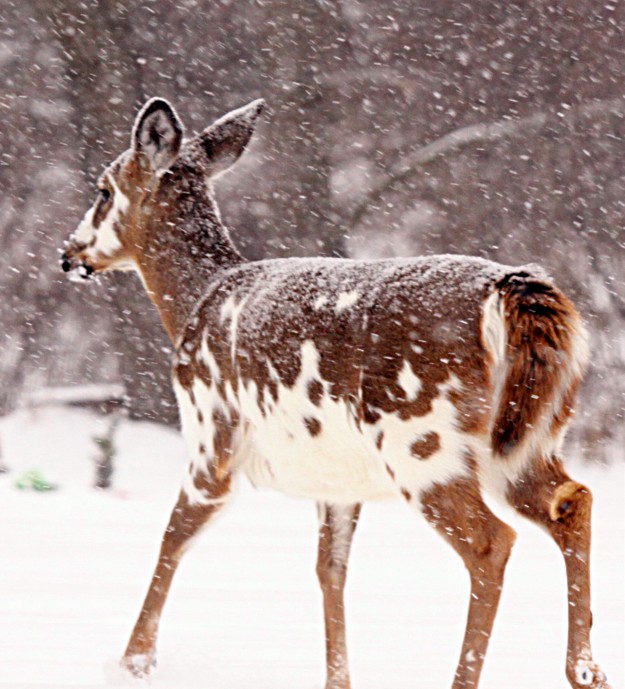
Photo by Joe Forma Multi-color Piebald deer are occasionally seen by walkers along a local winter hiking trail.
-
- Photo by Joe Forma Multi-color Piebald deer are occasionally seen by walkers along a local winter hiking trail.
-

- Photo by James Monteleone Red foxes are common in Western New York, but seeing one on the trail is not common and taking a good picture of one is quite difficult. They are wary of people.
For many, winter hiking fills an important gap. Shorter days, cold temperatures, and snow often keep people indoors, leading to reduced activity during the months when staying healthy matters most. A winter hike — even a short one — gets the heart pumping, works stabilizing muscles, and provides a mental reset that can rival any gym workout. I need that more often in winter than at any other time. The key to enjoying it, seasoned hikers say, is not toughness, but preparation and common sense.
Footwear is the foundation of winter hiking comfort and safety. Waterproof insulated hiking boots with good ankle support are ideal for Western New York conditions, where trails can shift quickly from packed snow to slush or ice. Aggressive foot tread helps on snow-covered paths, and many hikers add lightweight traction devices for icy stretches.
Equally important are socks. Wool or wool-blend socks are the gold standard. They insulate even when damp, they wick moisture away from the skin and reduce the risk of blisters. Cotton socks should be avoided, as they hold moisture and can quickly lead to cold feet.
Outerwear for winter hiking should focus on multiple light layers rather than bulk. A moisture-wicking base layer keeps sweat off the skin. A middle insulating layer such as fleece or lightweight down traps warmth, while an outer shell blocks wind and sheds snow. Breathability is just as important as warmth, especially on longer hikes or uphill sections.

Photo by James Monteleone Red foxes are common in Western New York, but seeing one on the trail is not common and taking a good picture of one is quite difficult. They are wary of people.
Gloves or mittens, a warm hat, and a neck gaiter round out the essentials. Many hikers carry an extra pair of gloves in case the first set gets wet. A good idea. Staying dry is the simplest way to stay warm.
One of winter hiking’s biggest rewards is the peace and quiet. Snow muffles sound, and trails that are busy in summer feel almost private in January and February. This stillness makes winter an excellent time for wildlife observation. You will find a front row seat to winter wildlife. Deer tracks often crisscross trails, squirrels are active gathering food, and winter birds such as chickadees, woodpeckers, and nuthatches, each stand out clearly against the snow and bare trees.
If you’re new to this winter hiking idea, the biggest question might be where to go? Chautauqua County has a new Interactive Trails Map and accompanying mobile app. This interactive map allows trail users to explore more than 700 miles of trails throughout the county, and select trails for hiking, biking, horseback riding, and more. It also features images of trail heads and provides information on trail surfaces, trail length, and parking. The mobile app can be downloaded from Avenza, the top-rated app used for hiking and biking, even in the most remote areas of the world. Using GPS technology, Avenza is useful for when trail users are on the trail and want to see their location in real time, regardless of cell reception. Visit https://www.tourchautauqua.com/explore/trails.
Binoculars are a valuable addition to a winter hiker pack, allowing for close-up views without disturbing wildlife. Even a compact pair can greatly enhance the experience, turning a simple walk into a nature outing.
We talk about technology across so many things in our modern lives, and the bottom line is that they add confidence. Modern tools have made winter hiking safer and more accessible than ever. GPS devices and smartphone apps help hikers stay oriented, especially when snow obscures trail markers. The NYSDEC offers mobile-friendly maps and resources that highlight public lands, trail systems, and access points across the region. Downloading maps ahead of time is best, as cell service can be limited in remote areas.
A fully charged phone carried in an inner pocket to preserve battery life, is an important safety item. Many hikers also let someone know their planned route and return time, a simple precaution that adds peace of mind.
Winter hiking in Western New York is a season worth stepping into. It isn’t about conquering harsh conditions; it’s about embracing them. With the right footwear, smart layering, and a few useful tools, the trails become a welcome adventure. The reward is fresh air, quiet moments, and a deeper appreciation for the outdoors during a season too often spent inside. Big game hunting season is over. For many, one winter hike is all it takes to turn cold weather into a reason to get outside.
TOP STORIES

Fredonia OKs new line despite complaints
Winter hiking finds footing across Western New York

Sheridan appoints new Planning, Zoning members
Scudder, 2 others join water district board
A county legislator representing Fredonia is now on the North County Water District administrative board. The board ...

Healing with horses: The science behind feeling safe