Affordability keeps getting more expensive
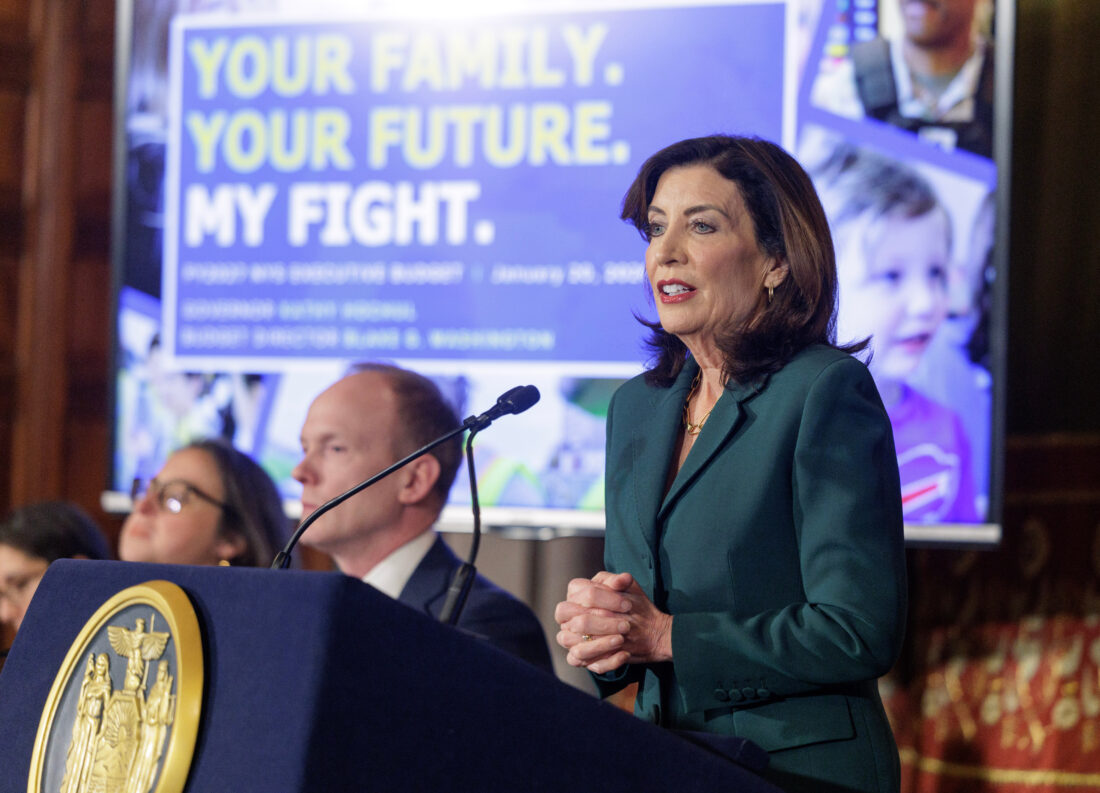
Gov. Kathy Hochul in Cheektowaga on Wednesday touts a more affordable New York state despite increasing budgets and taxes.
Almost every level of bureaucracy is guilty of overusing the word affordability. As prices keep rising — whether due to inflation, at the grocery store or painfully within the last two weeks at the gas pump — that phrase gets repeated more than nightly “Law & Order” reruns.
Let’s be clear. If the government is involved, costs are not going down — on the national and local levels.
That is not how the system works, especially for a needy Western New York region that has seen population declines for more than 50 years. As the numbers of residents dropped, municipal and other forms of public employment kept increasing.
During a stop in Erie County this week, state Gov. Kathy Hochul was on another one of her rants regarding high utility costs and rising car insurance prices. In making a return to her blue-collar roots, she was sympathetic to the struggles many families are facing at the moment.
“I know what’s happening out there,” she said. “I know what it’s like. I was a young mom having to clip the coupons and …worry about whether I could afford to pay for the gas as gas prices were going up back in that era as well. I know what anxiety feels like when the bills start piling up.”
Not mentioned in any of her prepared statements were the continued rising costs in Albany that lead to a more than $262 billion budget proposal for the fiscal year 2026-27 that does nothing to cut expenses. How can rising costs in an already overtaxed state lead to greater affordability for those who live here?
A more worrisome prospect involves the nation’s economy and stock markets. When Wall Street and the major indicators take a fall like they have over the last three months — the Dow Jones is down 4% since the start of 2026 — that impacts the big bucks that go to the capital in the form of bonuses that drive New York spending. Every region in the state, especially Chautauqua County, relies on that cash cow from New York City.
Here at home, however, there is no talk about affordability from elected leaders. Dunkirk, the entity that had an 84% increase in property taxes for 2025, does not create an annual spending plan that benefits residents. Instead, it focuses on meeting the rising price that comes with public safety.
Last week, a report on the federal American Rescue Plan Act funds for the county’s smaller city showed how out of whack and desperate the municipality is when it comes to making payroll. Of the $10.6 million received, $5.35 million from 2021 to 2023 went to pay police and fire — just over half of the city’s ARPA spending.
Jamestown, the largest county city, also faces a cash crunch. While in no way facing the same crisis as its north-county counterpart, a shrinking tax base cannot continue to feed mounting expenses.
Schools also are facing a similar pinch as budget proposals are starting to percolate. In the largest north county locations, officials are already looking at tax increases to make ends meet.
Fredonia’s district may be facing the most dire of the circumstances. Earlier this month, it unveiled a $41.5 million plan — an increase of 8.75% when compared to this year. Salaries are up 4.27% and benefits, especially the rising health care costs, are 8% higher. Those lines make up more than $28 million of the spending.
Warren County, Pa., schools are facing similar challenges. Even after closing two high schools — one in Youngsville and another in Sheffield — the county district is facing a nearly $3 million deficit as it begins financial talks. Health costs and salaries are driving that fiscal cliff.
Even in Chautauqua County, affordability is not what it seems. This year’s $310 million approved budget included trickery. Though the tax rate went down due to rising property values, the overall amount collected through taxes increased by 2%. That means the county tax bill for this year went up.
What’s worth watching in Mayville, as we continue to note, is the rapidly rising salaries that continue to be approved with little pushback by Republican county lawmakers. This matters when you look at recent history.
Payroll rose from $66.6 million in 2024 to $75 million in 2025. With higher pay scale thresholds, which were approved in February for county workers and administrators, those amounts will keep rising — hopefully not as much as the 19% during the last year.
Those higher wage rates, realistically, impact long-term employees who are already at the top of their pay scale and nearing retirement. By increasing those top-tier positions, that cost goes up for taxpayers twofold: it funds both the position and the pension payments.
So, in the end, when the discussion comes down to keeping prices in line, it is never about easing the burden on the taxpayers. Instead, especially in this area, affordability comes down to making sure those in the public sector are getting annual pay increases — no matter what it is costing the residents.
John D’Agostino is the editor of The Post-Journal, OBSERVER and Times Observer in Warren, Pa. Send comments to jdagostino@observertoday.com or call 716-366-3000, ext. 253.
TOP STORIES
High schoolers embrace BOCES repair program
Affordability keeps getting more expensive
County OKs school, municipal merger money
Fiscal worries aired in Fredonia budget plans
Fredonia’s budget talks got underway Wednesday with plenty of grim news. Village Treasurer Erlyssa LeBeau ...
Assembly passes lead disclosure in home sales
A state lawmaker wants to increase the transparency on lead contaminants for homebuyers, particularly those who are ...