Borrello, Molitor call grape pact cancellation ‘significant setback’
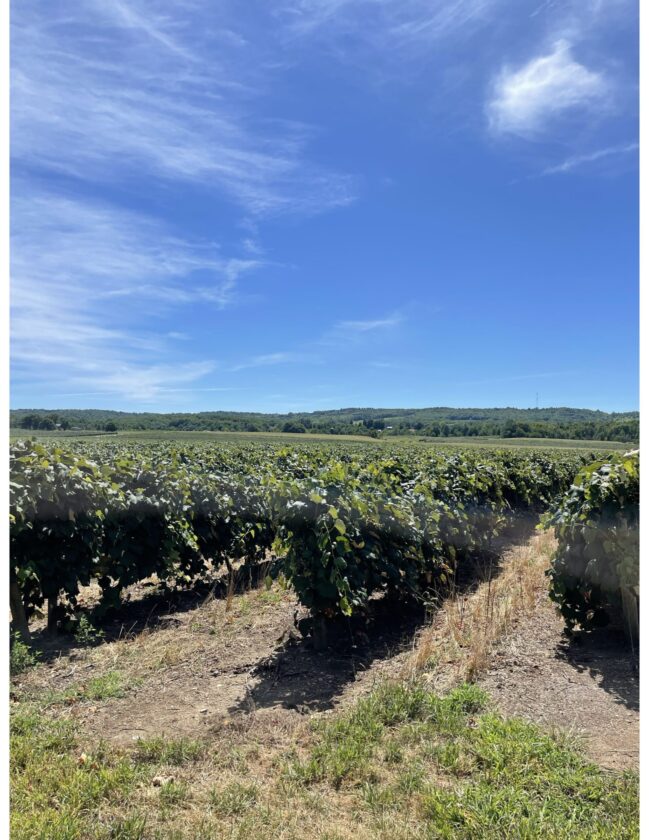
Grape vineyards are pictured in the Westfield area.
Area state leaders are responding to the recent cancellation of contracts by Refresco with Lake Erie Grape Growers.
In a statement issued Friday, both Sen. George Borrello and Assemblyman Andrew Molitor issued the following statement regarding Refresco’s decision to cancel contracts with grape growers across the Lake Erie region:
“This is a significant setback to grape growers in Chautauqua County and across our region,” both said. “These farms are not only a vital part of our agricultural heritage, but also a major driver of the local economy. When growers lose contracts of this scale, the impact extends far beyond the vineyard; it threatens jobs, related businesses, and the economic stability of entire communities.”
Refresco is one of the processors for many in the local Lake Erie region, buying from 126 growers and 2,600 acres of grapes in both New York and Pennsylvania. Andrew Holden, Cornell Cooperative Extension’s Lake Erie Regional Grape Program’s Business Management Specialist, said this week Refresco bought grapes to turn into different products such as beverages.
“Refresco sent letters out to let growers know they will no longer be processing grapes,” Holden said. “Our office here is working with growers to help them figure out the best decisions for their farms moving forward.”
The Lake Erie Regional Grape Program serves both New York and Pennsylvania through contracts with Cornell University and Penn-State University. Jennifer Phillips Russo, Cornell Lake Erie Regional Grape Program Team Leader and Viticulture Specialist, said the organization brings local experience and research-based solutions together to provide projects aimed at increasing yields, product quality, diversity and improvement of cultivars, efficiency of production, profitability and adoption of environmentally sound cultural and pest management strategies. She added that they are committed to working with stakeholders to assist them through this process to the best of their abilities. Holden added to that, saying they serve about 30,000 acres in the region and are primarily educational.
“We are actively working with industry stakeholders, the New York State Department of Agriculture and Markets, and federal, state, and local officials to identify every possible avenue of support for affected growers,” Borrello and Molitor said. “That includes exploring financial assistance, connecting producers with alternative markets, and pursuing available resources to help farm families navigate this difficult situation.
“Our grape growers have weathered challenges before, and we will do everything we can to stand with them and fight for the support they need during this uncertain time.”
TOP STORIES
Borrello, Molitor call grape pact cancellation ‘significant setback’

Forestville holds firm on 2.9% tax increase

More construction planned at Sheridan Bay Park
Ferguson adds to merger talks
Fredonia Mayor Michael Ferguson emphasized Monday that local municipal consolidation is at an early, strictly ...
Consistent north county sites eyed for Code Blue
Throughout the last few months the area has been continually blasted by cold and brutal weather conditions, leaving ...