Capital handouts keep cities in crisis
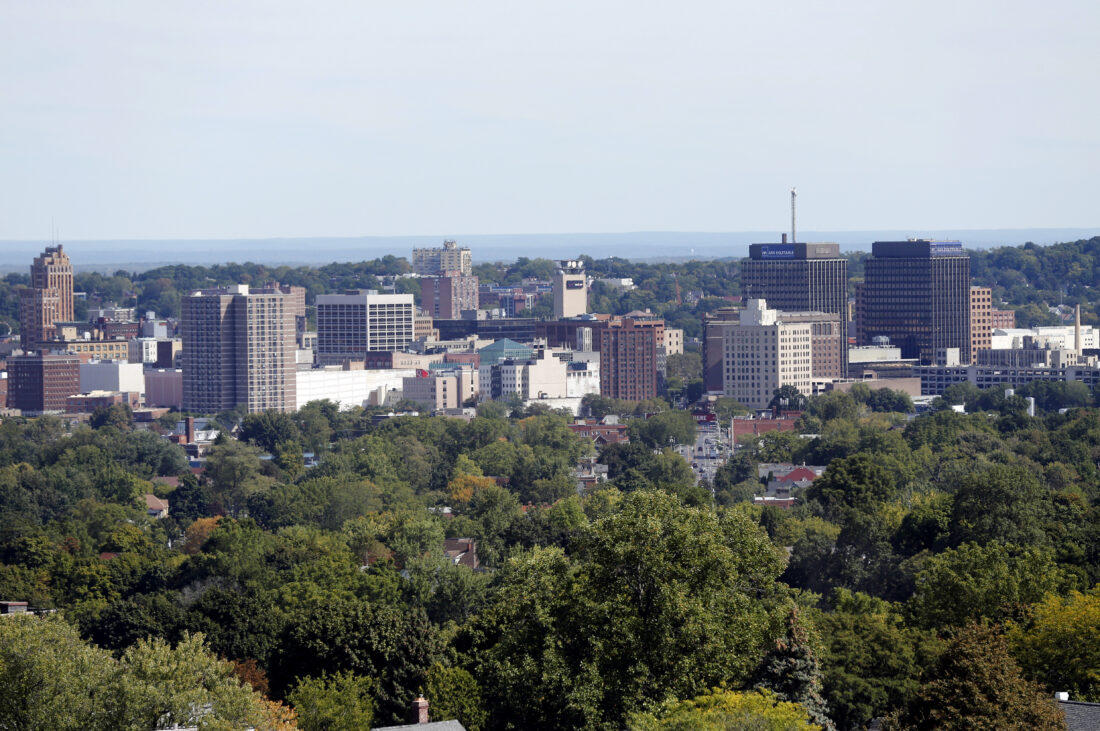
AP file photo Syracuse is one of New York’s big five cities that have seen population loss over the last five decades.
Somewhere in Albany, there has to be a money tree. How else can a state, with a proposed budget of more than $254 billion for the next year, keep doling out funds to fiscally strapped entities with absolutely no repercussions?
That is exactly what happened less than a month ago when the pressure ratcheted up on Gov. Kathy Hochul. Only days after promising New York City Mayor Zohran Mandami $1.5 billion to assist the Big Apple in its operating expenses for 2026 and 2027, Hochul deposited another $150 million to other state municipalities.
Sounding sympathetic, the governor also took a tone that these funds will pave the way for brighter futures. “Having spent years in local government, I understand the unique challenges our local leaders are experiencing, which is why my administration has worked closely with municipalities across the state to increase financial support from the state,” she said. “We want all of New York’s municipalities to succeed, and this funding is crucial to putting all of our cities, towns and villages on stronger financial footing and allowing them to keep their residents safe and continue providing the vital services they rely on.”
Even Jamestown officials have to be pleased by Hochul’s actions. With an additional $1.6 million, it gives a bit of breathing room for the largest Chautauqua County city that increased taxes 5.5% this year in its $45.6 million spending plan.
Dunkirk, already the benefactor of a $13.7 million state loan with a 7.5% interest rate last June to avoid insolvency, will receive $549,000 for its $30 million budget. That’s barely enough for the compensations and benefits of three police officers working in the municipality.
In Cattaraugus County, the city of Olean is targeted for an additional $780,276. But there is no party over the recently announced revenue as city taxpayers are facing an 18.65% hike in taxes.
Do you notice the trend? What Hochul’s offering is peanuts when taking on the elephant-sized problems that face the upstate municipalities.
It is even worse for the upstate big five that includes Buffalo, Yonkers, Rochester, Syracuse and Albany. All were thriving metropolitan areas in the 1970s, thanks to a strong manufacturing sector. Fifty-five years ago, the cities combined had a total population of 1.275 million. In 2025, those numbers plummeted to 942,512 — a 26% decrease.
Buffalo, which has a control board, was in such bad shape that Hochul gave the city an additional $40 million. “This support from New York State allows us to balance this year’s books without additional borrowing and reduces the pressure on Buffalo taxpayers in the years ahead,” said new Mayor Sean Ryan. “I’m grateful to Governor Hochul for recognizing Buffalo’s urgent need and providing the resources that will stabilize our finances immediately as we take on the long-term work to put the city on solid footing.”
But how many chances do these governments get?
Since 2010, according to seethroughny.net, these cities have increased government employment numbers from 10,972 to 11,760 in 2025. Combined public employee payroll for the cities during that time also showed gains — from $725 million to $1 billion. All this at a time when the big five saw major population declines.
New York’s glory days of the past were synonymous with its vibrant cities. Today, these once powerful entities are collectively limping. All are tied to contracts that are placing a tremendous strain on their well being — for today and years to come.
Closer to home, Dunkirk’s troubles have been well documented in these newspapers. It is a perfect example of the arrogance of previous leadership not wanting to consider its damaging decisions.
Flush with cash decades ago from an electric-generating plant that powered millions of dollars a year in taxes to the city, elected officials gave away the store. No-layoff clauses that also include minimum staffing levels and generous benefit packages.
Once these items are written in, they do not come out — even when governments do not have the ability to cover costs. This is an issue that faces every troubled city in New York with no end in sight.
Albany and Hochul, as is tradition, throw money at problems. That is an expensive proposition — and it lacks honesty with residents.
“This additional aid will deliver meaningful relief not only to municipalities across New York grappling with mounting fiscal pressures, but also to taxpayers striving to balance household budgets amid the rising cost of living,” said misguided New York Conference of Mayors Executive Director Barbara Van Epps. “We deeply appreciate the Governor’s recognition of the vital role local governments play in moving New York forward, and we urge the State Legislature to preserve this additional investment in the adopted state budget — because when our cities and villages rise, all of New York rises with them.”
That’s wishful thinking. Most major municipalities are stuck in a hole — and Albany keeps handing them a shovel.
John D’Agostino is editor of The Post-Journal, OBSERVER and Times Observer in Warren, Pa. Send comments to jdagostino@observertoday.com or call 716-487-1111, ext. 253.
TOP STORIES
County uses $1.3M from surplus to cover safety net
MAYVILLE – County leaders are once again dipping into its reserves to cover higher than expected expenses for ...
State energy prices keep rising upward

Floating fish pen project aims at steelhead
Capital handouts keep cities in crisis
‘Extremely tight’ April seen for city
There was more grim news about Dunkirk’s finances this week. “We’ll get through the month of March. April ...