Wendel details second north county efficiency meeting
It is still early, but discussions regarding a municipal cooperation between four north county entities are continuing.
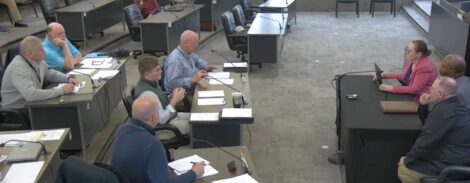
On Wednesday, Chautauqua County Executive PJ Wendel said he convened a second meeting of local and state leaders last week at the SUNY Fredonia Center for Innovation and Economic Development to continue discussions on the future of municipal cooperation and government efficiency in northern Chautauqua County.
The meeting followed an initial gathering on Feb. 13, where leaders first began exploring opportunities to utilize funding from the recently expanded Chautauqua County Government Reduction Initiative for shared services, potential consolidations, and other cooperative efforts among the city of Dunkirk, town of Dunkirk, village of Fredonia and town of Pomfret.
Wendel also spoke publicly of the effort last week during a town of Pomfret meeting.
During the discussions on Friday, participants examined the possibility of expanding collaboration beyond shared services to include exploring whether the four municipalities could eventually merge into a single town structure. Officials emphasized that the idea remains in its earliest stages and would require extensive analysis, public input, and voter approval under New York State law.
“This is not something we can just rush into, it is going to take some time,” Wendel said. “We will ensure all the proper steps are followed, and that this benefits each municipality involved. In the meantime, we are going to explore what shared services or department mergers can be accomplished in the short term that would help ensure a smooth transition in the event that all four municipalities combined.”
Attending Friday’s meeting alongside Wendel were state Sen. George Borrello, Assemblyman Andrew Molitor, city of Dunkirk Mayor Kate Wdowiasz, Dunkirk city attorney Elliot Raimondo, Dunkirk Fiscal Affairs Officer Ellen Luczkowiak, town of Dunkirk Supervisor Shari Miller, Dunkirk Town Board member Philip Leone, Fredonia Mayor Michael Ferguson, Fredonia Trustee Jon Espersen, Pomfret Supervisor Daniel Pacos, Pomfret Councilmember Kathleen Dennison, and County Legislator Marcus Buchanan.
Wendel noted the initial February meeting grew out of a candid and productive conversation he had with Mayor Wdowiasz regarding the financial and structural challenges facing municipalities across the region.
“These meetings represent exactly what Chautauqua County’s Government Reduction Initiative was designed to do — bring local leaders together to have proactive, forward-thinking conversations about how we can deliver services more efficiently while reducing the burden on taxpayers,” Wendel said. “By taking this step, these municipalities are showing a willingness to explore real solutions, backed by data and analysis, that could strengthen their communities for the long term. This is about being responsible with taxpayer dollars, embracing collaboration, and building a more sustainable model of government for the future.”
While discussions have at times been spirited, leaders in attendance agreed on a fundamental point: continuing to operate government exactly as it has been for decades may not be sustainable for residents or taxpayers.
“The city of Dunkirk fully supports these discussions because we know that working together is how we build a stronger future for every community in northern Chautauqua County,” Wdowiasz said. “I’m grateful that a candid and spirited conversation between County Executive Wendel and myself helped spark this effort — an honest recognition that we all face similar challenges and must plan for the long term. Exploring consolidation gives us a real opportunity to improve services, reduce duplication, and create a more sustainable model of local government. This is about being responsible, protecting taxpayers, and ensuring that residents across all of our communities receive the high quality services they deserve.”
County officials emphasized that these meetings represent a collaborative effort among local governments, not a mandate from the county or any single municipality. Leaders are proactively exploring options to address economic pressures impacting communities across the state.
“The Town of Dunkirk is cooperating in these discussions and will only do what is in the best fiscal interest of our residents,” said Shari Miller, Town of Dunkirk Supervisor. “Anything that we do will be based on the wishes of our tax payers.”
A key factor discussed during the meeting is the county’s role in guaranteeing municipal property tax revenues. Chautauqua County ensures municipalities receive their full budgeted property tax levy, even when residents are unable to pay their taxes. When that occurs, the shortfall is ultimately absorbed by taxpayers across the entire county.
“The Town of Pomfret is open to exploring ways to reduce redundancies and mitigate tax increases for our residents,” Pacos said. “We currently operate a shared assessor’s office with the towns of Arkwright, Dunkirk, Hanover and Portland. Each municipality is realizing savings from this shared service – we would like to explore additional savings in other ways.”
By studying possible structural changes now–while local governments have time to plan and collaborate–leaders believe they can create a more stable and efficient system that protects residents and reduces long-term tax burdens.
“I appreciate the local leaders who are coming together to have these important conversations about the future of government in northern Chautauqua County. These discussions are still in the early stages, but they reflect a willingness to think seriously about how local governments can better serve residents,” Borrello said. “We stand ready to assist as conversations in the community continue and to help ensure that taxpayers have a voice in building a government that serves them as efficiently and effectively as possible”
The conversation also builds on previous municipal dissolutions in Chautauqua County that successfully reduced costs for residents. The Village of Forestville dissolved into the Town of Hanover in 2016, and the Village of Cherry Creek dissolved into the Town of Cherry Creek in 2017. In both cases, the villages faced severe financial distress and potential tax rate increases exceeding 100 percent. Dissolution eliminated costly village tax bills while avoiding tax increases at the town level.
Wendel also noted he has spoken with state representatives and is confident that if discussions progress toward formal proposals, the communities involved could be eligible for significant state funding to support the transition and invest in improved services.
Leaders agreed transparency and community involvement will be essential moving forward, with the shared goal of ensuring residents receive effective, efficient, and affordable government services.
“I want to thank all of the local leaders who came to the table and engaged in open, honest, and sometimes difficult conversations for the betterment of their communities,” said Wendel. “While some narratives may suggest otherwise, what we are accomplishing here is real–local leaders working together across party lines, focused on solutions and united by a shared commitment to strengthening our communities and addressing common challenges. That kind of collaboration is how we move forward and deliver results for our residents.”
Further discussions are expected as leaders continue exploring options to ensure northern Chautauqua County remains financially stable, competitive, and well-positioned for the future.
TOP STORIES
Dunkirk lobbies county for north county brush site
Wendel details second north county efficiency meeting
It is still early, but discussions regarding a municipal cooperation between four north county entities are ...
Westfield man charged with attempted murder in shooting
Area grape farmers lose major contract

Touring from home: Fredonia Culture Fair celebrates best year yet