
Dairy market pushes forward despite challenges
In the wake of Refresco canceling its local contracts with grape growers, other agricultural markets such as dairy are continuing on, even while facing some challenges, including some similar to grape growers.
Kate McDonald Polakiewicz, farm business management specialist with Cornell Cooperative Extension, said dairy farming continues to be the backbone of New York state’s agriculture and accounts for around two-thirds of total farm revenue in the state. Investment in the sector remains high with roughly $3 billion in current or planned investment in dairy processing. Even with this, Polakiewicz said milk prices right now in 2026 are lower than they were in 2025, at about $2.50 to $3 per hundredweight on average across the United States.
This, she added, makes markets tight, and an abundant milk supply combined with prices going down reduces a farm’s profitability.
“For New York dairy farmers, these challenges are particularly relevant,” Polakiewicz said. “High input costs like labor, feed costs, and financing amidst low milk prices result in farms operating at or below the breakeven point in unideal months. Milk prices are susceptible to volatility due to global supply swings and trade patterns. Smaller dairy farms in our region continue to face structural pressure in the form of consolidation of many small to fewer large-scale farms over time.”
And while dairy farming and grape farming are two very different agricultural commodities, Polakiewicz said there is a meaningful similarity between what concord grape growers are currently experiencing and dairy farmers also experience — reliance on only a few processors. Refresco was a big one for grapes, and for dairy farmers in the area the main processors include Upstate Niagara Cooperative, Lactalis and Dairy Farmers of America.
“If a dairy processor-buyer suddenly buys less, dairy producers will feel it,” Polakiewicz said. “But where dairy differs significantly from grapes is that grapes are produced seasonally and contracts set in advance of the production season determine whether the grape crop is grown at all. Cows on the other hand produce a perishable product daily, involving an established system of always moving milk somewhere and making it difficult to walk away from and outright cancel. Instead of cancelling contracts, the milk market instead sees prices collapsing or milk being dumped, to the point of losing profit.”
Polakiewicz added that dairy is more structurally stable than grapes due to Federal Milk Marketing Orders that provide a pricing basis, the advantages provided by co-ops, and diversification potential of the end-market product such as cheese, yogurt, and butter. Even with these protections, she said dairy experiences its own version of stress in the form of a potential price collapse.
“Despite these challenges, there is room for cautious optimism tied to investments made in processing infrastructure,” Polakiewicz said. “Increased processing capacity of New York milk means more availability and demand of locally produced milk. Demand for milk exported internationally to Canada and Mexico also remains strong. US-wide consumer market demand for high protein milk products like cheese and yogurt predicts long-term growth in the dairy sector.”
While facing difficult times or to focus on staying the course during cycles such as the current one, Polakiewicz recommends that farmers focus on being proactive in mitigating risk, staying diligent on tracking costs and employing flexibility in milk production and marketing. She said farmers should be tracking their cost of production on a monthly basis, and not annually, and should have a working idea of their break-even milk price. Dairy producers should also look to reliable data sources to inform their decisions, Polakiewicz said, such as the USDA’s Farm Service Agency’s Dairy Margin Coverage tool. Tracking profit margins like milk price to feed cost gives a more realistic picture of profitability, she added, versus just tracking the price of milk alone.
“With feed costs being a major cost of production, feeding smarter and more efficiently — improving forage quality, storage, etc. — and reducing feed waste can pay off over time,” Polakiewicz said. “It’s also wise to delay big purchases like new, non-essential equipment to times when we have climbed out of a down market. Don’t skip out on relying on others during tough times. Your lender, technical service providers like CCE, NY FarmNet, and other farmers going through it along with you are all sources to lean on.”
TOP STORIES
Dairy market pushes forward despite challenges
In the wake of Refresco canceling its local contracts with grape growers, other agricultural markets such as dairy ...
Court rejects water lawsuit in village
State Supreme Court Justice Grace Hanlon was apparently not impressed with the arguments of the trio of Fredonians ...
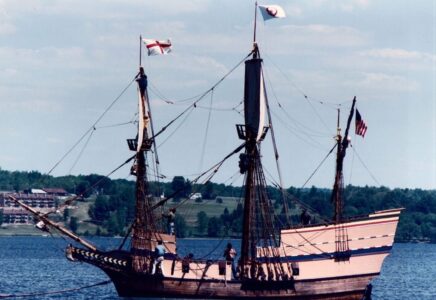
Preservation efforts continue to former Chautauqua Lake ship

Residents speak out against potential Portland data center

New ImmunityBio timeline emerges
Fire closes Fredonia bakery until further notice
A Fredonia bakery and cafe has announced it is closed until further notice after a Thursday afternoon oven ...