
Residents speak out against potential Portland data center
-
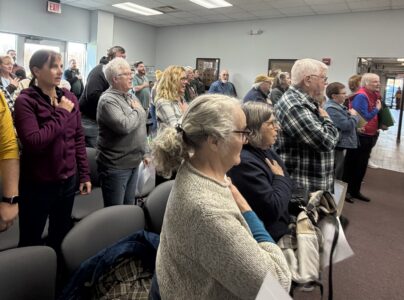
- OBSERVER Photos by Braden Carmen Residents filled the Portland Town Hall to speak out against the Town Board’s decision to issue “general support” for a data center at the former Sugar Hill Golf Course.
-
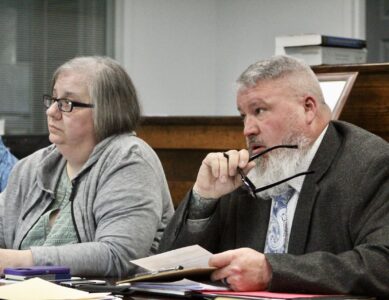
- OBSERVER Photo by Braden Carmen Town Board member Tammy Thompson, left, and Supervisor Rich Lewis, right, listen to public comments about a potential data center to be located at the former Sugar Hill Golf Course.
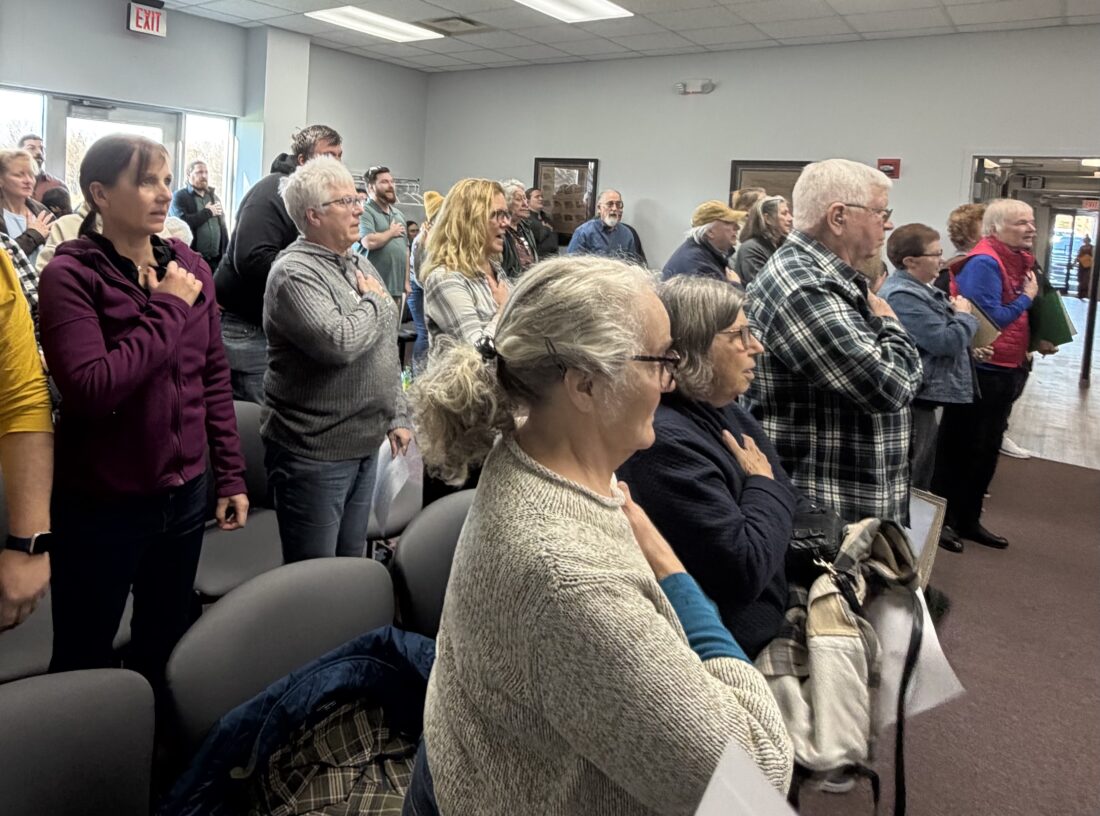
OBSERVER Photos by Braden Carmen Residents filled the Portland Town Hall to speak out against the Town Board’s decision to issue “general support” for a data center at the former Sugar Hill Golf Course.
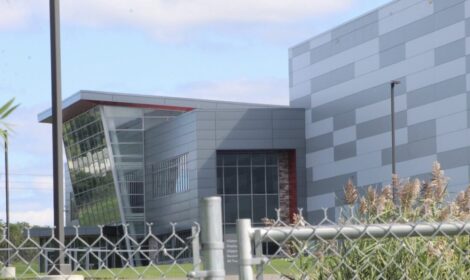
PORTLAND — A month ago, the Portland Town Board passed a resolution to let their stance be known pertaining to a potential data center at the site of the former Sugar Hill Golf Course. Only one member of the public attended the meeting as the Board unanimously passed the resolution to declare its “general support” of a potential project, with a list of conditions that must be met before it could proceed.
A month later, roughly 50 county residents showed up to the next Board meeting to let their voices be heard. The residents were anything but supportive of the idea.
More than 45 minutes worth of public comments from a standing room only crowd at the Portland Town Hall were overwhelmingly opposed to a potential data center to be located at 7060 Route 5 in Portland. A sign-in sheet for public speakers was full, with roughly a dozen speakers taking their turn addressing the Board on the matter. They were each held to three minutes, many of the comments were met with applause.
Before the comments, the Town Board issued a statement on the matter. The Board clarified that while they are supportive of a potential development of the site, there has not been any formal application or detailed plans for a data center project at the site.
Before any project could be approved, the Town Board would need to receive site plans and environmental assessments, and the project would need to be deemed in compliance “with all applicable laws and regulations.” Public hearings would need to be scheduled before any project is approved.
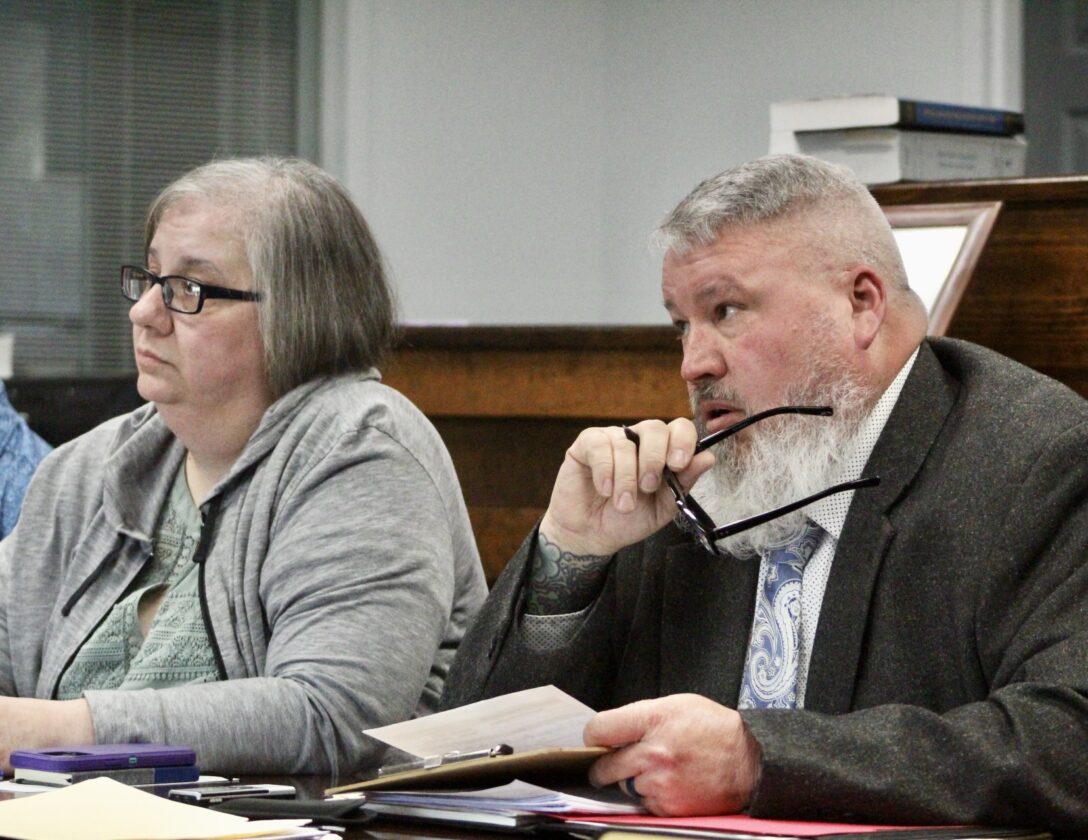
OBSERVER Photo by Braden Carmen Town Board member Tammy Thompson, left, and Supervisor Rich Lewis, right, listen to public comments about a potential data center to be located at the former Sugar Hill Golf Course.
The Board’s statement concluded by stating, “The Town Board encourages responsible development that strengthens the local tax base. A stronger tax base benefits all taxpayers in the community.”
The community felt it is not that simple.
The first to speak was Dale Carlson, chairman of the Planning Board. He said a month ago, he knew very little about data centers, but after the Town Board voiced its support for the idea, Carlson spent a lot of time researching the pros and cons of data centers for a small community. He said they are necessary during the era of artificial intelligence, but “they aren’t free of trade-offs.”
Carlson said there needs to be more transparency regarding what such facilities would cost, rather than just viewing them as generators of tax revenue. He highlighted the water and electricity needs of such facilities — as well as the emissions produced — as costs to consider.
Carlson suggested the Town Board consider a moratorium on data center applications in order to allow for proper zoning laws regarding such facilities to be implemented. Several members of the audience spoke up in favor of his suggestion.
Matthew Susskraut, a Portland resident, said he believes the Town should “proceed with caution” regarding any future data center proposal. He highlighted that a moratorium was proposed at the state level regarding data centers because of the “serious concerns about the strain on electrical grids, rising utility costs to residents, water consumption, noise, and long-term environmental impacts” that could stem from data centers being implemented in communities across the state.
“Local communities like ours do not have the information needed to make fully informed decisions about the risks and costs of hosting a data center,” Susskraut said. He asked the Board to consider why it wishes to proceed even before the state completes its environmental studies, as well as what protections would be in place to keep electric and water costs down for residents.
“New York’s proposed moratorium gives local governments a very clear signal — we should slow down, gather the facts, and make sure that community interests come first,” Susskraut said.
Many others spoke, as well, with some calling a data center “a terrible idea” for the Board to consider. Some residents inquired about a cannabis growing company using the land instead, while others raised the question about why the Town Board opposed the State of New York’s interest in the land for a park. When the State of New York inquired about the land in the fall of 2024, the Town Board responded by saying it opposed the land being used as a park because more than 50% of the land in the town was already tax-exempt, including Lake Erie State Park along the shoreline off Route 5. Several residents stated that they would have preferred another park — even with higher taxes as a result — if it meant the land would not be used for a data center.
Julie Ormsby, who identified herself to the Board as a Portland resident with a background in the energy sector for over 16 years, spoke to the cost of energy and infrastructure costs that a data center could result in. Ormsby stated that many of the protections regarding data centers are not yet finalized at the state level. She then highlighted that the Town Board stated its support for a data center would be contingent upon abiding by the laws in place, but clarified, “There is no law. We will absorb that cost.”
Ormsby said of her stance on the matter, “I’d much rather absorb the cost of no tax on 42 acres, among however many people we have in the town, than the cost of paying for the infrastructure to go in for the electricity grid, the cost for the supply. That’s going to cost us a lot more if New York State doesn’t put laws in place.”
Mike Lee, a Pomfret Town Board member, also spoke on behalf of concerned residents of neighboring communities who worry that the impact of a data center could be felt throughout the region. Lee highlighted energy costs that raise all throughout the areas that data centers are established. “This is not a one town issue,” Lee said.
Lee also asked for a moratorium on data centers. He summed up his stance on the matter by quoting a group in the state of Ohio fighting data centers, stating, “We are not against progress, nor are we opposed to development, but this decision cannot come at the cost of our water, tranquility, and financial stability.”
Many residents spoke to the concerns on the environment a data center could pose, from the impact on the lake with the property located along the coast, as well as to eagles’ nests located nearby. One resident, who would be a neighbor to the potential facility should plans proceed, stated that his wife is pregnant with the couple’s first child, and that he has “zero intention of raising a child next to this building.” He said it is “a disservice to the town” and young families who could call Portland home if a data center is located in the town.
Before the majority of the crowd exited following the public comment portion, one resident asked the crowd to raise their hands if they opposed a data center being established at the targeted site on Route 5. Nearly every hand in the room was raised.
Following the meeting, Lewis said of the comments, “We welcome public opinion, concerns and comments. … I wish we had this many people coming to every meeting.”
Lewis said of the potential of a data center project at the site, “At this point, it’s not an issue because nothing is happening.”
TOP STORIES
Dairy market pushes forward despite challenges
In the wake of Refresco canceling its local contracts with grape growers, other agricultural markets such as dairy ...
Court rejects water lawsuit in village
State Supreme Court Justice Grace Hanlon was apparently not impressed with the arguments of the trio of Fredonians ...

Preservation efforts continue to former Chautauqua Lake ship
Residents speak out against potential Portland data center
New ImmunityBio timeline emerges
Fire closes Fredonia bakery until further notice
A Fredonia bakery and cafe has announced it is closed until further notice after a Thursday afternoon oven ...