
Falconer firm to eliminate line, 79 jobs
Trending
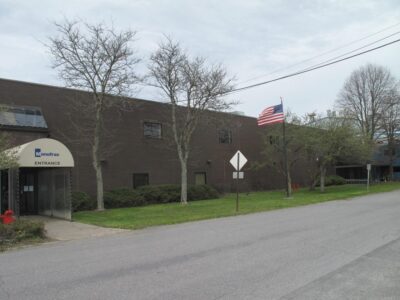
A new business plan at Saint-Gobain, corporate owner of the SEFPRO facility in Falconer, is leading to the loss of 79 jobs at the local plant.
Saint-Gobain officials are ending production of its Alumina-Zirconia-Silica line at the Falconer facility, which was formerly known as Monofrax. The move impacts 79 union and salaried positions associated with the line, with production expected to end in August, according to a company official in a news release Wednesday morning.
"This will not impact every product line at Falconer, and the facility will continue the production of its remaining product lines," the company said. "This decision comes after careful consideration and evaluation of Saint-Gobain's core business goals and is in line with the company's mission and strategy. The company values and thanks all the employees impacted by this decision for their hard work and is committed to supporting these employees as they transition out of the business."
SEFPRO offers a wide range of fused cast refractories including high Zirconia, alumina and chrome products. Materials are used for glass melting, steel reheat, electrolytic reduction cells for smelting light metals, coal and black liquor gasification and nuclear waste vitrification. Monofrax has supplied its products to the glass industry worldwide.
Saint-Gobain designs, manufactures and distributes materials and services for the construction and industrial markets.
An April report by Mordor Intelligence states the production cost of Alumina-Zirconia-Silica (AZS) materials is increasing due to surging global demand for specialty ceramics, supply chain shortages, stricter environmental regulations, and the energy-intensive nature of manufacturing. Zirconium raw materials are facing a structural supply gap, driving up the price of zircon sand and high-purity zirconia. Demand increases are driven by competition from high-tech sectors, solid-state batteries and nuclear applications.
Manufacturing AZS also involves fused-cast processes and high-temperature sintering, which are highly energy-intensive and carbon-heavy. Energy costs and carbon compliance taxes, particularly in Europe and North America, add to the operational costs of companies manufacturing Alumina-Zirconia-Silica materials while limits on the disposal of spent refractory waste have forced manufacturers to spend more on recycling, compliance, and transitioning to low-toxicity raw materials.
Saint-Gobain announced its first quarter financial results in late April. Revenues from North American operations, which would include SEFPRO's operation in Falconer, decreased 11.3% like-for-like, which continued volume trends seen in the fourth quarter. Activity picked up in March after a slow start to the year due to the harsh winter
weather. New construction remained weak and the first quarter was also impacted by a high comparison basis (continuation in 2025 of roofing jobsites linked to 2024 storms). Price increases were implemented in April 2026 across different product categories. The Group saw growth and further market share gains in construction chemicals. It also specified solutions adapted to the needs of data centers (currently 180 projects, versus 80 projects last year).
Company officials said they expect continued weakness in its North American market through the rest of the first half of 2026 before seeing a rebound in the second half of the fiscal year.