
Course changes spark debate in Fredonia

OBSERVER Photos by Braden Carmen Elementary Principal Mark Drollinger discussed proposed changes to the elementary schedule at a recent Board of Education meeting.

Ray Dai, the Fredonia High School Class of 2026 Valedictorian, spoke out against the proposed changes to the elementary schedule at a recent Board of Education meeting.
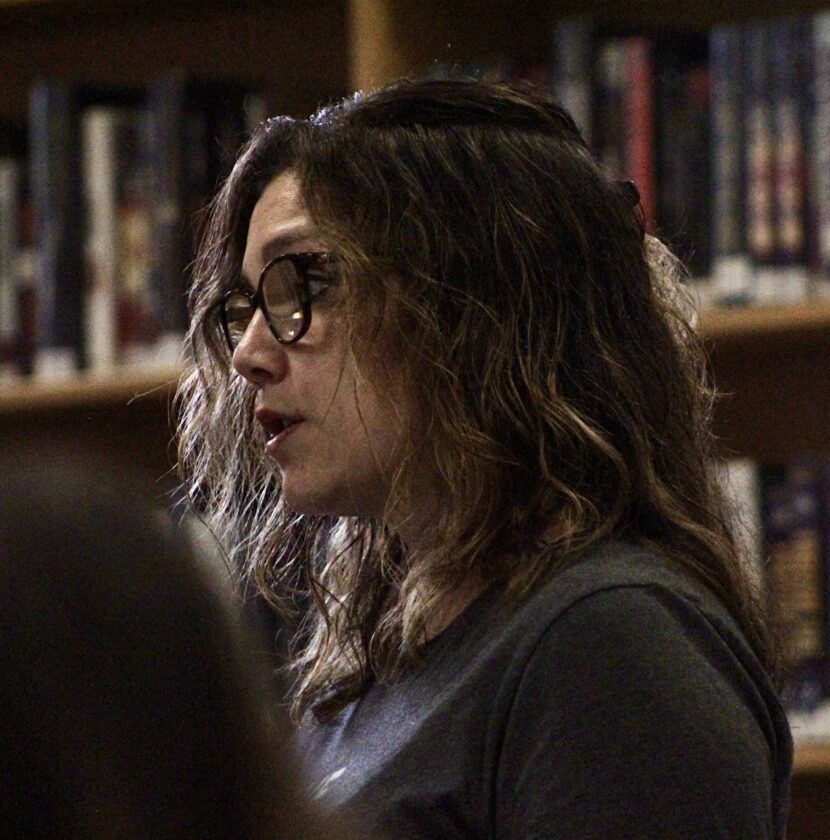
Rhianna Kelley, a high school teacher at Fredonia and a district parent, spoke out against the proposed changes to the elementary schedule at a recent Board of Education meeting.
OBSERVER Photos by Braden Carmen Elementary Principal Mark Drollinger discussed proposed changes to the elementary schedule at a recent Board of Education meeting.
Ray Dai, the Fredonia High School Class of 2026 Valedictorian, spoke out against the proposed changes to the elementary schedule at a recent Board of Education meeting.
Rhianna Kelley, a high school teacher at Fredonia and a district parent, spoke out against the proposed changes to the elementary schedule at a recent Board of Education meeting.
Trending
Changes are coming to the Fredonia Elementary School course schedule. Most notably, the district is changing its special course rotation to remove library and computer classes from the schedule.
Instead of library and computers being offered as special courses, the district is shifting to a model that offers library and computer access in other ways. The school schedule will now rotate four specials courses instead of five, with health education added to the rotation.
"I am confident these changes will continue to provide students with high-quality learning experiences while supporting creativity, literacy, technology skills, physical wellness, and the overall development of every child," Elementary Principal Mark Drollinger said.
This school year, students have library, computers, art, STEM, and general music as specials courses in a rotation. The courses rotate every five days, with students visiting each course roughly 35 times during the school year. Additionally, chorus meets roughly 35 times during the year, and physical education is offered each day, rather than as part of a rotating schedule.
Moving forward, the school will be adding health education to the regular specials rotation, along with art, STEM, and general music. Art, STEM, and general music will each have roughly 10 additional days throughout the school year with the change, for a total of roughly 45 days for each subject.
Physical education will continue to be offered each day, through a traditional gym class and health education -- a separate special, utilizing HealthSmart curriculum -- integrated into the specials rotation approximately 45 times during the year. All four of the district's elementary physical education teachers are certified as health teachers. Every student will have the same two physical education teachers throughout the year, teaching both traditional gym and health classes.
The district highlighted its changing demographics and needs of students in recent years as a motivator for focusing on providing health education. The new health course will be aimed at addressing issues such as anxiety, obesity, inactivity, screen time, and nutrition. The focus of the course will be on wellness, safety, healthy decision-making, and social-emotional development.
The district is pulling library from the specials rotation, but it is not limiting access to the library for its students. Each class will have a dedicated weekly library visit, just as they do now, with the same amount of time dedicated to browsing the library and checking out books. That time will come out of the additional classroom time as a result of the schedule shift.
What changes is rather than a 40-minute period in the library as a special class, with a lesson taught by a teaching assistant in the library, students will return to their classroom for additional instructional time with their teacher. The library is also available for classes to utilize as an alternative work space.
The shift gives classroom teachers more time for literacy education such as reading, writing and discussion. It also better utilizes the district's library staff, allowing for additional focus to be put on the middle and high school students who are required to have a certified librarian, where elementary students are not.
"Our teachers were asking for additional time to delve into deeper writing practices within the classroom, and this gives it to them," Dr. Margie Wright, Chief Officer for Curriculum and Human Resources, told the OBSERVER.
With the additional time offered to the STEM program, key computer and digital literacy skills will be taught by the STEM teacher, similar to how they were offered in the computers special course offered this year. In recent years, as the district's STEM program grew, student access to computers increased. The district now provides a device for every student – iPads and Chromebooks – which was not the case prior to the establishment of the STEM program. Rather than students' only exposure to computer skills being through the designated course, students now have access to a device every day.
Budgetary concerns played a part in the district's decision to reassess its specials. With the elimination of two elementary teaching positions following retirements in order for the district to be compliant with the tax cap, class sizes in the elementary school were set to increase.
"The reduction through attrition of two elementary teaching positions as part of the proposed budget for next school year required our administrative team to carefully review our elementary schedule," Drollinger said.
Drollinger wanted to avoid class sizes rising in fourth grade to roughly 26 students in each class, which he said is a number he "wasn't comfortable with." Instead, the decision was made to reassign the district's elementary computers teacher to the fourth grade. Doing so will reduce class sizes to roughly 20 students in each class. The reassigned teacher is certified as a general education teacher and as an English as a New Learner (ENL) educator. Three ENL students will be placed in the new fourth grade class, which Drollinger called "a win for the district."
Budget cuts are not the only reason for the change. The district reassesses its schedule minute by minute each year as the State Education Department requires. Fredonia sought to address its changing needs through special courses by not only providing health education, but also by maximizing the time in the day.
The shift gives students more than 1,000 additional instructional minutes with their classroom teacher over the course of the year. Rather than eight periods of 40 minutes, there will be nine periods next year as a result of shortened transition periods.
The biggest misconception surrounding the changes to the schedule is the impact it will have on the district's music programming, specifically elementary chorus, which is offered beginning in second grade.
This year, approximately 35 sessions of chorus are scheduled in the elementary school. With half days, field trips, snow days, and other potential changes to the schedule during the year, students end up with approximately 33 chorus lessons throughout the year.
Under the new model, Drollinger believes the number will be close to the same. Rather than having chorus on a rotation every fourth day, which would provide roughly 45 days of instruction, the district is targeting 33 days. Drollinger has met with Music Instructional Leader Andy Bennett and Elementary Music and Chorus Teacher April Hartung several times to discuss the matter.
"I anticipate that the number of times that a student will meet with April for chorus will be very close to what it is this year," Drollinger said.
Public criticism
In the days leading up to the latest Board of Education meeting, many in the community were under the impression that significant cuts were being made to various programs, including the music department. After an initial draft of the building schedule was shared with staff for input, news of the potential changes made its way around town and on social media.
Many were outraged that chorus was not included in the schedule, along with computers and library. The draft did not articulate the changes to computers and library offerings to students, and chorus was not included because the availability of the chorus room was not yet worked out between the elementary, middle school, and high school levels. That is in line with past scheduling practices at the elementary school.
Still, many have been vocal on social media about the matter, and two public speakers addressed the Board of Education at its latest meeting. First to speak was Ray Dai, the Class of 2026 Valedictorian. He was followed by Rhianna Kelley, a Fredonia Special Education Teacher and district parent.
Dai spoke of his efforts urging the community to support the school budget in recent years. He feels concerned that the proposed changes are a blow to the reputation for quality programming the school has built, especially when it comes to music. He cited the importance of repetition for students to master the arts.
Drollinger, however, emphasized that general music and chorus would remain as part of the schedule throughout the year. The new format will have a similar amount of time dedicated to chorus as the current format does, and general music instruction will continue for all students. The schedule will have dedicated chorus instruction days built in.
Kelley stated that the district's reputation for music education was a strong factor in her decision to call Fredonia home. Kelley said she is "in strong opposition" of the new proposed schedule, which she said is not in line with the district's mission and vision statements. She called the elimination of a dedicated computers course "concerning" in a world where technology is more and more a part of everyday life.
As a teacher herself, Kelley shared concern regarding the additional duties being added on to teachers' schedules, with more dedicated classroom instruction time with an emphasis on literacy and computer skills. Kelley called the demands "unrealistic" and "out of touch." She characterized the changes to library services as "ultimately the most concerning and the most shameful."
Kelley urged the district to reconsider its proposed schedule changes. Any scheduling decision is made by district administrators in consultation with staff. It does not require Board approval.
"I want to be clear here: I'm not a budget expert and I don't have all the solutions that we're looking for, but I am an engaged student and community member who pays attention," Dai said to district administrators and the Board of Education. "... We've asked this community to give the maximum, and it's fair to ask whether our management and administration are meeting the same standard and putting in the maximum effort, finding balance and solutions that utilize what we have to the fullest."