
Texas data center to use Cummins natural gas generators
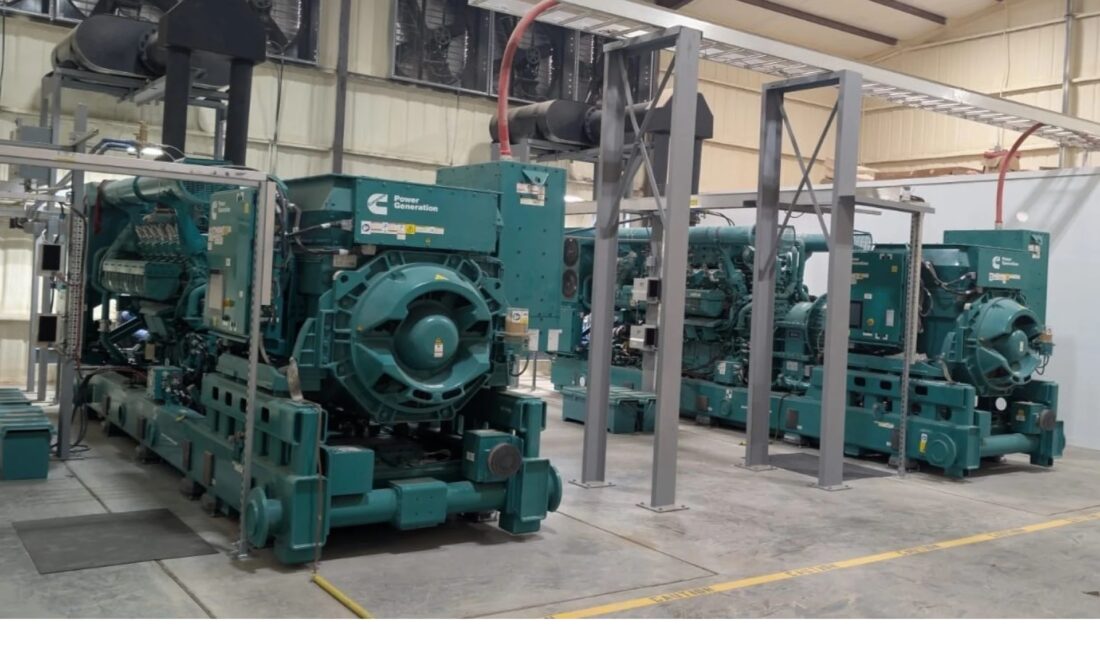
Cummins generators Pictured are Cummins Inc. natural gas generator units. Units like these will be used in Texas to provide behind-the-meter microgrid power for Circe Energy’s data center project in Texas.
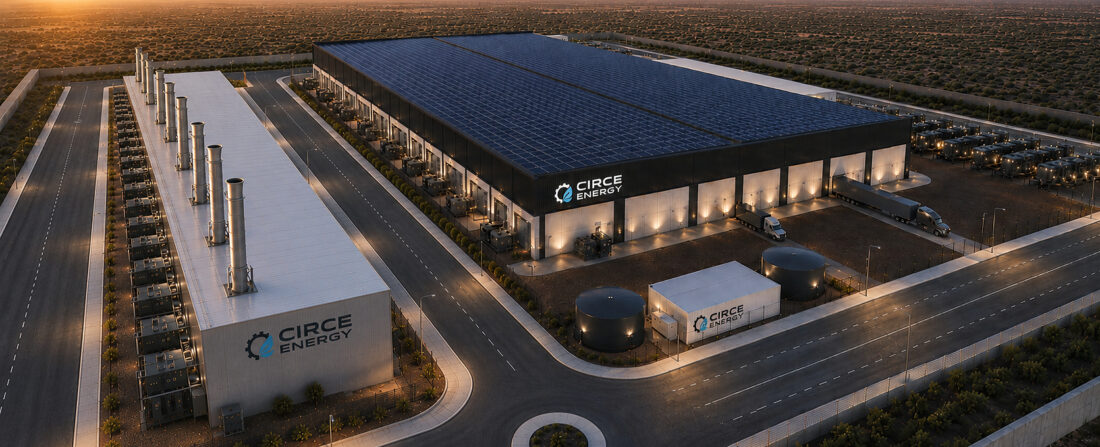
The Circe Energy campus in Texas is pictured. The company plans to use natural gas-powered Cummins engines to help power data centers in Texas.
Cummins generators Pictured are Cummins Inc. natural gas generator units. Units like these will be used in Texas to provide behind-the-meter microgrid power for Circe Energy’s data center project in Texas.
The Circe Energy campus in Texas is pictured. The company plans to use natural gas-powered Cummins engines to help power data centers in Texas.
Trending
With New York poised to delay construction of data centers for a year, Cummins Inc. is profiting from the growth of data centers in Texas.
Cummins Inc. recently announced an agreement with Circe Energy to provide a series of high-powered, high-efficiency natural gas generator sets to support a scalable, behind-the-meter, prime power microgrid solution for Circe Energy's High-Performance Computing data center in Texas. Deliveries are scheduled from 2026 through 2030 and will include Cummins' HSK78 and QSK60 generator set platforms.
Texas' main grid operator predicts power demand will nearly double by 2030 in part due to more requests to plug into the grid from large users like data centers, crypto mining facilities, hydrogen production plants and oil and gas companies, the Associated Press reported in 2025 in the wake of President Donald Trump's announcement that Stargate, a joint venture between OpenAI, SoftBank and Oracle, will invest up to $500 billion in AI-related infrastructure. Texas will serve as ground zero, with 10 data centers by the venture already under construction in the state, 10 more on the way and the first project based in Abilene, Oracle CEO Larry Ellison said. Each building will occupy half a million square feet.
Cummins officials said the company is expanding its role supporting the North American data center market with natural gas-fueled generator sets and integrated microgrid controls designed to address power grid constraints, improve reliability and enable fast-start response capabilities in an era of unprecedented AI demand.
Cummins is supporting Circe's behind-the-meter power need for their AI HPC data center campuses, including its West Texas campus development, by utilizing two of Cummins' high-horsepower natural gas generator sets as the primary power source – without reliability on the grid.
As demand for artificial intelligence and other power-intensive digital infrastructure accelerates, data center developers are increasingly evaluating on-site power generation as part of their energy strategy.
"Data center customers are navigating a new power reality where speed, reliability, and availability are just as critical as capacity--and downtime is not an option," said Susan Cleaver, executive director of Cummins Global Power Generation business. "Cummins natural gas power solutions help customers meet unprecedented growth in data demand while closing utility power gaps with dependable on-site generation for large, power-intensive facilities."
Data centers -- which house servers that provide computing power and the fans and cooling units needed to keep the equipment from overheating -- are energy-intensive facilities that operate 24/7. Large data centers can require 100 MW or more each, consuming the same amount of power per year as 350,000 to 400,000 electric cars, according to the International Energy Agency. Put another way, a larger facility can use as much electricity as a medium-sized power plant, the U.S. Energy Information Administration estimates. Texas has seen a rapid increase in data capacity thanks to the state's relatively cheap energy prices, the ease with which facilities can connect to the grid and its overall business-friendly tax and regulatory environment. Companies generally employ around 50 to 150 or more employees in each data center, in addition to an array of building and maintenance contractors, according to information provided to the Associated Press by the Data Center Coalition. Texas had 279 data centers as of September 2025, according to the Texas Comptroller. The Dallas-Fort Worth area has about 141 of those.
Circe Energy's West Texas campus is designed as a modular deployment platform capable of phased energization beginning in 2027. The platform combines microgrid architecture with HPC-ready powered shell facilities designed for high-density AI computing, liquid cooling compatibility, and long-term scalability.
"AI infrastructure depends on both power availability and delivery timing," said Dagan Baroco, chief commercial officer of Circe Energy. "Securing prime power natural gas generation solutions from Cummins, combined with our microgrid architecture and powered shell design, enables Circe to deliver scalable AI campus infrastructure on a predictable timeline while providing customers with a reliable and cost-competitive alternative to traditional grid-dependent development."
Cummins officials said the Circe partnership reflects a broader trend in the North American data center market: customers are seeking power solutions that combine efficient and resilient power generation capacity, technical system integration, and advanced technical lifecycle service support.
"With growing demand from AI and high-performance computing, the data center industry needs energy strategies that are both reliable and adaptable," said Zach Gillen, Cummins vice president of distribution business sales and service North America. "Cummins brings over 100 years of power generation expertise and is uniquely positioned to help customers deploy reliable, scalable energy solutions. From natural gas generator sets and microgrids to system integration and technical support, Cummins helps bring complex power systems online faster and with greater confidence."
New York's legislature has approved a one-year moratorium on permits for data centers, but the bill has yet to be signed into law by Gov. Kathy Hochul. The bill requires hearings before a data center permit is issued and requires the Department of Environmental Conservation to prepare an environmental impact report on data center development in the state. The state Public Service Law would be amended to require each electric corporation, gas corporation and municipality to establish an independent classification of service for large energy use facilities while the state Public Service Law would be changed to require each water works corporation to establish an independent classification of service for large energy use facilities. The state Public Service Commission would be prohibited from approving any change of rates or related updates to a tariff unless a data center proposal includes a service classification for large energy use facilities, and an adjustment mechanism.
State lawmakers are also proposing a new section in the Public Authorities Law authorizing NYSERDA, in conjunction with the federal bulk system operator, the Public Service Commission and the state Climate Action Council to determine reasonable energy consumption efficiency goals for the design and operation of data centers, including the recycling of waste heat, and a new section in the state Energy Law requiring data centers to derive increasing percentages of their electricity consumption from renewable energy systems, either via on-site production or power purchase agreements.
Data centers, including within the Long Island Power Authority service territory, would also be required to provide their host communities with benefits including residential energy technologies and community infrastructure as well as prevent adverse impacts on local waters.