
A tastefully done history
County farms, families and factories are a remarkable legacy
Trending
Editor's note: This is the first of two parts.
There was a time when a drive from Westfield through Sheridan and Fredonia to Dunkirk passed through one of Western New York’s most remarkable concentrations of agriculture and food manufacturing.
Some names remain familiar. Others have disappeared from buildings, signs and store shelves. Taken together, however, they tell a story worth preserving: Welch’s, Fredonia Preserving Company, Sheridan Canning, Bedford Products, Red Wing, Mitchell Foods, Dunkirk Ice Cream and Cliffstar – and behind them generations of grape growers, dairy farmers, vegetable growers, employees, entrepreneurs and local families.
These were not simply unrelated businesses that happened to operate in the same part of Chautauqua County. They were pieces of an interconnected agricultural and industrial economy that developed here over generations.
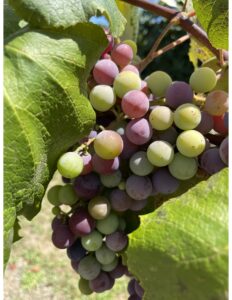
Lake Erie’s moderating influence helped create conditions particularly favorable for grapes. The Concord grape became inseparable from the identity of the region, while vegetable and dairy farming flourished alongside the vineyards. Wherever food was being grown in significant quantities, opportunities developed to preserve it, process it, package it and sell it.
Grapes, Welch’s and the Cooperative Idea
Any account of the region’s food history must give Welch’s a foundational place. Welch’s traces its beginnings to 1869, and by 1897 Charles Welch was processing grapes in Westfield. The company helped demonstrate that locally grown grapes could support nationally distributed, value-added food and beverage products.
The cooperative story is equally important. Its local roots ran through Brocton, where Jacob “Jack” Kaplan and his brother Maurice acquired the former Chautauqua & Erie Grape Growers Cooperative processing operation in 1933. Kaplan later helped organize National Grape Cooperative, bringing together approximately 900 growers at its creation in 1945. After several years of planning and financing, the cooperative completed its $28.5 million purchase of the Welch Grape Juice Company in 1956. The arrangement linked growers directly to a nationally recognized consumer brand while National Grape and Welch Foods retained separate boards and management.
That cooperative idea echoes elsewhere in the county’s history. Dairy farmers likewise used cooperative organizations to gain scale and bargaining strength. Grapes and dairy were different commodities, but both show how family agriculture could connect to increasingly large processing and marketing systems.
From the Farm to the Factory
Early preserving and canning businesses formed a crucial bridge between Chautauqua County’s farms and the manufacturing economy that followed. Fredonia Preserving Company advertised grape juice and fruit products more than a century ago, while Sheridan developed an important canning history of its own.
Behind the factories were farming families whose work rarely received the same attention as the products that eventually appeared on store shelves.
Family history records that Charles Joy arrived in this country in 1896, moved to Fredonia in 1900 at age 17 and established the family’s Water Street farming operation in 1904. The farm grew general produce for canning, and later generations expanded into grapes, green beans for processing, wholesale strawberries, sweet corn and tomatoes.
Their story is one of many illustrating the relationship between growers and processors: farmers needed dependable markets, and processors needed dependable crops.
Bedford and a National Food Connection
Dunkirk’s Bedford Products represents another fascinating chapter. The company developed substantial fruit-processing operations and became involved in jams, jellies, preserves and concentrates. Historical records also show Bedford as an assignee of food-processing technology during the period when portion-control packaging was becoming increasingly important.
Arthur W. “Bud” Woelfle Jr. provides a particularly valuable human connection to Bedford. In 1992, Bud personally related to me memories of joining Bedford after World War II, remaining with the company after an ownership opportunity, and participating in negotiations as the business entered a much larger corporate world.
Those recollections are oral history rather than corporate records, and I believe that distinction is important. Documents can establish dates and transactions; firsthand memories can tell us what those events felt like to the people who lived them.
Red Wing: Private Labels and the Yellow Lid
In Fredonia, Red Wing became an important private-label food manufacturer. Its products included peanut butter, jams, jellies, preserves, syrups and other foods, often sold under somebody else’s brand name.
A 1985 New Yorker account of the Fredonia operation described Red Wing as the nation’s fourth-largest peanut-butter producer at the time and documented its distinctive yellow plastic lids. That independently supports something Red Wing president Douglas Manly later explained to me personally: people in the food business could often recognize Red Wing peanut butter by that yellow lid even when another company’s name appeared on the label.
The same published account described Red Wing’s enormous peanut roaster – roughly 60 feet long – and the scale of an operation that could be nationally significant while remaining largely invisible to consumers.
By the time Red Wing’s yellow-lidded jars were moving through national private-label markets, Chautauqua County had already developed a deep pool of agricultural, processing and manufacturing expertise. That foundation would support a new generation of companies--and carry the county’s food-and-beverage story far beyond grapes, preserves and peanut butter.
Next: Mitchell Foods, Dunkirk Ice Cream, Cliffstar and the people behind them.