
Trending
BATAVIA – Whether a grand jury indictment charging a Silver Creek woman with second-degree murder is reinstated or not now lies in the hands of five judges in the Fourth Department Appellate Division.
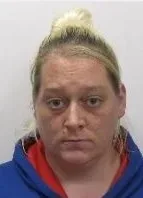
Ashley Bertino of Silver Creek was charged by grand jury in 2025 with second-degree murder, second-degree manslaughter and three counts of endangering the welfare of a child after her 12-year-old daughter Mya Smith died April 29, 2024, from diabetic ketoacidosis, commonly referred to as untreated diabetes.
Prosecutors believe Mya’s life could have been spared if she was given basic medical care.
The Chautauqua County Public Defender’s Office, challenged the validity of the second-degree murder charge against Bertino and was successful, with Chautauqua County Judge David Foley dismissing the charge. Following Foley’s ruling, District Attorney Jason Schmidt filed for an appeal to get the murder charge reinstated.
Jeffrey DiPalma, first assistant county district attorney, and Andrew Brautigam of the Chautauqua County Public Defender's Office representing Ashley Bertino of Silver Creek, appeared before the appeals court Sept. 14. DiPalma argued that Foley erred in dismissing the charge.
'BE REASONABLE'
DiPalma argued Foley erred in dismissing the second-degree murder charge because, the county believes, the case built by investigators shows Bertino didn't do enough in the week before Mya Smith died to help treat her condition. He said precedent in such cases is to view the evidence in the light most favorable to the prosecution, with questions over evidence then argued in court.
"The people respectfully submit that the lower court erred in misapplying the standard of review by invading into the process of the grand jury and applying its own assessment of the quality of and the weight of the people's proof and drawing inferences in favor of innocence when in fact inferences, rational and reasonable inferences, could have been drawn for guilt, which is the standard," DiPalma said.
DiPalma was in the midst of arguing precedent set by the state Court of Appeals four decades ago that DiPalma said limited a court's review of evidence presented to a grand jury to legal sufficiency, not legal adequacy, weight or quality of that proof. Judge Mark Montour interrupted, asking if Bertino was aware that Mya Smith was diabetic.
DiPalma said that is correct, because Bertino hadn’t taken her daughter to see a doctor for eight months prior to the incident. Medical records showed an indication from doctors that Mya Smith was to get followup blood testing, but the tests never took place.
"I would respectfully submit that it’s really immaterial as to whether or not she was diabetic, because the issue is this – we’re not asking Ms. Bertino to be a doctor," DiPalma said. "What we're asking her to do is to be reasonable as she watches her 12-year-old daughter lie unresponsive.”
Montour then asked if reasonableness is the standard in these cases.
“Since the daughter was throwing up on a Sunday and a couple of other times during the week, I think she went to school once, the mother made arrangements for the grandparents to watch the child another time," Montour said. "The child was going to go see the doctor another time, the mother made arrangements for a vehicle because she didn’t have a separate car to drive herself, so she had to borrow her boyfriends. She’s making these arrangements at the time that the child was exhibiting these signs of illness. Was it sufficient or was she just being woefully inadequate or in your words not responsible?”
Chautauqua County Chief Medical Examiner Dr. Michael Faulk testified at 2024 preliminary hearing that Mya Smith should have been showing symptoms of diabetes for weeks or months and that any medical professional should have been able to identify her as a diabetic.
Faulk ordered Mya’s body be sent to the Erie County Medical Examiner’s Office where a determination was made that Mya’s death would be classified a homicide.
"You’re saying in this instance that the mother didn’t even care if they lived or died?” Montour asked.
“That’s correct,” DiPalma responded. “When the victim asked her to go to the hospital several days before she ignored that. When the twin sister, the 12-year-old, said to her, ‘Mom, I think that my sister is going to die if you don’t get her medical attention,’ she ignored that. When the 8-year-old boy said, ‘Mom, I think my sister needs emergency care right now,’ days before this happens, she ignored that. When the boyfriend says, 'I think that it is unreasonable that a child has been sick seriously for this long, you should take her to go get urgent care,’ she then appeases him. This is a reasonable and rational inference that can be drawn, which is the standard, because this is the grand jury, not a trial."
'Fairly Clear'
Brautigam opened his time before the appeals court saying Foley made the right decision in its review of the grand jury minutes. He was stopped by Montour, who asked a pointed question of the defense counsel.
"The counselor has made a strong case for depraved indifference here with a number of factors," Montour said. "Maybe a highlight would be 'CPR on a corpse,' Attempting to do that. There are a lot of instances here where your client appears to, I don’t know if you want to take it to the level of not caring if the child lives or dies, but that seems to be some of the case law standard or significance where cases have indicated that. Here, is there something along those lines or is your client just being woefully inadequate being a parent?"
Brautigam said Bertino made errors, but that in the broader context of what was happening with the other children in the house and Mya Smith's health, those errors were reasonable errors that Brautigam said can be explained. Montour again stopped Brautigam, saying the record shows Mya Smith's siblings and Bertino's boyfriend all expressed concern for Mya Smith's health in the days and hours before her death.
"Your honor, I would just like to, I think those are overstatements and they don’t line up with the actual conduct of any of the other people at the time," Brautigam said. "Every single person, who now months and months after the fact, after Ms. Bertino is dramatically charged by Mr. DiPalma, by a criminal complaint in local court, there’s a hearing that received, for Chautauqua County standards, significant media attention ..."
Montour again interrupted, asking Brautigam to make his argument why Foley's decision to dismiss the second-degree murder charge should be upheld.
Brautigam said Bertino exhibited care for Mya Smith by making a doctor's appointment and by inquiring, on the day Mya Smith passed away, about the availability of medical care. Juliana Post with Silver Creek Pediatric also testified during a 2024 preliminary hearing that Bertino had scheduled an appointment for Mya to be seen but gave no indication that there was anything seriously wrong, other than vomiting. Post said she told Bertino to take her to a hospital if Mya Smith's condition worsened. Mya Smith passed away before being seen at Silver Creek Pediatric.
Case law, Brautigam said, has set the precedent that a parent's ability to seek care or willingness to seek care for a child who ultimately dies negates the required proof of a "guilty mind" that is required to prove depraved indifference.
"Depraved indifference is more, based on my review of the case law, it’s more than merely making errors or being careless," Brautigam argued. "And it seems there is some conflation of recklessness and negligence in this matter. Recklessness would require some kind of knowledge. And the months after the fact representations from people who surely feel some level of guilt or culpability after the fact, they somehow knew that this was going to happen. Those representations just aren’t reliable. They're in the record, but they’re facially unreliable."
That's when Brautigam was stopped again, this time by Judge David Greenwood, who argued and asked Brautigam to address the burden of proof in a grand jury proceeding and the burden of proof in a trial. Greenwood specifically asked Brautigam why his argument about the worthiness of statements gathered during the investigation shouldn't be addressed at trial in front of a jury.
"Why isn't that enough for this court to determine there's enough to go forward," Greenwood asked.
"It's not enough because of the mother and the defendant's willingness to see care for her child," Brautigam responded. "If she hadn't done anything to seek care for her child then I'd believe there would be sufficient evidence even by the lower standard of a grand jury proceeding compared to a trial jury. But because there is in the grand jury proceeding strong evidence that Ms. Bertino sought care but did so inadequately and unfortunately too late, that's enough, I believe, just as a matter of law, to overcome and bely the prosecution's representations of Ms. Bertino's state of mind. That's really the important thing for the court to consider."
Montour again interrupted, asking Brautigam to differentiate between the different standards of proof for a grand jury indictment and trial.
"If the proof’s not there with the grand jury it can’t be there at trial, so it’s legally insufficient," Brautigam said.