
Trending
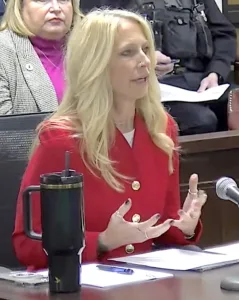
Dunkirk Mayor Kate Wdowiasz said she is vetoing the Common Council's moratorium on new Battery Energy Storage System proposals.
Wdowiasz told city department heads at her monthly meeting with them last week that Dunkirk was threatened with a lawsuit over the moratorium. She didn't say who made the threat.
"They need to do it properly," she said of the Common Council. "Local law, public hearings, one end of the spectrum to another."
The veto may be only symbolic, because all five council members voted for the moratorium. Going by past city practice, the council would need four votes to override Wdowiasz's veto. The council's next meeting is scheduled for Tuesday, Oct. 6.
Councilwoman Natalie Luczkowiak emailed the full text of the moratorium resolution to the OBSERVER, noting it was not on the agenda of the last meeting. It was presented as a "walk-in" and Luczkowiak alleged it was not on the agenda due to obstructionism by the Wdowiasz administration.
The council's moratorium resolution begins that "the Common Council of the City of Dunkirk recognizes that Battery Energy Storage Systems present unique land use, fire safety, and environmental considerations that are not adequately addressed in the City's current Zoning Code."
The resolution notes a "BESS Model Law for Responsible Battery Energy Storage System Development” from the New York State Energy Research and Development Authority. An interest is expressed in "review and consider(ation of) adoption of the NYSERDA BESS Model Law and to integrate appropriate standards into (city) Zoning Code to ensure the protection of public health, safety, and welfare."
The resolution continues that "the Common Council finds that a temporary moratorium is necessary to allow time for such review without the pressure of pending applications."
The moratorium means "no city officer, board, or agency shall accept, process, or approve any application for a permit, site plan, special use permit, variance, or other approval for the construction, installation, or operation of any Battery Energy Storage System within the City of Dunkirk."
The moratorium does not apply to "Battery Energy Storage Systems that received all required approvals before the adoption of this resolution; or residential battery systems less than 20 kWh installed as part of a single-family dwelling."
It's supposed to last "until the earlier of: The adoption of updated Zoning Code provisions specifically regulating Battery Energy Storage Systems; and the adoption of the NYSERDA “BESS Model Law” or substantially similar regulations."
However, "in no event shall this moratorium extend beyond six months from the date of adoption unless extended by subsequent resolution of the Common Council."
Luczkowiak commented Tuesday that "an intimidating, stern and long veto letter was sent to council. But we will override the veto, schedule the required public hearing and adopt a local law that will legally protect our neighborhoods for the next six months while we write proper zoning regulations."
She added: "This isn’t politics; it is about safety, process and following state law. Adding unnecessary drama only delays the protection people are asking for. We have a clear path under Municipal Home Rule Law to override, provide a 10-day notice, hold a public hearing and adopt."
Before Wdowiasz revealed her plans to veto the moratorium during last week's meeting, Dunkirk Planning and Development Director Vince DeJoy mentioned NYSERDA's award for a Battery Energy Storage System by Gridi Development. The outfit plans the BESS for woodland off Brigham Road along the western edge of the city.
DeJoy said he talked to Gridi representatives after the state energy authority's award was announced. He stated that while the project will not be as large as previously planned, the award "still works with their model."
Randy Woodbury, Department of Public Works director, said the city is in "the final stages" of a road use agreement with Gridi. Once that is set, the focus will shift to a host community agreement, he said.
That's the item that's expected to finalize a reported $1 million annual infusion into city revenue under a Payment In Lieu of Taxes arrangement.
Woodbury said he wasn't sure if the pay would start when Gridi's BESS operation is running, or beforehand. As for the host community agreement, "the sooner we get that, the sooner we can get that revenue realized."