
In troubled waters, border partners keep focus of lakes
In troubled waters, border partners keep focus of lakes
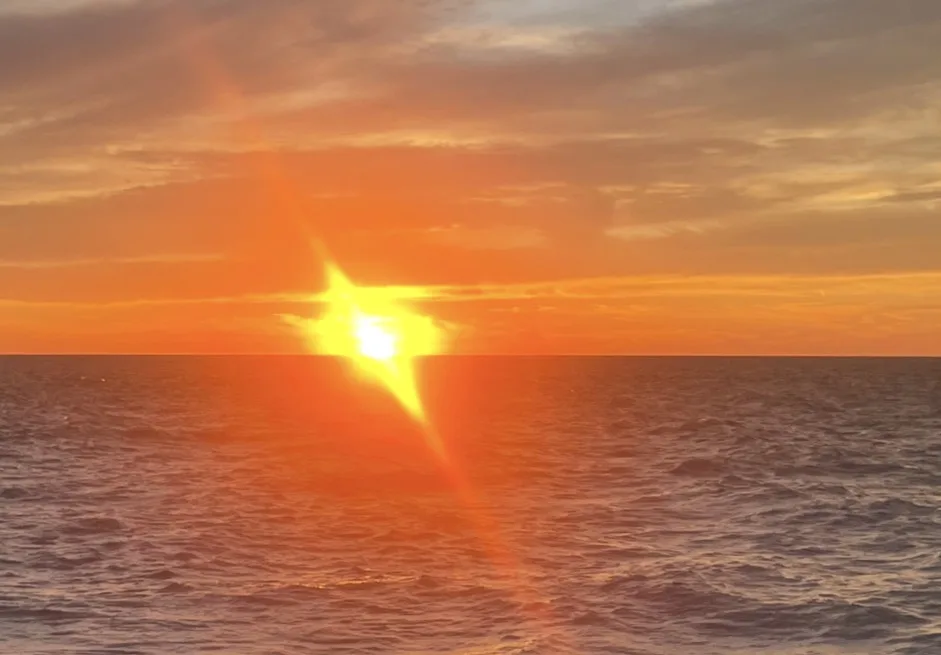
A sunset on Lake Erie from the town of Westfield on Saturday night.
A sunset on Lake Erie from the town of Westfield on Saturday night.
Trending
No one could have predicted two years ago that two of Western New York's treasured resources would become part of a political grudge that is part of strained international relations. When President Donald Trump issued the executive order to rename Lake Ontario to Lake America in late August, the idea was not only insulting to historians, it also led to debate on both sides of the border.
Some of the strongest criticism close to home came from Seneca Nation of Indians President J. Conrad Seneca. He called the president's decision an intrusive action shortly after the order.
"To us, Lake Ontario is not a political pawn," he said. "It does not separate the countries of the United States and Canada. It is all Indigenous land, which has been occupied by Indigenous people since time immemorial."
Along the Oswego County lakefront in Central New York, longtime residents who include Trump supporters have also voiced their disagreement. Its Republican-dominated County Legislature approved a resolution denouncing "Lake America."
"We know where our constituents stand. They want it to stay the same, obviously," John Martino, Republican majority leader and a Trump supporter, told The Wall Street Journal. "It's Lake Ontario. It's going to be Lake Ontario. That's it."
Another one of Trump's questionable tantrums opened the door to Pennsylvania Rep. David Maloney, R-Boyertown, seeking a name change through a resolution for Lake Erie. “This is Pennsylvania’s only Great Lake. Its modern economy and identity are increasingly tied to the boaters, anglers, families and tourists who come to enjoy it,” he said. “Ohio has plenty of shoreline. New York already has two Great Lakes. Canada has four others. Pennsylvania has one. Let’s call it Lake Pennsylvania!”
Though Trump and Maloney add unneeded division to relations between states and nations, there are groups that continue to see a greater good from working jointly. Long before the waters became political ping-pong, the Great Lakes and St. Lawrence Cities Initiative had been building relationships between cities in both the United States and Canada.
Two months ago, the group launched a Big City Caucus that has major border cities working on shared economic priorities and other issues affecting the Great Lakes and St. Lawrence River Region. Some of the 15 participants include Buffalo, Cleveland and Rochester in the United States, and Burlington, London, and Toronto in Canada.
Though not included, Dunkirk is already strongly tied to the organization. In 2024, leaders came to the city for a meeting at the Center for Innovation and Economic Development, formerly the State University of New York at Fredonia incubator. Their message was simple -- and continues to be evident after last weekend's devastating Nor'easter that struck the Atlantic coastline.
Great Lake regions could be in line for serious population growth as hurricanes and storms wreak devastation that leads to damages that can top tens of millions in dollars to affected locations. Jon Altenberg, president and chief executive officer for the Great Lakes and St. Lawrence Cities Initiative, sees the potential for growth here.
“Imagine Dunkirk,” he said during the visit in 2024. “You’re going to have people from New York City and down South. They’re all going to want to move up here. … You’re going to see the transitions. Not all of them are going to be good. They’re going to be hard.”
Navigating through the political discord is just one more hurdle facing the Great Lakes and St. Lawrence Cities Initiative. Local leadership tied to the group, however, is more focused on opportunities that are tied to four strategic pillars set by the organization: Climate change and coastal resilience; water equity and infrastructure; economic transformation; and the ecosystem and source water protection. Its overall goal is for a Blue-Green Economic Corridor, which includes the use of renewable energy.
It's refreshing to see this group continuing to work toward solutions. National leaders, however, let pride and ego get in the way.
John D'Agostino is the editor of The Post-Journal, OBSERVER and Times Observer in Warren, Pa. Send comments to jdagostino@observertoday.com or call 716-487-1111, ext. 253.