
Poverty rates take troubling toll on youth
Trending
As energy and grocery costs continue what seems as an unending climb, many households -- even those working multiple full-time jobs -- are experiencing more than just a pinch. It is an absolute cash gash.
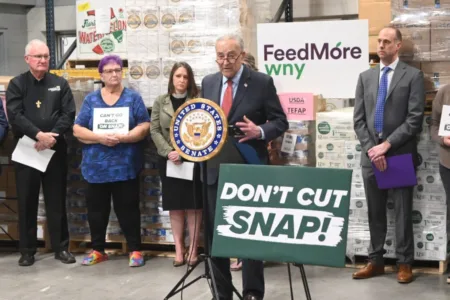
Within the last month, the New York State Association of Counties continued banging the drum on the federal Supplemental Nutritional Assistance Program reductions. It was a major talking point during the fall conference last week in Syracuse as the group representing 62 entities reiterated that the One Big Beautiful Bill Act in 2025 cut the share of SNAP administrative costs to counties in half -- from 50% to 25%.
Under existing state law, counties bear the share of these costs. Estimates from the association reveal it will cost New York's counties $168 million annually, with $60 million hitting budgets in the fourth quarter of this year.
Census figures already reveal a high need. In Chautauqua County, poverty numbers are around 18.7% for a population of 124,000 residents. While that figure may seem high, it also appears understated.
Where hardship hits the greatest is in the younger generation. In 2024, state Comptroller Thomas DiNapoli issued a report detailing the bleak numbers facing our youth when it came to demographics.
"A staggering number of children live in poverty in New York," he said. "Research shows that poverty presents serious barriers to healthy child development. Despite unstable economic conditions during the pandemic, child poverty dropped by half because the government expanded programs to help families and children. When these measures expired, the problem got worse."
That report found nearly one in five state children are living in financially struggling homes. Almost half of those 20% are in deep poverty, meaning they are in a household with income that is 50% below the federal poverty line, which is $2,276 per month.
A truer gauge of the pain, however, can be found in state Education Department statistics. There, enrollment numbers show how dire the situation has become.
For instance, 60% of students attending public schools statewide are classified as economically disadvantaged. In the Western New York, Chautauqua County's percentage is at 63 -- that's the highest of the eight counties in the region.
Of the 18 districts, six have rates that are 60% or higher. Those districts include: Brocton, Ripley, Silver Creek and Westfield, which was at an unthinkable 74%.
City schools had the highest numbers. Dunkirk is at 80% and Jamestown at 81%.
These younger populations are the most vulnerable when it comes to the reductions in SNAP funds. Of families with female heads of household and children present, the figures are even more alarming. According to the New York State Community Action Association, 42.4% of that cohort live in poverty in this county.
So while there is a lot of uncertainty regarding the lost SNAP funding among those who are elected within New York state, there is no denying a rising need. According to the FeedMore WNY website, the agency assisted more than 170,000 individuals experiencing food insecurity throughout Erie, Niagara, Cattaraugus and Chautauqua counties in 2025. It distributed more than 15.8 million pounds of nutritious and shelf-stable foods to its food pantries, soup kitchens, emergency shelters and other hunger-relief partners throughout our service area.
Locally, both Chautauqua County Rural Ministry in Dunkirk and the St. Susan Center in Jamestown are seeing an increase in those seeking assistance. “Right now, the need is real and it's growing," Lorie Mets, board member for Rural Ministry said in the spring. "More families and individuals are relying on food pantries and community meals than ever before."
Neither Albany nor county leaders across the state appear to have an appetite to pick up the costs associated from the federal SNAP shortfall for those who need assistance locally. This has already led to an abundance of finger-pointing and blame.
In the center of this dispute, and often forgotten, are children living in low-income households -- here and throughout New York. It is an issue that gets too little attention. Even in an important election year.
John D'Agostino is the editor of The Post-Journal, OBSERVER and Times Observer in Warren, Pa. Send comments to jdagostino@observertoday.com or call 716-487-1111, ext. 253.