
Ride helps build relationship, confidence
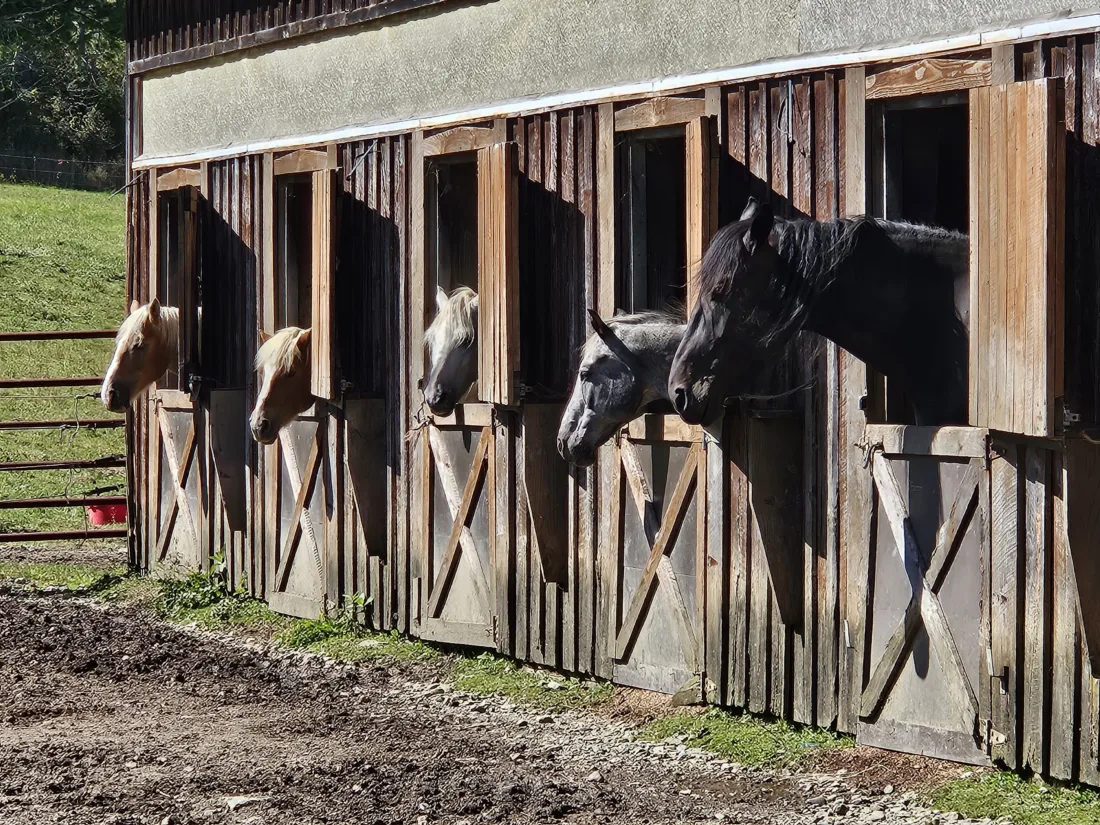
Horses wait for humans to arrive.
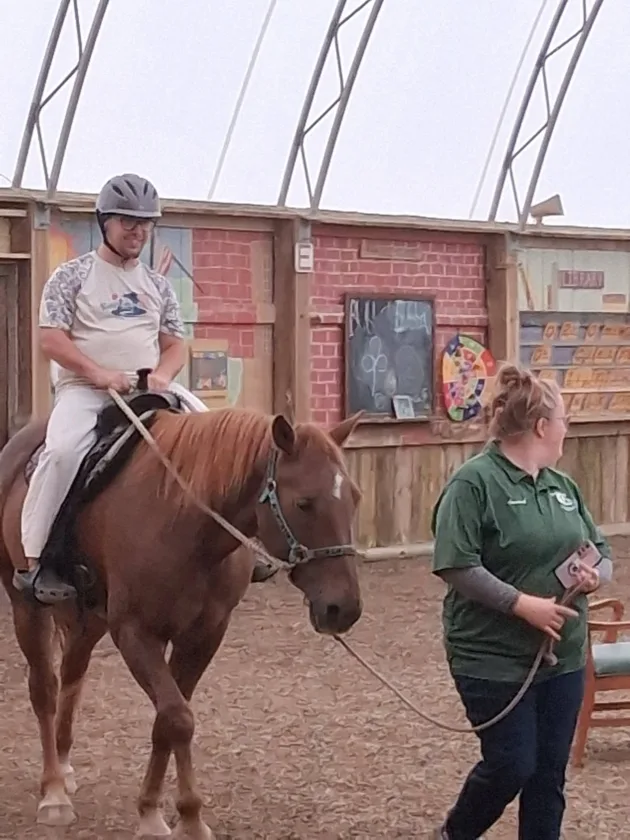
Jacob Overstreet overcoming his fear of horses at one of the Centaur Stride clinics.
Horses wait for humans to arrive.
Jacob Overstreet overcoming his fear of horses at one of the Centaur Stride clinics.
Trending
In Chautauqua County, therapeutic horseback riding offers a rhythmic path toward connection, confidence and nervous-system regulation.
There's a social media post I never get tired of seeing. Two horses are talking to each other, wondering how their "rescue human" was doing that day.
We often think of rescue as something we do for animals. We give them food, shelter, care and a safe place to live. But anyone who has spent time with a horse knows the relationship can go both ways. At Centaur Stride, we have 17 horses, all with unique backgrounds, often unknown to us when we get them. Their personalities add to the experiences. (Training and acceptance into our program may take a long time.)
For parents raising children who struggle with autism, elopement, frequent meltdowns, anxiety or difficulty regulating their nervous systems, finding meaningful support can be exhausting. These parents are often relentless advocates--researching, trying therapies and searching for programs that might help their children feel safer and more comfortable in their own bodies. I know because I was one of those parents.
There is growing interest in the role of the nervous system in how people respond to stress, sensory information and their environment. The vagus nerve, a major communication pathway between the brain and body, has become an important part of that conversation.
Approaches intended to support nervous-system regulation often emphasize remarkably simple things: slower breathing, rhythmic movement, gentle sensory input, appropriate touch, relaxed posture, vocalization and safe social connection.
The goal isn’t to force someone to "calm down." Instead, the idea is to meet the person where they are and gradually help the body tolerate and participate in more engagement.
That progression can be particularly important for children whose nervous systems become overwhelmed easily.
Therapeutic horseback riding naturally incorporates many of the same elements being discussed in nervous-system regulation.
At a walk, the horse produces a steady, rhythmic, three-dimensional movement. The rider’s body has to continually respond to that movement, making small adjustments to maintain balance and position.
For someone who is tense or overwhelmed, that rhythm can provide a predictable sensory experience.
Breathing may become slower and deeper as the rider settles into the horse’s movement. Physical activity increases circulation. The rider receives continuous information through the muscles, joints and balance system.
The rider isn’t simply receiving sensory input. The rider is developing a relationship with another living being, one who constantly responds to the rider.
At Centaur Stride, instructors can build participation gradually. A rider may begin by simply tolerating the experience of sitting on the horse. Later, the instructor might encourage looking around, reaching for an object, following a direction, steering or participating in a game. The progression can move from passive experience toward gentle activation and purposeful engagement. Regulation requires constant adjustments to the environment.
A rider may initially keep their attention very close to the horse. As confidence grows, they may begin looking ahead. Then they start noticing what is happening around them. Eventually, they may become willing to interact with their environment while remaining engaged with the horse.
Posture is part of that process. When the pelvis is positioned more neutrally, the spine and neck can align more naturally. The rider engages the core and opens the front of the body, potentially making breathing and movement more comfortable.
Then there is something no clinical protocol can manufacture quite as easily: laughter.
A child’s deep belly laugh while riding a horse is its own kind of sensory experience -- and often a sign that the child is not merely tolerating the environment, but enjoying it.
You don’t need a diagnosis to benefit
Perhaps one of the most important things to understand about therapeutic horseback riding is that a person doesn’t need to fit neatly into a diagnostic category to benefit from the experience. Nervous-system struggles can be obvious, but they can also be quiet.
They can look like anxiety, low motivation, difficulty getting started, social withdrawal, procrastination, depression or simply feeling overwhelmed by everyday demands.
A horse doesn’t ask for a diagnosis. It asks for a relationship.
For many people, those experiences can build confidence in ways that don’t feel like therapy.
Centaur Stride, located at 8488 Jones Road in Sherman, uses therapeutic horseback riding to help individuals develop physical, sensory, emotional and social skills through structured interaction with horses.
And perhaps the most compelling part of the work isn’t what happens to the rider.
It’s what happens between the rider and the horse.
So, who’s rescuing whom?
Maybe the answer has always been both.
Centaur Stride is reliant on community support: donations, volunteers and participation. Contact us at: info@centaurstride.org, (716) 326-4318. Donations can be sent to: Centaur Stride, PO Box 174, Westfield, NY 1787.
Thank you for your support.
Claudia Monroe is the president and founder of Centaur Stride.