
Violence against teachers on rise at Fredonia
Violence against teachers on rise at Fredonia
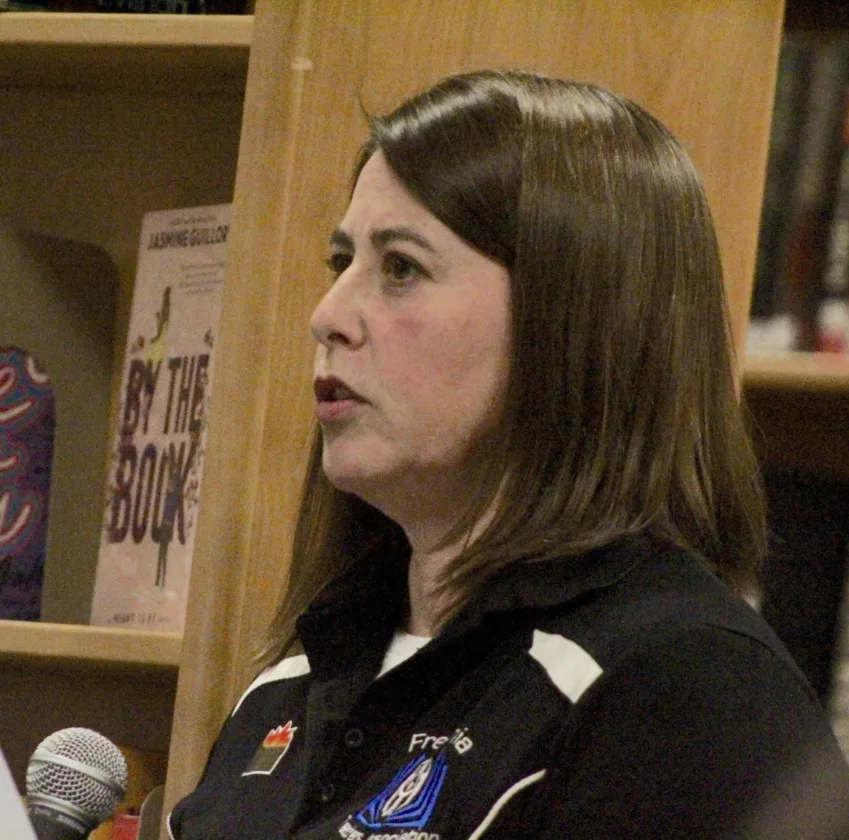
OBSERVER Photos by Braden Carmen Michelle Greenough, Fredonia Teachers’ Association President, spoke on behalf of special education concerns at the latest Board of Education meeting.

Ben Wendell, a Special Education Teacher at Fredonia, addressed safety concerns and needs of the district regarding special education.
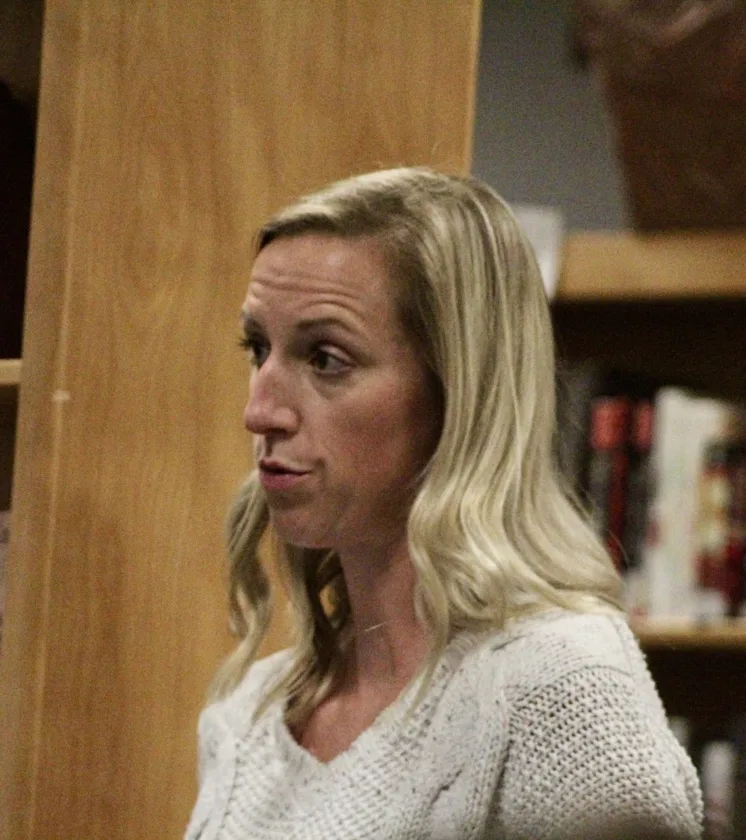
Samantha Gambino, a Special Education Teacher at Fredonia, addressed safety concerns and needs of the district regarding special education.
OBSERVER Photos by Braden Carmen Michelle Greenough, Fredonia Teachers’ Association President, spoke on behalf of special education concerns at the latest Board of Education meeting.
Ben Wendell, a Special Education Teacher at Fredonia, addressed safety concerns and needs of the district regarding special education.
Samantha Gambino, a Special Education Teacher at Fredonia, addressed safety concerns and needs of the district regarding special education.
Trending
Three Fredonia teachers addressed the Board of Education at its latest meeting to "advocate for meaningful changes" because they feel unsafe and disrespected.
Fredonia Teachers' Association President Michelle Greenough, along with Special Education teachers Samantha Gambino and Ben Wendell, shared one common message: Fredonia teachers feel the behaviors of Elementary Special Education students are out of control.
"We cannot continue to normalize classrooms, offices, and displays being destroyed, staff being injured, and students witnessing violent outbursts that leave them frightened and traumatized," Greenough said. "These situations are not fair to the students experiencing behavioral crises, the adults responsible for supporting them, or the other children who deserve a safe environment in which to learn."
According to Greenough, members of the Fredonia Teachers' Association have raised concerns for several years, but both Gambino and Wendell agree the behaviors exhibited this year are worse than they have been in the past. Teachers have reached their breaking point due to incidents of hitting, biting, scratching, choking, pushing and spitting. Chairs have been thrown and classroom materials have been destroyed.
"Children are witnessing frightening behaviors," Gambino said.
Gambino, who is also a Fredonia parent, has worked with students with special needs throughout her career and emphasized the need for compassion. She said what she is witnessing regularly at Fredonia this year, however, goes beyond what the district is able to manage.
Gambino said "extreme crisis behaviors" have increased over the four years she has spent at Fredonia. She estimated 20 students at Fredonia are in need of "significant staff support" with behaviors that require physical intervention.
Wendell added that in his time at Fredonia, as one of the veteran teachers of the department, the behaviors in question are noticeably more prevalent in recent years. He said it is an issue across the region and beyond.
"We may not be able to control the societal problem at large, but we can control how we respond to it, and that's where we have not been doing enough here at Fredonia up to this point," Wendell said.
Wendell was slapped across the face and sworn at by a student this year, which he admitted took a toll on him for the rest of the school day. He said there are teachers and other staff members who are put in similar positions on a daily basis, and students throughout the building are witnessing such behaviors regularly.
Gambino and Wendell both said their own classrooms are no longer experiencing significant disruptions, but that is not the case for all teachers in the district. Gambino spoke to what a difference it made to have additional support in her classroom, and hopes for more support district-wide.
"I see my colleagues and my mentees struggling. I see classroom aides putting their own safety at risk to protect and support our students. I cannot simply stand by and watch because this year, the crisis isn't happening in my room," Gambino said.
Greenough said prior to attending the Board meeting, staff members attempted to go through the proper channels within the district, but the results were not satisfactory to the personnel impacted by the behaviors in question. Greenough added that there was a "days without incident" board posted in the school, but that the number "never really got to a number we could live with."
Rather than blaming the children exhibiting the behaviors she referenced, Greenough puts the responsibility on the adults who have not put together an adequate plan to address such situations. She called for a clear, proactive approach to crises, clearly defined roles and protocols, adequately trained support staff, timely debriefing, and increased communication.
"Safety cannot depend on which administrator happens to be available, which staff member happens to be assigned, or whether someone has to get hurt before a plan changes. Our students deserve better, our staff deserves better, and this district must do better," Greenough said.
Gambino said her statements are not a criticism of the district administration, adding "they cannot be everywhere at once." She said the district does not have a lack of people who care, rather a lack of resources to meet the needs of the students in frequent crises. She called for additional staff qualified to handle such behaviors and a more detailed plan on how to react in times of crisis.
"I don't pretend to have every answer, but what we're asking our teachers, aides, and administrators to manage is not sustainable," Gambino said.
DISTRICT RESPONSE
Superintendent Dr. Brad Zilliox responded to the public comments later in the meeting by stating, "There have certainly been some challenges. In no way do I have any intention of minimizing the concerns that were brought up here tonight or the intense situations that have played out in moments."
The district held a safety meeting in mid-October, and conversations are being held regularly between administrators and stakeholders who are looking for solutions. Director of Special Education Kristen Ferro and Elementary Principal Mark Drollinger have been involved in the process of finding better ways to respond to students in crisis.
The district currently has five self-contained classrooms, and through recent discussions, one classroom where the incidents are occurring frequently will be moved away from the special classrooms to instead be next to Gambino's room to limit disruptions. The district is also utilizing walkie-talkies to communicate quickly in times of conflict. More discussion about other potential changes is expected in the coming weeks.
"There isn't one magic solution. If there was, we would have done it by now," Drollinger said.
At the recent meeting, Board of Education Vice President Sheila Hahn asked if there are students currently enrolled with needs that the district simply cannot meet. A round of applause from a large audience followed Hahn's question.
Zilliox said the preference of the district is to have students attend their home school rather than be placed elsewhere whenever possible. Ferro later added that it is not easy to find alternative placements for students with significant needs. She said that all of the nearby facilities for alternative placements are at capacity, and in many cases, students are waitlisted for placement.
Like her colleagues did earlier in the meeting, Ferro also acknowledged that the needs of students are increasing year after year. "Students with unique needs have grown, not only in numbers but also in the complexity and intensity of those needs. It's very, very significant," she said.
Ferro feels that the growing concerns should not be seen as reasons not to serve students with significant needs. She believes it is an indication that Fredonia needs to evolve in the way it provides an appropriate educational experience for all students. The focus must be on not only providing the least restrictive environment for students to learn, but also on the safety of students and staff in the process.
"Establishing, growing, and flexing our program is right – it's the right thing to do," Ferro said. "It is essential to building and maintaining the district capacity, rather than defaulting to more restrictive and more costly actions."
Ferro continued, "I know -- we all know -- that simply establishing a classroom and a program is not enough. The staffing, the training, the communication, the crisis response procedures ... must be equally as intentional. I do not believe that we have failed on that point. I believe instead that we are at a crossroads – we are at a time and a place to create opportunities and pave new pathways."