
Tariffs not enough to fix troubled steel industry
“Trade wars are destructive!”
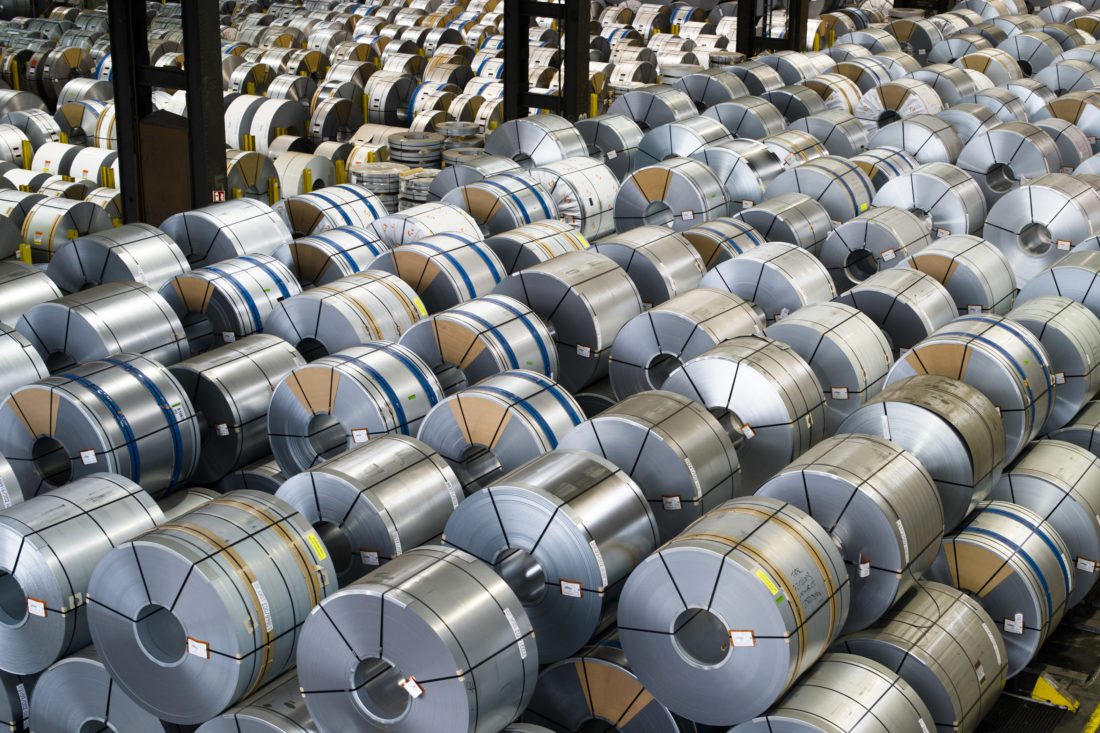
AP photo Pictured are coils placed in a storage on the grounds of the steel producer, Salzgitter AG, in Salzgitter, Germany.
Our daycare center at 1600 Pennsylvania Ave. is demonstrating a complete failure to understand how the world’s economy works.
By proposing to levy 25 percent tariffs on steel and 10 percent on aluminum imports from other countries, we will protect about 25,000 jobs at several woefully run steel companies here in the U.S., but we will likely cause an increase in inflation on the very goods that will be used in the proposed $1.7 trillion infrastructure program — 50 percent of steel used in the U.S. is on buildings and infrastructure; endanger 85 percent of the jobs in the aluminum industry — only 15 percent of the jobs are in smelting in that industry, or about 150,000 to 200,000 jobs; and since we are the world’s largest importer of goods, we will likely experience an significant increase in prices on that portion of our economy as the nations of the world retaliate by raising prices. Great economic plan.
And guess what? About 20 percent of our imported steel comes from Canada and much of it is for our automobile industry. So, expect car prices to rise as well even if they are not imports. And who does the tariff program benefit?
Well, companies that use Basic Oxygen Blast Furnaces, like US Steel that lost $160 million last year using their outdated technology to produce steel. Nucor Steel based in Charlotte, N.C., made $1.5 billion before taxes using the newest Electric Arc fired technology. US Steel with $3.065 billion in debt outstanding that is rated B1 by Moody’s. In case you’re wondering, their debt is called junk bonds in market parlance, which is below investment quality. The goal of the tariffs, according the report entitled “The Effects of Imports of Steel on the National Security” commissioned by the Department of Commerce under Wilbur Ross, is to enable our legacy steel producers using outdated technologies (US Steel, AK Steel, Allegheny Technologies, JMC Steel and Steel Dynamics) to reach 80 percent capacity at their plants, which will allow them to be profitable. The goal will be achieved according to the report if imports of steel are reduced to 21 percent from the current level of 30 percent. And, while this may achieve this short-term goal without considering the consequences worldwide, our daycare leader is taking these measures without fixing the problem.
If he really wants to help the steel industry, then provide funding at little or no interest rate, or give the companies with the outdated technology free grants, so that they can install new technologies and be competitive. Nucor figured that out 40 years ago. And, what is not revealed is that China produces 50 percent of the steel in the world and has expanded their capacity by 127 percent since 2000. India also has expanded capacity as well. But, you can see from the numbers below that the U.S. is the fourth largest producer and only 10 percent of what China produces. China should be the real target of any policies, and there already are measures in place against China, enacted by previous Presidents, that provides adequate protections without causing international trade issues.
Here are the top 10 steel producing countries in the world, with the amount in million metric tons:
¯ People’s Republic of China, 803.83.
¯ Japan, 105.15.
¯ India, 89.58.
¯ United States, 78.92.
¯ Russia, 71.11.
¯ South Korea, 69.73.
¯ Germany, 42.68.
¯ Brazil, 33.25.
¯ Turkey, 31.25.
¯ Ukraine, 22.93.
But if you think the destruction in steel is significant, then you need to consider aluminum. The U.S. imports 50 percent of the Aluminum used. We have only five smelters remaining in the U.S. — down from 23 just 20 years ago. Most of the aluminum industry takes the product and makes components and parts for machinery, autos, and construction. Aluminum also is used in a great deal of the products that we use in everyday life. The tariffs will protect about 15,000 jobs and put about 150,000 or more jobs at risk. We will see additional retaliation from other countries and it will be more sever because aluminum use also is widespread. Our cost of living will increase significantly.
Let me be clear. Having open trading agreements with other countries with each country producing what they do best lowers prices worldwide and creates jobs here in the U.S. and abroad. Trade wars are destructive! Yes, we can point to a plant closing and being moved to another country, but those moves are short lived and those plant will move back here. Many of the operations of major manufacturers that moved abroad in the 1990s have now moved back to the U.S. Many more jobs are staying here because U.S. productivity during the 1990s and early 200s was growing at 2 to 4 percent annually. This offset the advantage of lower wage process abroad.
Other collateral damage is that we witness the departure of the President’s Chief Economic Advisor Gary Cohn. He is the conservative banker and former Goldman Sachs CEO who designed the tax cut program that was enacted recently.
The most recent news reflects a change in the original position. That is, Canada and Mexico may get exemptions from tariffs on national security grounds. Also, an independent organization called The Trade Partnership has published an independent report that says that 37,000 jobs will be created and 145,000 will be lost as a result of the proposed tariffs.
Dr. Russell P. Boisjoly is professor of finance and strategy at SUNY Fredonia.