
Trending
When I first went away to college, I registered for an elective course in Eastern religions. As a rebel without a clue at a conservative school, it seemed the right thing to do.
At the time, the radical hippie movement was morphing into a kind of cerebral escapism that fused recreational drugs with the pursuit of a higher consciousness. The sexual revolution and anti-war movements were giving way to the search for inner truth. The emergence of great thinkers such as Lebanese-American Kahlil Gibran and Harvard professor Ramm Dass inspired a deeper, more nuanced respect for life, especially for living in the present, for "being here now."
The course included a "lab" three times a week in which we sat yoga-style on the floor in a circle to practice zen meditation. The goal was to not-think about the world, to banish the clutter of selfish thoughts in order to discover the true one-ness that thrums through us all. Silence was required, which caused a good deal of sleepy-ness. To remedy this, the sleepy-head undergrad would raise her/his hand, prompting one of our Zen Master/professor's grad students to tip-toe up from behind and smack her/him on the neck with a wooden stick.
The group thing wasn't something I enjoyed much, so I asked the Master to allow me to pursue my meditations in nature, alone, down the hill by the creek. He agreed, and I began a series of personalized meditation sessions sitting by a large rock in the creekbed. My eyelids fluttered, filtering the sunlight that glistened upon the water's surface. There were moments that I felt weightless, genuinely transcendent. And once I felt as if I really was "one" with the rock next to me. It was a better buzz than any pot I'd ever smoked!
However, my journey into the universal mindscape would be short lived. A wild, reckless streak (the terrible Id of my youth) brought an end to my small college existence. I blew up a scholarship and returned home with a sense of failure and gloom. It would take several years of aimless wandering before I landed at the University at Buffalo. Despite some serious setbacks regarding the dark side of city life, I managed to infiltrate some literary circles in what was a prestigious English department at the time. Thus, creative writing -- prose, poetry and music -- became a lifelong dream I would never quite capture. (Hence, plan B -- a career in teaching.)
I suppose all journeys begin with dreams. Trying to achieve them usually requires some form of a commitment to a narrow course of action. We must streamline our vision and focus on the path that leads us into the future. Oftentimes, we go with blinders on, ignoring all that is peripheral.
And then we finally come to this place of reflection, wondering what we might have missed along the way, or what we could have done differently. We do this knowing full well it's no use, that it's all water under the bridge, and all the boats we missed have disappeared beyond the bend.
Yet there is a beauty about this bridge upon which we stand. There is as much chance of magic happening now as ever before, and all we have to do is that which we might have failed to do in the past: look around at what is here now.
It is autumn in Western New York, and the trees are exceptionally beautiful. I'm staring at the top of a large maple. A leaf detaches, floats down in a twirling dance, changing directions with the whimsical breezes several times before landing gently among those who had gone before.
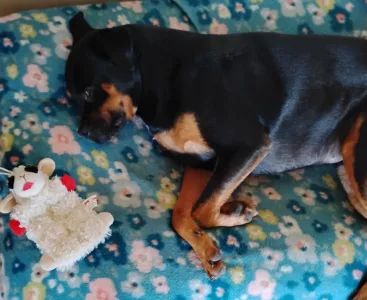
I'll admit this is hard for me, as I've been cursed with a short attention span. It's hard to make my mind slow down, to be in the moment. But I try, and as I write this, my dog Rocco is dreaming in his bed across the room. I can't imagine what's going on in his dog mind. But I like to hear his snuffing and snorting, and to watch his feet twitch and tremble as engages in some great chase.
Peter Alan Howard, author of the novel Rosebud Dreamworld, lives in Dunkirk.