
Catching up with fishing legends
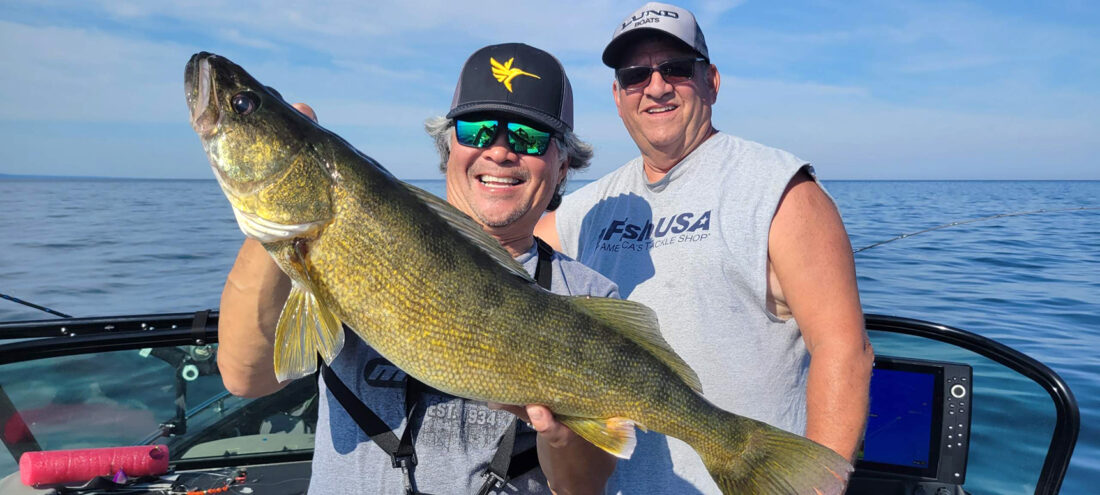
Ted Takasaki is pictured with a walleye he caught pre-fishing for the NWT Championship. Submitted Photo
As we all take a deep breath from this past week, I had a moment to reflect with a couple local anglers on the impact of the National Walleye Tour Championship in Dunkirk Harbor.
While it was a busy week for many folks — and not wanting to leave anybody out — I will send double high-fives out to everybody, from Dunkirk Mayor Rosas and his team, to dozens of volunteers that helped bring in the event, coordinate and host the best from the world of walleye fishing. Job well done.
I have been fortunate enough to be a part of hundreds of small to mid-level to major fishing events through the years and from my seat on the sideline, everything went off without a hitch. From the anglers I have spoken to before, during and after the event, there was not one who had anything bad to say about the NWT Championship and praised the City of Dunkirk and Dunkirk Harbor. They all now know why Dunkirk Harbor is called the Walleye Capital of the Northeast.
Earlier this summer when I received the list of top 40 pro anglers who would be coming back to Dunkirk, three names immediately jumped out at me — Ted Takasaki, Keith Kavajecz and Chase Parsons.
It has been some time since I have spoken to Keith and Chase — heck Chase was a little guy when I last saw him with his dad, Gary, and I would, from time to time, run into Ted on the sports show circuit. We would try to grab a minute or two and sit down and catch up in each other’s lives over a stiff cup of coffee.
I first met Ted when he was president of Liddy Fishing Tackle and I was fortunate enough to keep tabs on him over the years and even spend some time a boat with him on a couple different bodies of water, most notably Lake Erie when he would be in Dunkirk fishing tournaments.
The word “legend” gets tossed around a lot, but there are a few folks still with us who have literally helped build a sport and an industry like Ted has. With more than 30 years of full-time tournament fishing, lure design or running Liddy Fishing Tackle, Ted is one angler who has been there and done that, all the while with a smile on his face.
Here are just a few things that Ted Takasaki has accomplished in his career: Legendary angler in the International Freshwater Fishing Hall of Fame; regular segment and Fishing Tips TV host for Midwest Outdoors Television, which garners more than 500,000 viewers per week; executive producer of five top-selling videotapes, “Ted’s Tips,” and has won in every major walleye tournament trail since the early 1990s.
With Takasaki’s engineering degree, in 1999 he became president of Lindy Fishing Tackle. He left the company in 2008. During Takasaki’s time at Liddy the company doubled its revenues and quadrupled profits during his long tenure as president.
He knew he was ready to go out on my own as a professional fisherman when his fishing business income exceeded how much he was making as president at Lindy Fishing Tackle.
Speaking with Ted before his trip to Dunkirk he expressed how excited he was to return to the Walleye Capital of the Northeast.
“I have always had a great time in Dunkirk, while it has been some time since the last time I fished the eastern basin of Lake Erie out of Dunkirk, I remember the fishing to be great and the folks being so friendly,” said Takasaki. “For some reason, I can catch the big ones pre-fishing, but seldom get them in the boat on the east basin.”
I was able to sit down with Ted at a local “coffee shop” and catch up this past week.
Always interested in what makes legends tict and their journey, I sat down with Ted at a local coffee shop last week and asked him the following: “Over the past three plus decades being in the fishing industry, what is the most important thing you have seen change the industry.”
“That’s tough one,” he responded. “When I started fishing, we were using paper graphs to find structure and fish. Then we moved to what they called depth-finders or flashers. They were much better than paper graphs, because paper would get just a little spot of water on them and could not read them anymore. The move was small-screen, black-and white fish finders. Within a couple of years there was a colored version. Electronics today are the size of small TV with all the bells and whistles one could ask for. And the GPS technology is absolutely amazing. You can mark a piece of structure or contour line and go back to the same spot with the help of GPS.”
Ted added: “But the one thing I have seen that really made a difference from my standpoint is the conservation side of fishing and tournaments. Today anglers — both pros, co- and weekend anglers are better educated in keeping fish alive. This week we will be bringing walleyes out of deep water that, just a few years ago, would mean those fish would die bringing them up. But today most all anglers are schooled in how to bring the fish in, safely unhook them and keep alive all day in their live wells. That is the part that excites me about the future of fishing — conserving of the resource.
“You know there will always be a new lure, a fancy rod or fast reel, different color of line, and these all get things and they help catch fish, whichever species you are fishing. But the conservation side and how the industry has come such a long way in helping promote that gives us the knowledge and products to keep the fish alive, release and caught another day.”
When I asked how long he was going to continue fishing Ted said, “Well, I will start getting Medicare in a few months. My body has held up rather well for all the years of me running around in my Lund boat chasing walleyes, but I am sure I have fished more tournaments than I will in the future.”
As always, it is always great seeing old friends and meeting a few new ones.
Next week I share a sitdown with another fishing legend and Hall of Famer, Keith Kavajecz.
Local Sports
Muddy waters, clear fishing opportunities
Hoose returns to Southwestern, wins 2nd state title
2026 OBSERVER/Post-Journal Boys Wrestling All-Stars
Ottawa rallies past Buffalo 4-1, keeps Sabres from ending the drought
God, grit and the great outdoors
JCC Golf Classic returns to Holiday Valley
ELLICOTTVILLE — Jamestown Community College’s annual Golf Classic will return to the Holiday Valley Double ...