
Learning how to diagnose and treat Lyme disease
While I am not a medical professional, I can provide general information about Lyme disease and the treatment of Lyme disease based on personal experience — I have been sharing that with our readers in this 3-part series.
The treatment of Lyme disease presented here is from my experience, the CDC, and other sources of information. We have discovered much about finding proper treatment based on what we have learned with three people in our family who contracted advanced Lyme disease. This series is an effort to help others understand the seriousness of Lyme disease in Western New York and the Northeast USA. We are providing information that we have learned about treatments and options to avoid the potentially painful and costly medical care for the debilitating state of the human body that can occur with unrecognized Lyme, misdiagnosed Lyme, or ineffective treatments, and what to do.
Of course, when you suspect you or someone else has Lyme disease, it’s essential to seek professional medical advice and follow the guidance of a knowledgeable healthcare provider. The key word is knowledgeable. Lyme disease is a bacterial infection caused by the spirochete bacteria Borrelia burgdorferi, which is transmitted through the bite of infected black-legged ticks (deer ticks).
The usual early-stage treatment for Lyme disease typically involves antibiotics. The choice of antibiotics and the duration of treatment may vary depending on the actual stage of the disease and the individual health condition of the infected person. People treated with appropriate antibiotics in the early stages of Lyme disease usually recover rapidly and completely. Early diagnosis and proper antibiotic treatment of Lyme disease can help prevent late advanced Lyme disease. According to the CDC, typical early oral treatments for adults include 100mg of Doxycycline twice daily for 10-14 days, or 500mg of Amoxicillin three times daily for 14 days, or 500mg of Cefuroxime twice daily for 14 days. The CDC adds that Macrolide Azithromycin may be used for people intolerant of Amoxicillin, Doxycycline, and Cefuroxime, although it is less effective. People treated with Azithromycin should be closely monitored to insure that symptoms resolve. In our experience, Doxycycline, even at initial onset, is required for 28 days minimum. This longer treatment cycle was the advice to us for treatment provided by a medical professional who has been treating Lyme for decades. He has successfully treated advanced stages of Lyme disease for people from all corners of the USA. Once progressive Lyme disease is managed, the lifestyle of the person can return to normal. We learned that Lyme in advanced late stages can only be placed into remission and is never fully cured. Also, note that if you have had Lyme disease, don’t assume you can’t get it again. You can get Lyme disease more than once if you are bitten again by a Lyme-carrying deer tick. Never drop your guard on deer tick awareness and personal protection.
Complications can occur for people with assorted sensitivities, as everyone is a little different, especially when a deer tick with Lyme disease bites a person, and it is not noticed — no bullseye rash — and left untreated. The bite is painless, and with no bullseye rash, Lyme disease can progress to an advanced stage without notice until aches, pains and bodily malfunctions begin. Lyme carditis and Lyme arthritis are among the possible effects.
The CDC advises that Lyme carditis can occur when Lyme disease bacteria enter the tissues of the heart. They identify that this can interfere with the normal movement of electrical signals from the heart’s upper to lower chambers. This process coordinates the beating of the heart. The result is something physicians call “heart block,” which can vary in degree and change rapidly. Lyme carditis occurs in approximately one out of every 100 Lyme disease cases reported to the CDC. They advise Lyme carditis can either be treated with oral or intravenous (IV) antibiotics, depending on severity. The CDC recommends that some patients may need a temporary pacemaker. Patients generally recover within one to six weeks.
Lyme arthritis occurs when Lyme disease bacteria enter joint tissue and causes inflammation. If left untreated, permanent damage to the joint can occur. Lyme arthritis accounts for approximately one out of every four Lyme disease cases reported to the CDC. Because of reporting practices, this statistic may overstate the frequency of arthritis among patients seen in routine clinical practice. The main feature of Lyme arthritis is the apparent swelling of one or more joints. While the knees are often affected, other large joints such as the shoulder, ankle, elbow, jaw, wrist, and hip can also be involved. The joint may feel warm to the touch or cause pain during movement. Joint swelling can come and go or move between joints, and it may be difficult to detect in the shoulder, hip, or jaw. Lyme arthritis typically develops within one to a few months after infection.
Both Lyme Carditis and Lyme Arthritis are treated similarly, with the same antibiotics as described for an initial bite. Still, the doctor may modify the precise treatment required after advanced blood testing.
We discovered with our grandchildren that the disease embedded itself in their human system when the initial deer tick bite was not noticed. It was challenging to gain control for effective treatment. Then, after a third diagnosis with an advanced high-sensitivity blood test, the proper identification of Lyme was verified. Advanced Lyme disease management began. Adverse effects from treatment occurred initially and later; this is not uncommon with prolonged treatment of the usual antibiotics. That’s when a bonafide Lyme doctor, a specialist, is necessary because we discovered many local medical practices have yet to be trained on Lyme disease in the advanced stage. For our family cases, proper treatment required repeated blood work and time, plus multiple support vitamins and elixirs to contain the adverse long-term effects of using strong antibiotics. For some of our family, the treatment required 30 pills of various vitamins and medicines, mostly particular vitamins, Epsom salt baths, and the like, over 12 to 24 months to gain management control and resume a normal lifestyle.
So, where to go for advanced blood testing? There are several places. Through our medical doctor, we used IGeneX Labs (www.igenex.com) as the primary lab resource for blood work. A doctor can order the appropriate test for the initial diagnosis and then afterward for supporting diagnosis to verify the effectiveness of the treatment regimen. More importantly, for when to make treatment changes.
Unfortunately, many of the tick-borne diseases share similar symptoms. They are difficult to detect without special testing, as Lyme disease can mimic other debilitating health conditions. Because of this, it is possible the patient is not recognized with Lyme disease. Misdiagnosis of Lyme disease is common, and it’s not the doctor’s fault. Lyme disease treatment protocols are new.
IGeneX is a CLIA-certified lab (Clinical Laboratory Improvement Amendments of 1988) with decades of experience. They offer comprehensive testing for major tick-borne diseases, ensuring that physicians provide the correct diagnosis to patients and help them get the treatment that will be most effective. The CLIA regulations include federal standards applicable to all U.S. facilities or sites that test human specimens for health assessment or to diagnose, prevent, or treat disease. CDC supports the CLIA program and clinical laboratory quality in partnership with CMS and FDA.
If you are unsure you have been bitten by a deer tick infected with Lyme disease, you can order a home test kit from IGeneX and send it in by mail. Of course, coordinate with your medical professional. It is a urine-based test. If the initial local Lyme panel tests on a blood sample are negative, including PCR (polymerase chain reaction), but symptoms for Lyme disease are present, the Lyme Dot-blot assay from IGeneX can be helpful for advanced diagnosis. The cost for the home test kit is $85, and other tests have various prices. I don’t know if any test is 100 percent proof positive, but the IGeneX lab has been reliable in our experience. To learn about the details of this test, visit https://igenex.com/test-directory/product/lyme-dot-blot-1-sample/.
Note that the CDC advises there is no evidence that Lyme disease can be transmitted from person to person through touching, kissing, or having sex with a person who has Lyme disease.
Remember that only a qualified healthcare professional can diagnose and prescribe appropriate treatment for Lyme disease. If you suspect you have been exposed to ticks or are experiencing symptoms associated with Lyme disease, seek medical attention promptly. Additionally, to prevent Lyme disease, taking preventive measures such as wearing protective clothing, using tick repellents, and checking for ticks after spending time in areas where ticks may be present is crucial. Please drop me a note if there are questions I can help with (nugdor@yahoo.com).
Information provided above has been consolidated from various sources, including personal exposure, the Centers for Disease Control (CDC); the University of Massachusetts at Amherst; IGeneX Labs; and the New England Regional Center of Vector-borne Diseases (NEWVEC).
Local Sports

First-Team nods
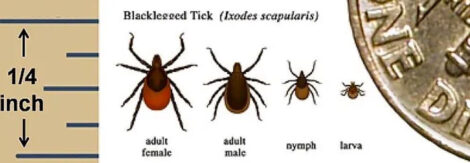
Deer ticks can be tiny terrors in Western New York

Safest hunting season ever according to NYSDEC

Section VI K4 youth wrestlers take 2nd at states

Indoor soccer
MacDonald welcomed as Bonnies coach
ST. BONAVENTURE — After building a national championship-contending Division II program at Daemen University, ...