
Serving NY’s outdoors: Recruits begin journey
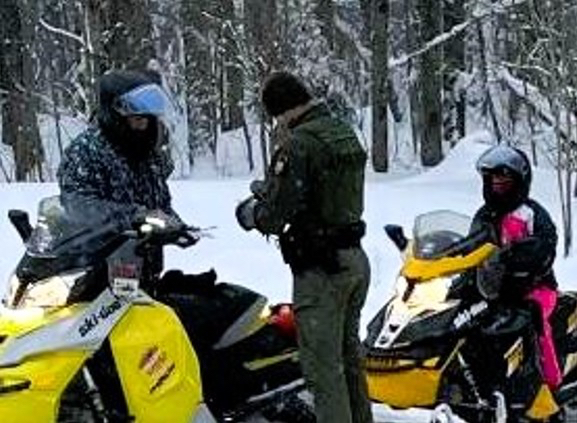
Photo courtesy of NYSDEC A DEC officer checks snowmobiles on the trails at Boutwell Hill State Forest. Conservation and law enforcement is grounded in science, public service and community safety.
New York is investing in the future of its natural resources and the dedicated professionals sworn to protect them. The NYSDEC has launched its newest training academies for environmental conservation officers and forest rangers, preparing up to 50 recruits for careers safeguarding the state’s air, water, forests, fish and wildlife.
Announced by DEC Commissioner Amanda Lefton last week, the six-month academies reflect a renewed commitment to conservation law enforcement grounded in science, public service and community safety.
“DEC forest rangers and ECOs each have a rich history of conservation and public protection in New York,” Lefton said, noting that the specialized and rigorous academies ensure graduates are ready to meet the challenges of the job.
For those of us who spend time in our New York wilds, we know that legacy runs deep. ECOs, originally known as game protectors, have served New Yorkers since 1880. Forest rangers began in 1885, when the state legislature established the Forest Preserve. Today’s recruits join a storied tradition, but their preparation reflects the demands of our modern times.
ECO training is underway at the DEC division of Law Enforcement Training Academy in Pulaski. Forest ranger recruits begin at the State University of New York College of Environmental Science and Forestry at the Huntington Wildlife Forest before moving to the ranger school in Wanakena and completing exercises at the State Preparedness Training Center in Oriskany. The academies emphasize environmental law, emergency response, physical conditioning, public communication and decision-making under pressure.
The scope of the work is significant. ECOs enforce the 71 chapters of New York’s Environmental Conservation Law, addressing offenses ranging from deer poaching and illegal dumping to emissions violations and wildlife trafficking. In 2025 alone, ECOs responded to more than 35,000 complaints and issued over 15,000 tickets or arrests statewide.
Forest rangers, meanwhile, balance law enforcement with lifesaving service. Last year they conducted 362 search and rescue missions, extinguished more than 200 wildfires, and carried out prescribed burns that rejuvenated nearly 1,650 acres of land. Some 41 rangers were deployed to assist with fire assignments in other states, underscoring New York’s leadership in environmental response.
These responsibilities are not without risk. Rangers navigate rugged terrain in all weather conditions, and ECOs often confront armed poachers or investigate hazardous environmental crimes. Public support for their mission remains strong. Communities across the state recognize that responsible stewardship of natural resources protects public health, preserves outdoor traditions and strengthens local economies.
At the heart of the DEC’s work is a commitment to science-based regulation. Environmental Conservation Law is crafted from biological research, ecological monitoring and data-driven analysis designed to ensure sustainable wildlife populations and clean air and water for future generations. In an era when policy debates can be politically charged, the preferred model emphasizes evidence over ideology, a principle widely endorsed by conservationists, hunters, anglers, outdoor enthusiasts, and environmental advocates alike.
The newest class of recruits emerged from nearly 10,000 applicants who took the most recent civil service exam in November, a testament to strong public interest in environmental careers. As they begin their demanding training, they carry forward a mission that transcends politics: protecting New York’s natural heritage through professionalism, integrity and science.
For New Yorkers who value healthy forests, abundant fish and wildlife and safe communities, the investment in these academies represents more than recruitment. It is an affirmation that the stewardship of the Empire State’s natural resources remains in capable and courageous hands. To learn more about the qualifications for these positions visit the NYSDEC website.
Gotta Love the outdoors.
CALENDAR
Feb. 26: Lake Erie Chapter of Fly Fishers, monthly meeting, 6 p.m., Burchfield Nature and Arts Center, 2001 Union Road, West Seneca, Guest: Tyler Olrogg — Fly Fishing Team USA.
Feb. 26: Erie County Federation of Sportsmen, monthly meeting, 7 p.m., George Washington Club, 2805 Niagara St., Buffalo. Board meeting begins at 6:30 p.m. Open to public.
Feb. 28: Southtowns Walleye Association Outfitters Fair, 5895 Southwestern Blvd., Hamburg, 9 a.m. to 1 p.m. Free admission.
Feb. 28: Hunting season close: pheasant, cottontail rabbit, ruffed grouse. See dec.ny.gov for details.
Mar. 6-8: WNY Sport/Travel Show, Hamburg Fairgrounds, see: https://renmarevents.com/wny-sport-show/.
Submit calendar items to forrestfisher35@yahoo.com at least 10 days in advance.
Local Sports
SECTION VI POSTSEASON
BOYS BASKETBALL Class AAA Semifinals Thursday, Feb. 26 At Buffalo State University No. 4 Lancaster vs. ...
Adult hockey
CHAUTAUQUA COUNTY HOCKEY ASSOCIATION A LEAGUE Jack Brinkley and Alex Paluch each scored twice as Coughlan’s ...
Serving NY’s outdoors: Recruits begin journey

Girls wrestle for titles today

Upset ending
Cassadaga Valley, Forestville advance to semifinals at JCC
SINCLAIRVILLE — Four days after establishing a career high, Maddie Debo was at it again. The Cassadaga ...