Coyotes, hunters and the space between
-
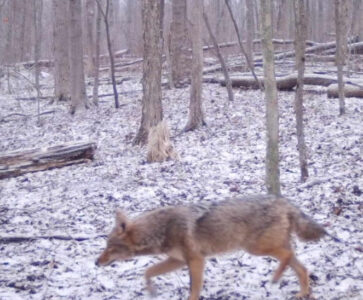
- Photo courtesy of Corey Wiktor Mature coyotes hunt mostly at night, but with apparent expanding numbers in recent years, coyotes have been seen during daylight hours.
-
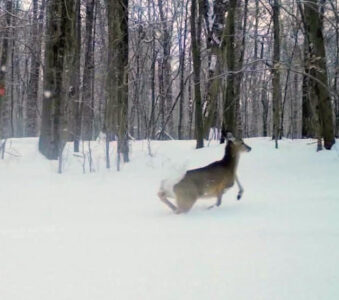
- Photo courtesy of Corey Wiktor Young-of-the-year deer, and sometimes older deer, too, are chased by coyotes when winter snows are deep. This photo was taken in late February in a rural Western New York location.
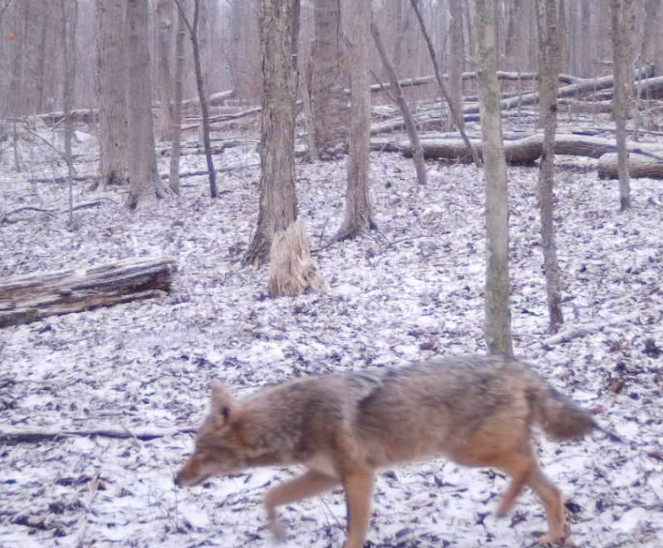
Photo courtesy of Corey Wiktor Mature coyotes hunt mostly at night, but with apparent expanding numbers in recent years, coyotes have been seen during daylight hours.
When deer season ends in Western New York, the woods don’t go quiet — they just change hands. The blaze orange fades, the big rifles go back into cabinets, and for most people, hunting season feels over. But in reality, another pursuit is just getting started — or, more accurately, continuing under a different set of rules. Coyote season stretches into late March (ends March 29), and unlike deer hunting, it doesn’t stop when the sun goes down. In fact, that’s when it becomes something else entirely.
Across farm fields, woodlots and even the edges of small villages, hunters head out at night. Their tools are different now — shotguns, handguns and scanning lights cutting through darkness. No high-powered deer rifles allowed after dark. No long-distance shots across open fields. Everything is closer, quieter and more uncertain.
In New York state, coyote hunting is one of the few opportunities for legal night hunting, but it comes with specific firearm restrictions: Shotguns (no larger than 10 gauge); rimfire rifles (.22 caliber or smaller); handguns (legal calibers vary, but commonly rimfire or certain center-fire options depending on local regs). Not allowed at night are center-fire rifles (the typical deer rifles are prohibited after dark). Artificial lights are allowed, including handheld or firearm-mounted lights. Coyotes may be hunted 24 hours a day during the open season. Note that local discharge laws still apply (especially near villages) and that hunters must always maintain safe shooting distances from homes and roads.
Sometimes, if you’re inside your home on a cold March night, you might hear it — a sharp crack in the distance. Not a firecracker. Not a deer hunter. It could be a coyote hunter.
The ethics of it all sit in a gray space that’s hard to ignore. What lurks beyond the porch light is a common question, sometimes a scary thought for village residents in the suburbs.
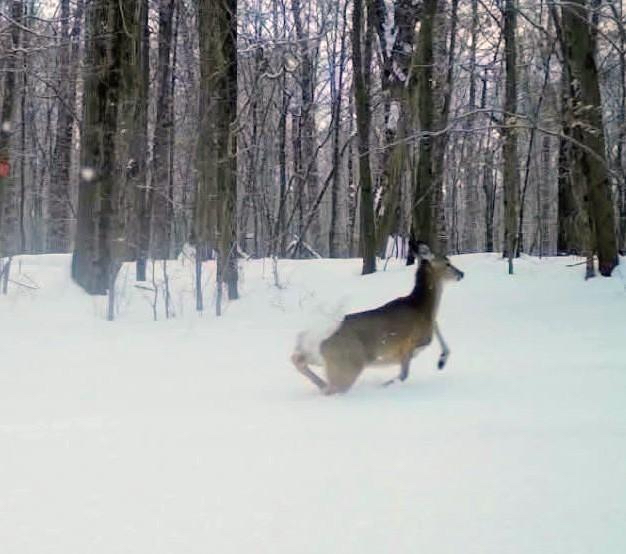
Photo courtesy of Corey Wiktor Young-of-the-year deer, and sometimes older deer, too, are chased by coyotes when winter snows are deep. This photo was taken in late February in a rural Western New York location.
Coyotes are often described as overabundant, especially by deer hunters who see them as a direct threat to fawn survival. There’s truth in that. Studies have shown coyotes can have a real impact on young deer in certain conditions, particularly during harsh winters or in areas with already stressed deer populations. But “impact” doesn’t always mean “collapse.” Nature rarely works in such clean, one-sided narratives, but I’m not a biologist.
Our DEC crews seem to have the balance just right most of the time. Credit where credit is due.
Coyotes are also opportunists, survivors that have adapted better than almost any predator in North America. They live on the edges of human development, slipping through backyards and city lines, sometimes spotted trotting down village streets in the early morning hours. Their presence feels new to many people, even though they’ve been quietly expanding for decades. And with that presence comes suspicion.
Missing pets. A glimpse of movement at dusk. Tracks in the snow. Coyotes are often the first — and sometimes the only — suspect, even when there’s no clear evidence. It’s easier to blame a wild predator than to accept uncertainty. Still, the perception sticks. Can perception drive policy as much as biology does? Then there’s the question that doesn’t get asked often enough: what happens after the shot?
Unlike deer, which are carefully processed for meat, coyotes exist in a different category for many hunters. Some are skinned for fur, though the market has declined significantly over the years. Others are left in the field, seen as pests rather than resources. Some hunters keep skulls or pelts. Some don’t.
It’s a reality that sits uneasily with people outside the hunting community — and even with some within it. Because at its core, hunting has always carried an implicit contract: that the animal has value beyond the moment of the kill. In some modern hunting circles, coyote hunting challenges that idea.
As March 29 approaches and the season closes, it leaves behind more than just empty fields and quiet woods. It leaves questions about balance, about ethics, about how we define “too many,” and who gets to decide. The coyotes won’t disappear when the season ends. They’ll still be out there, moving along hedgerows, crossing frozen creeks, adapting as they always have. And come next season, the debate will start all over again.
Gotta love the outdoors.
CALENDAR
March 21: Erie County Federation of Sportsman’s Clubs, Annual Banquet, Kloc’s Grove, 1245 Seneca Creek Road, West Seneca. $45 includes dinner, social hour. Info: Diane Steel, 716-998-5137.
March 21: Hanover Fish & Game Club, Shots for Gold — sporting clays, 780 Overhiser Road, Forestville. 716-525-5160.
March 24: Children in the Stream, Youth Fly Fishing program, free, Costello Room, Rockefeller Art Center, SUNY Fredonia, 7-8:30 p.m., 12 years old and older, info: 716-410-7003 (Alberto Rey).
ııı
Submit calendar items to forrestfisher35@yahoo.com at least 10 days in advance.
Local Sports
HIGH SCHOOL POSTSEASON
NYSPHSAA Championships Boys Basketball At Visions Veterans Memorial Arena, Binghamton Semifinals Thursday, ...

Hammerheads competing in championships
Coyotes, hunters and the space between

Frewsburg set to defend state title

Adult Floor Hockey League champions