Melt, rise, repeat: spring steelhead are in
-
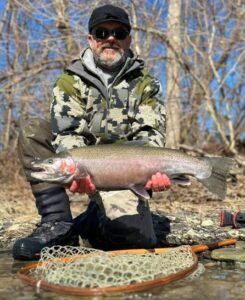
- Photo by Adam McInerney Spring steelhead don’t sit still. Fresh fish push through faster water, pause in transition zones, then slide into deeper pools. It’s that time of year.
-
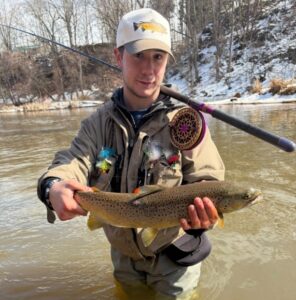
- Photo by Easton Lynch Andrew Frelock with a stained water brown trout. Hard beads excel in stained water for durability and consistent profile. Soft beads shine in clearer flows. Homemade jigs work well, too.
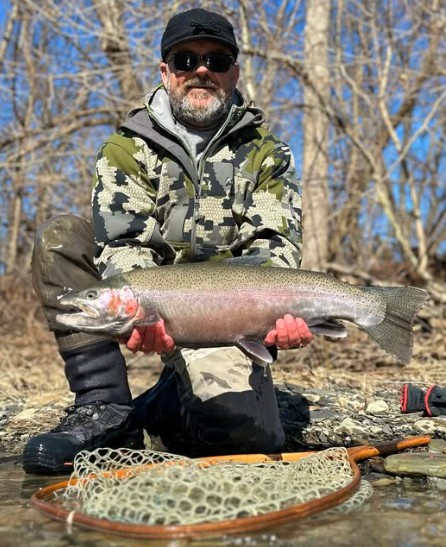
Photo by Adam McInerney Spring steelhead don’t sit still. Fresh fish push through faster water, pause in transition zones, then slide into deeper pools. It’s that time of year.
Oh yeah, this is that time of year.
The snowbanks are shrinking, the tributaries are waking up, and chrome is on the move. Western New York’s Lake Erie streams are officially in go mode, and if you’ve been pacing around the garage staring at your waders, it’s time.
Every thaw pushes new steelhead upstream, and this year’s steady melt cycles are doing exactly what anglers hope they’ll do: refreshing the runs and keeping fish moving. Each bump in water level invites another wave of chrome-bright steelhead into the tributaries. That means aggressive fish, less pressured fish, and fish that haven’t seen every bead in the tackle box yet.
The larger systems like Cattaraugus Creek tend to hold muddy water longer, but they stay fishable even after bigger melt events. When other creeks drop and clear quickly, the Catt. often keeps that perfect steelhead green tint for days. If you like covering water and hunting for pods of fresh fish, pick your playground.
Meanwhile, smaller tributaries such as Chautauqua Creek, Canadaway Creek, and Silver Creek respond fast to weather swings. They rise quickly with snowmelt or rain — and they typically drop just as fast. That means timing is everything. Hit them on the drop when flows are falling, clarity improves, and you might find fish stacked in classic runs, tailouts, and deeper bends.
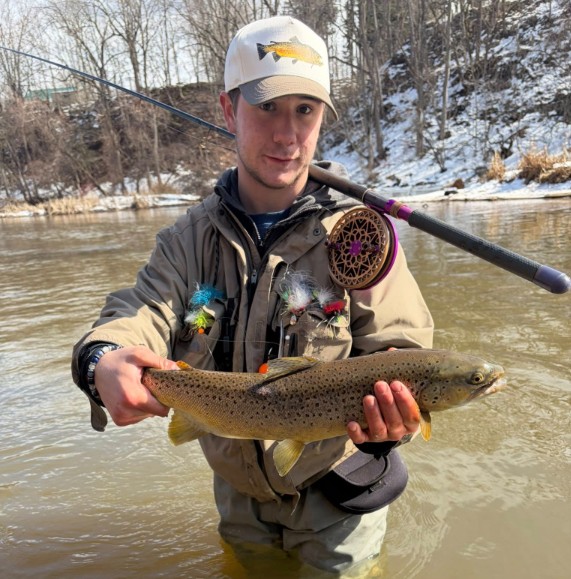
Photo by Easton Lynch Andrew Frelock with a stained water brown trout. Hard beads excel in stained water for durability and consistent profile. Soft beads shine in clearer flows. Homemade jigs work well, too.
This is prime wool sock and chest-high wader season. Mornings still bite, but by midday you’ll feel that spring sun on your shoulders. The fish do too, and they become more active. Layer smart, pack dry gloves, and don’t forget that second thermos. Steelhead fishing in Western New York rewards the angler who’s comfortable enough to stay out “just one more drift.” And trust me — this is not the time to leave early.
Decision making can be confusing, but it’s all about beads, bugs, and other related decisions – like color. That’s one of the joys of tributary season: Options.
Hard beads excel in higher, stained water when you want durability and a consistent profile. Peg them clean and drift them naturally; that dead-drift is everything.
Soft beads shine in clearer flows. They move subtly and compress when fish bite, often leading to better hook-ups in pressured water.
When flows bump up or visibility drops, don’t hesitate to go bold. Larger profile offerings and brighter colors can trigger reaction strikes from fish pushing upstream.
For fly anglers, streamer patterns can be downright electric when steelhead are fresh and aggressive. Swinging flies through tailouts or stripping them through softer seams can produce those heart-stopping grabs. Meanwhile, nymphs and glo-bugs remain steady producers when fish settle into holding water. If they’re hugging bottom, get down to them, adjust split shot and leader length until you’re ticking occasionally. If you’re not occasionally losing a rig to the rocks, you’re probably not deep enough.
Spring steelhead don’t sit still. Fresh fish push through faster water, pause in transition zones, then slide into deeper pools. Cover water deliberately. Make thoughtful drifts. Change angles. If a run looks right, give it multiple passes before moving on, but don’t camp too long if you’re not seeing signs of life.
Adam McInerney fished yesterday and said, “It was beautiful and sunny, but a cold day on the cricks. The temperature was down in the teens this morning, so I fought a lot of slush. The water temp was right at 32 degrees, but I still managed to put a few fish in the net.”
Look for: Soft seams alongside faster current, inside bends with depth, gravel tailouts below riffles, and don’t pass up speed runs with 2-4 feet of visibility. Remember, too, that every melt cycle can reposition fish. Yesterday’s empty run might be loaded today.
What’s ahead? Line-stretching fun. The forecast? More melt, more movement, more opportunity. As long as temperatures continue their gradual climb, waves of steelhead will keep entering the tributaries. The mix of drop-back fish and fresh chrome means strong fights, acrobatic runs, and that unmistakable scream of a reel under pressure.
There’s something special about this early spring window. The air smells like thawing earth instead of winter. And every drift carries that feeling that something powerful could grab hold at any second. So dust off the waders. Re-spool that reel. Organize the bead box. Western New York’s Lake Erie tributaries are flowing, fresh steelhead are charging upstream, and the kind of days that bend rods and stretch lines are stacking up fast. If you’ve been waiting for a sign, this is it.
Gotta Love the Outdoors.
Outdoors Calendar
Mar. 6-8: WNY Sport and Travel Show, Hamburg Fairgrounds, see: https://renmarevents.com/wny-sport-show/.
Mar. 10: Children in the Stream, Youth Fly Fishing program, free, Costello Room, Rockefeller Art Center, SUNY Fredonia, 7-8:30 p.m., 12yrs old and older, info: 716-410-7003 (Alberto Rey).
Mar. 14: Antique Fishing Tackle Show, 10:30 a.m.-2 p.m., Elks Lodge, 691 N. Canal St., Lockport. Info: 716-713-9410. Submit calendar items to forrestfisher35@yahoo.com at least 10 days in advance.
Local Sports

Sabres honor Olympians, take down Golden Knights
Global Concepts hangs on against Ellicottville 56-50, reaches final
JAMESTOWN — There are no moral victories come playoffs — you lose and you’re done. But No. 6 Ellicottville ...
Melt, rise, repeat: spring steelhead are in
It’s an upset!
SECTION VI POSTSEASON
BOYS BASKETBALL Class AAA Semifinals Thursday, Feb. 26 At Buffalo State University Health Sciences 83, ...