
Hunter education builds safer hunting
Trending
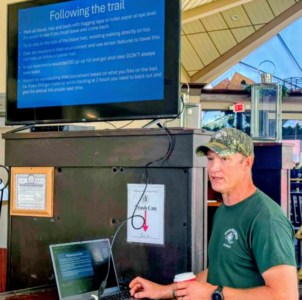
For generations of New York hunters, the first step into the woods has started in a classroom with a teacher, a firearm safety lesson and a group of people willing to share what they know.
The New York State Department of Environmental Conservation's Hunter Education Program has been doing exactly that for more than 75 years and behind those classes is something worth recognizing. An army of DEC-certified volunteer instructors who give their time, knowledge and often their own money to help the next generation of hunters learn to do it right.
In-person hunter education courses are free, but "free" doesn’t mean they come without a cost. These instructors volunteer their evenings and weekends, drive their own vehicles, pay for their own fuel and absorb the wear and tear that comes with traveling to classes. Some even provide food and refreshments for students.
They do it because hunter education is about far more than passing a test. It is about introducing someone -- perhaps a youngster, a first-time adult hunter or someone returning to the outdoors -- to the responsibilities that come with carrying a firearm or bow and pursuing game.
The general New York hunter education course is at least seven hours long. Students must complete required homework before attending, and classes can fill quickly, particularly in late summer and early fall. At the end of the course, students must score at least 80% on the final exam to earn their Hunter Education Certificate.
For the new hunter, that certificate represents a license to begin a new adventure. For the instructor, it represents something bigger: another person entering the hunting community with the knowledge to make good decisions in the field.
That’s where all hunters have a role.
If you’re an experienced deer hunter, help the first-timer understand how to safely unload a firearm, cross a fence, climb into a tree stand or identify a target. If you’re a small-game hunter, explain why knowing what lies beyond the target matters just as much when pursuing a rabbit or pheasant as it does when hunting deer. If someone has a question, don’t laugh at it. Answer it.
We were all new once.
The four cardinal firearm-safety rules remain the foundation: treat every firearm as if it is loaded; keep the muzzle pointed in a safe direction; keep your finger off the trigger until ready to fire; and identify your target and what lies beyond it.
Those are not simply classroom rules. They should be habits that follow us every time we enter the woods.
New York’s hunting safety record has improved dramatically over the decades, but safety isn’t something we inherit -- it is something we continue to practice and teach.
So, as another hunting season approaches, remember the people who make that first step possible. The instructors may not receive a paycheck, but they are investing in something priceless: safer hunters, responsible sportsmen and women, and a hunting tradition that can be passed from one generation to the next.
The best hunters don’t just know how to take game, they know how to look after one another, thanks to volunteer instructors in so many areas.
Perhaps the most important thing an experienced hunter can bring into the woods isn’t another piece of gear. It’s a willingness to teach and share. Organizations like the Western New York Deer Search team are part of that traditional outdoor teaching core team, especially when a young (or old) hunter makes a shot and cannot find their deer. Never forget that Deer Search is your friend, and if you use their volunteer services, please don't overlook to at least tip the team, it’s only common sense. They use dogs to track the wounded deer. Help them keep their services going.
Gotta love the outdoors.
Outdoor Calendar
Sept. 14: West Falls Conservation Society, monthly meeting, 8 p.m. start; 55 Bridge St., West Falls. Potential new members are invited to attend. Free dinner. Info: 716-652-4650
Sept. 16: 3D Archery, Evans Rod/Gun, 4 p.m. start, $10 fee, 15 targets, free instruction 4-6 p.m.; Info-call Jerry Gorski, 716-698-3008.
Sept. 17: 3D Archery, 20 targets Bear Lake Rod and Gun, 4 p.m. start, $10 fee, open to public, 4391 Stockton-Cassadaga Road, Stockton, NY; 716-397-9717.