
Is that old hunting ammunition still good?
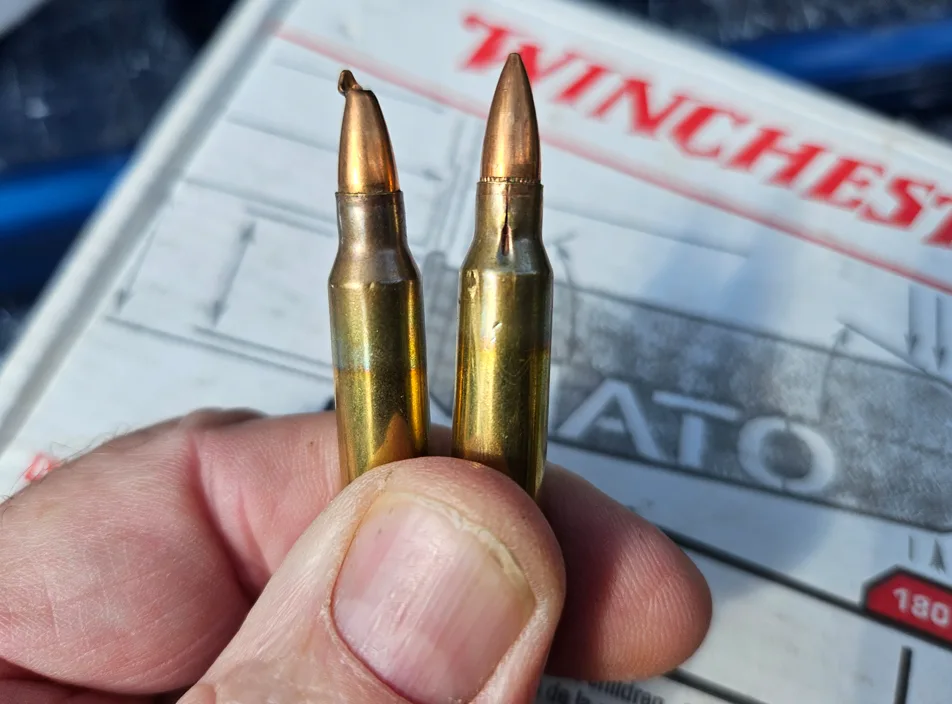
Photo courtesy of Forrest Fisher Old and new rifle ammunition should be visually examined for obvious defects. In this photo, there are defects on both bullets, the ballistic tip, left, and the crinkled rifle case, right.
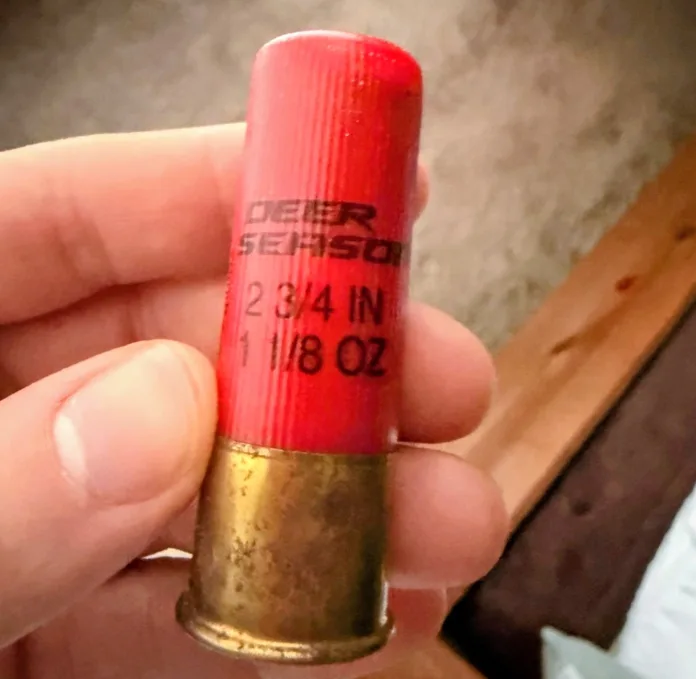
Photo courtesy of Forrest Fisher Old shotgun ammunition for big game hunting (deer slugs) should at least be visually inspected for corrosion and sealed packaging.
Photo courtesy of Forrest Fisher Old and new rifle ammunition should be visually examined for obvious defects. In this photo, there are defects on both bullets, the ballistic tip, left, and the crinkled rifle case, right.
Photo courtesy of Forrest Fisher Old shotgun ammunition for big game hunting (deer slugs) should at least be visually inspected for corrosion and sealed packaging.
Trending
With New York’s Southern Zone regular big game firearms season opening this Saturday, hunters across Western New York are making their final preparations for deer season. But let’s be honest, each and every year -- you know who you are, not everyone has enough time to get ready.
Between demanding work schedules, sometimes working two jobs just to keep up with the cost of living, and the high taxes and expenses that come with living in New York, hunting preparations can easily get pushed to the back burner. For many, opening weekend is approaching faster than expected.
That brings up a familiar question: Have you ever wondered whether the ammunition you bought on sale 20 or 30 years ago is still viable? Is it safe to use? Will it perform the way it did when you first brought it home? Or, maybe, similarly, you’ve come across a few boxes in your dad’s gun locker after he passed away, or provided to you from the family of a friend. The ammo could be even older.
Perhaps you’re looking at your own firearm and ammunition storage collection and wondering why you bought 10 boxes of shotgun slugs when you typically use only one or two slugs each hunting season. Some years, you don’t use any at all.
It’s a familiar situation for many hunters. You're not alone. Ammunition can sit untouched for years, sometimes decades, between hunting seasons. The question is whether it has been stored properly and whether it’s still safe and reliable.
The best way to store hunting ammunition can vary by geographic location, but most scenarios require similar care. Western New York’s humid summers, cold winters and seasonal temperature swings make storage conditions especially important. Moisture, condensation and excessive heat are among the biggest enemies for ammunition. The golden rule: Keep ammunition cool, dry, protected from temperature swings and stored securely.
With rifle ammunition (centerfire hunting calibers), keep cartridges in their original factory boxes and place those boxes inside a quality, gasket-sealed ammunition container. This protects them from moisture and physical damage while preserving important caliber and lot information. A rechargeable or replaceable silica-gel desiccant can help control moisture. Avoid damp basements, unheated garages and storage areas subject to condensation.
With shotgun slugs, the same basic storage approach applies. Keep them in their original factory packaging, protected from moisture and physical damage. Pay particular attention to plastic hulls, crimps and any signs of cracking or deterioration.
Neither bullets nor slugs require an elaborate storage system. Consistent, dry storage is what matters. You might ask, what about ammunition that’s 20 or 30 years old? Ammunition doesn’t automatically become unusable simply because it’s old. Properly stored ammunition will remain serviceable for many years. However, age alone doesn’t guarantee safety. Look for corrosion, dents, damaged primers, cracked shotgun hulls, damaged crimps or unusual discoloration. Never fire visibly damaged, chemically contaminated or flood-exposed ammunition.
Remember, a visual inspection cannot establish that old ammunition is safe to fire. If its storage history is unknown, particularly with inherited ammunition, consult the manufacturer or a qualified gunsmith. Don’t experiment with questionable cartridges.
Make a few simple off-season habits your every year rule. Keep ammunition in its original, labeled packaging. Use sealed storage containers with desiccant. Choose a secure, climate-controlled interior location. Keep ammunition away from solvents, gasoline, ammonia and excessive heat. Retain manufacturer and lot information. Inspect ammunition before each hunting season. To know more about all ammo talk, consult the Sporting Arms and Ammunition Manufacturers’ Institute for additional safety and storage recommendations.
The bottom line? You don’t need to buy new ammunition every hunting season, nor should you assume ammunition is good forever just because it looks fine.
For hunters juggling busy work schedules and family responsibilities, a simple storage routine can make a meaningful difference. Keep it dry, keep it cool, keep it secure and know what you’re taking into the field.
That box of shotgun slugs you bought on sale 30 years ago? It might be worth investigating before heading out this Saturday. Head to the range, take at least one or two shots at a target after you assure that your barrel is clear. Then you know that box is tested. Good luck out there.
Gotta love the outdoors.
CALENDAR
Nov. 17: Children in the Stream Youth Fly Fishing/4-H Program, Fly tying/fly fishing classes, 7-8:30 p.m., free, Costello Room, Rockefeller Art Center at SUNY Fredonia, For info: email Alberto@albertorey.com.
Nov. 18: Fly Tying Class, 6-8 p.m., free, Falconer Rod & Gun Club, 329 Falconer St., Jamestown; info: 716-467-0782.
Nov. 20: Last day of the NY Southern Zone early archery big game season, ends 30 minutes after sunset.
Nov. 21: Opening day of NYS Southern Zone big game regular firearm season, runs through Dec. 13. Starts 30 minutes before sunrise.
Nov. 21-22: NY Concealed Carry Class, Bear Lake Rod & Gun Club, 4391 Cassadaga-Stockton Road, Stockton, limited seats, register at 716-410-6692.